
 |
Airedoodle |
|
He is not recognized by the F.C.I. |
Origin |
Great Britain <> France -> U.S.A. | |
Translation |
Francis Vandersteen | |
This breed is also known as |
Dale Poodle |
A brief presentation of the Airedoodle |
| The Airedoodle is a cross between the Airedale Terrier and the Poodle. Fairly large in size, the average Airedoodle weighs between 18 and 27 kilos. Airedoodles have a lot of energy and need plenty of exercise to maintain good physical and emotional health. The hybrid's coat can range in texture from coarse to soft, and is of medium length. These dogs are intelligent and generally very friendly, able to get along with other dogs and pets. With a gentle temperament, the Airedoodle will strive to please its master, is loyal and fun-loving, and enjoys being with its family. Dogs of this breed will need to be trained, and early socialization with children and other animals is recommended. |
History of the Airedoodle |
| The Airedoodle hybrid is a new breed of dog with no detailed history. However, the two breeds that combine to form the Airedoodle have centuries of history. |
A little of the Airedale Terrier |
||
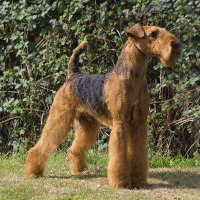
| The Airedale Terrier is a large dog that has always been kept in England as a versatile farm dog with guarding abilities. They are highly prized for their elegant appearance and outgoing, independent nature. The Airedale Terrier is reputed to be the tallest of all Terriers, reaching over 60 cm in height at maturity. It takes its name from its place of origin, the Aire Valley in Yorkshire, northern England. Most experts agree that they are a cross between the Black and Tan Terrier and the Otterhound. By the mid-1800s, the breed had become established and, a few decades later, was exported to America, where it was used for a variety of purposes, including livestock breeding and protection. Interestingly, the Airedale Terrier was one of the real stars of the First World War, and its popularity grew in the years that followed, as people told stories of their courage and usefulness. Today, most are kept as pets, and the number of breeds has declined in recent years. | ||
 |
||
| Standard of the Airedale Terrier | ||
A little of the Poodle |
||
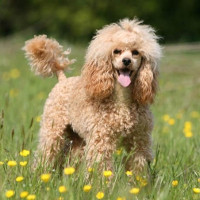
| The Poodle is one of the main players in the new world of hybrid dogs, and is renowned for its versatility. An intelligent dog that excels in many disciplines, the Poodle is not only an excellent pet, but can also compete successfully in events such as agility and flyball. The general public tends to associate the Poodle and its hairstyle with France, but the truth is that it's a German breed. Despite their glamorous appearance, they were originally bred to hunt and retrieve waterfowl and have always been fantastic swimmers. The Poodle is available in three sizes: Toy, Miniature and Standard, although it is the larger Standard Poodle that contributes to the Airedoodle breed. Poodles are recognized by the Kennel Club within their public service group. | ||
 |
||
| Standard of the Poodle |
Appearance of the Airedoodle |
| The Airedoodle is a hybrid of the Airedale Terrier and the Poodle, weighing on average between 18 and 27 kilos and measuring between 56 and 66 centimeters. With a wiry coat, this hybrid generally has a long muzzle in proportion to the overall length of its head. Its face appears friendly, its head is round and its ears are generally floppy. Dogs of this type are generally squarely built and have a strong, robust appearance. Their dense, medium-length coats can be wavy or curly, coarse or soft. |
Temperament of the Airedoodle |
| The Airedoodle is very energetic, but also intelligent and friendly. This inquisitive, competent hybrid gets on well with other dogs and makes an excellent companion and watchdog. The Airedoodle is adorable and loyal, and is known to love being with people and thrives on being part of the family. Known for its adaptability, the Airedoodle is eager to learn, making training an enjoyable experience for both owner and dog, and basic commands will come easily to it. When training your Airedoodle, you'll need to remain relaxed, firm and confident, as your dog will be able to sense your emotions. Early socialization is important, after which the hybrid will behave well with children of all ages, as well as with other animals. |
Needs and activities of the Airedoodle |
| The Airedoodle, like the Airedale Terrier and Poodle, has a lot of energy and needs plenty of physical activity to maintain good physical and emotional health. Daily exercise in the form of a long walk, jog or hike will be important for your dog. Supervised access to a fenced yard is useful to give him a space where he can run and play. Mental stimulation is also essential for the Airedoodle; this can include tracking exercises, hunting, guarding, competitive obedience and police work. A home with a fenced garden is ideal for the Airedoodle, so he can get his daily exercise in addition to his training and walks. |
Maintenance of the Airedoodle |
| The Airedoodle will probably have a moderate moult and will need to be brushed regularly. The extent of shedding will depend on whether it's a Poodle, which doesn't shed, or an Airedale Terrier, which does. Poodle maintenance includes trimming, brushing and shampooing with a dog shampoo, while the Airedale Terrier requires twice-weekly brushing and shaping. The Airedoodle's teeth should be brushed regularly to ensure long-term dental health, and its nails should be trimmed if necessary; a good sign that nail trimming time is near is when you hear a click as your Airedoodle crosses the floor. Like many other dogs, the Airedoodle needs to be trained from an early age. Happy to take part in obedience classes, certain commands will come easily to him. Behavioral training will help your dog avoid developing bad habits that will be difficult to break. It's important not to be impatient while training your dog. You'll probably have to repeat the command several times, and negative reinforcement is not recommended. Do your best not to let your frustration show in your voice. Your dog will sense that you are becoming increasingly frustrated and may associate training with your displeasure. |



 English (United Kingdom)

Comments