
 |
Labernese |
|
He is not recognized by the F.C.I. |
Origin |
Canada <> Switzerland -> Canada | |
Translation |
Francis Vandersteen | |
This breed is also known as |
Labernois
|
A brief presentation of the Labernese |
| The Labernese is a mix of Labrador Retriever and Bernese Mountain Dog. They're big, friendly dogs who love being with their families, and don't do well if left alone for long periods. They can suffer from separation anxiety and become destructive. They are gentle, calm and intelligent dogs, bred to be working dogs for the blind and disabled, but also great pets. They get on well with children and need regular exercise to stay fit and happy. The only drawback is that the breed has a relatively short lifespan. Common colors are black, yellow, chocolate and white, and they can be solid or two-tone. Their coats are dense, soft, long and wavy. |
History of the Labernese |
| The Labernese is a combination of a pure-bred Bernese Mountain dog, a farm dog from the Swiss Alps, and a Labrador Retriever, bred as draft dogs by Newfoundland fishermen. The idea was to take the best of both breeds and create a near-perfect dog to help the blind and disabled. The Mira Foundation began developing the breed in the 1990s and launched an official breeding program around ten years later. The foundation is named after a female Labrador, Mirabelle, one of the first guide dogs trained by founder Eric St-Pierre. They use the best bloodlines and apply strict breeding standards to ensure their dogs have the right temperament to work with disabled people. Both parent breeds are known for their intelligence, gentleness and tolerance, and have long been used as working dogs. Both parent breeds are good companions who thrive on human interaction and also excel in dog sports and competitions. |
A little of the Labrador Retriever |
||
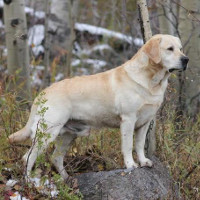
| Despite its name, the Labrador Retriever is not native to Labrador, but is thought to have originated in Newfoundland. Most agree that its ancestor is the St. John's Water Dog, an extinct Newfoundland breed anecdotally more at home in the water than on land. Historically, the Labrador Retriever was used to hunt on both dry and wet land, making it a favorite of local fishermen. Of course, many still use the Labrador Retriever for this purpose today, although the breed has developed into a multitude of other disciplines. Labrador Retrievers can be seen as therapy dogs, guide dogs for the blind and even drug detectors at airports and ferry terminals. In fact, the Labrador Retriever is such a successful breed that it now features in the top ten list of popular dogs in many countries around the world. | ||
 |
||
| Standard of the Labrador Retriever | ||
A little of the Bernese Mountain Dog |
||
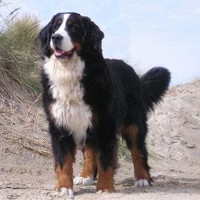
| The Bernese Mountain Dog, affectionately known as the Berner, has been used as a guard dog and herding dog for over 2,000 years in the Swiss Alps. Their ancestry is likely to include the Molosser, a Mastiff-style dog that the Romans brought with them in the first century BC. Bernese Mountain Dogs arrived in England and America shortly after the First World War. The Bernese Mountain Dog Club of America was founded in 1968, while the Bernese Mountain Club of America became a member of the American Kennel Club in 1981. | ||
 |
||
| Standard of the Bernese Mountain Dog |
Appearance of the Labernese |
| The Labernese is a mix of pure-bred Labrador Retriever and Bernese Mountain Dog. They are large or giant-sized dogs weighing up to 50 kilos, with an average height of 71 centimeters. Common colors are black, yellow, white and chocolate. They can be plain or two-tone. Their double coat is dense, shaggy and soft. Laberneses will have dark, set, almond-shaped eyes with a friendly, intelligent expression. They have a straight muzzle and soft ears that hang close to the head. These dogs have strong legs and are well built with deep chests. |
Temperament of the Labernese |
| The Labernese is a gentle giant, affectionate, intelligent and eager to please. They love nothing more than to be with their family and, if left to their own devices for any length of time, will be distressed by separation, which could lead to destructive behavior. They're big, well-built dogs, but have a lot of energy, so daily exercise is needed to burn that off. They are patient, good-humored dogs and very good with children. Because they are big dogs, small children should be supervised and taught to respect them. They are also friendly with other pets. Laberneses are good watchdogs and will alert their owners to any intruders, but their friendly nature means they are unlikely to become aggressive. The breed is easy to train and will respond best to positive reinforcement, like most dogs. They are well suited to new owners, but need a firm, confident hand. |
Needs and activities of the Labernese |
| A Labernese is a high-energy dog that needs daily exercise, which can include long walks and hikes. They love to swim, so going to the beach is a good idea, and they'll love playing with balls and frisbees. This breed is also excellent for dog sports and will do well in obedience or agility. They do best in cold environments so don't exercise your pet in the heat of the day as a general rule. Laberneses won't do well in an apartment as they're too big, but a house with a fenced yard will be ideal. They should get about an hour's exercise a day to keep them happy and content. |
Maintenance of the Labernese |
| Laberneses have a lot of hair to shed, so they need daily brushing to get rid of disheveled hair and avoid tangles. It's not necessary to wash them often, only if they're very dirty, otherwise the skin can dry out. It's best to use a veterinary shampoo and rinse well. The breed is prone to ear infections, so it's important to check the ears often, especially after swimming. Nails should wear naturally with all the exercise they get, but it's a good idea to check just in case. Try to get your dog into the habit of cleaning his teeth every day from an early age to maintain good dental hygiene. |



 English (United Kingdom)

Comments