
 |
Boxweiler |
|
He is not recognized by the F.C.I. |
Origin |
Germany -> Germany | |
Translation |
Francis Vandersteen |
A brief presentation of the Boxweiler |
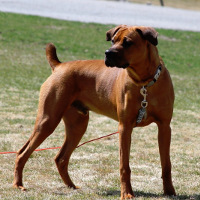
| The Boxweiler is a hybrid of the Boxer and the Rottweiler. There is currently no standard for this mix, and the size and appearance of the dogs may vary according to the more dominant parent breed. Current and potential owners of Boxweilers should examine the characteristics and health problems of the parent breed to become familiar with the inherent characteristics that a Boxweiler may present. The Boxweiler is a large dog and can reach weights of up to 80 kilos. This mix is a good family dog and is bred as a specific crossbreed. Given the sometimes intimidating appearance of this dog, it is sensitive and needs the attention of its family. The Boxweiler also tends to put on weight and will need plenty of exercise. |
History of the Boxweiler |
| The Boxweiler is a hybrid of the Boxer and the Rottweiler. The hybrid is a modern dog with no detailed history, despite the deliberate crossing of the two parent breeds since the 1980s. Being a relatively modern hybrid, bred as a specific crossbreed dog, those interested in understanding the characteristics and potential traits of the Boxweiler will need to look at the parent breeds for a better understanding. Both parent breeds are descendants of the Molossus family, predating the Mastiff lineage, which then developed, and both parent breeds also developed in Germany and surrounding areas. |
A little of the Boxer |
||
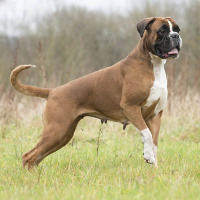
| The Boxer belongs to the Tibetan Mastiff line and was developed mainly in Germany in the 16th century. The Boxer Breed Club was founded in Munich in the 1800s, and it is thought that the Boxer owes its name to the boxer-like way it uses its paws in a fight. The Boxer was first registered in the American Kennel Club in 1904 and today ranks in the top ten in terms of popularity. | ||
 |
||
| Standard of the Boxer | ||
A little of the Rottweiler |
||
| The Rottweiler is part of the Roman Mastiff line of dogs that accompanied the Romans on their northern conquests. Mastiff cattle dogs were bred to herd livestock, which were mobile food resources for invading Roman forces. Roman Mastiffs mated with native dogs and became the foundation of the Rottweiler in Germany. A Roman settlement in Germany was discovered some 600 years after the invading forces had passed through, following the discovery of red tiles on a site, red tiles were used on the roofs of Roman villas. The site became known as Rote Wil, and the cattle breeders of the area were later christened Rottweiler in homage to the region they had developed over those 600 years. Rottweilers continued to thrive in Germany until the 19th century, when they were almost threatened with extinction, but the breed was saved and returned to popularity as a police and guard dog. Today, the Rottweiler is one of the twenty most popular breeds. | ||
 |
||
| Standard of the Rottweiler |
Appearance of the Boxweiler |
| The Boxweiler is a hybrid between the Boxer and the Rottweiler, and can resemble either breed in dominant appearance. It's a large dog, weighing between 60 and 80 kilos, with powerful muscles, and this hybrid can reach up to 100 kilos. The Boxweiler has a square head, no matter which parent its appearance leans towards. However, if the Boxweiler is more like the Boxer, it will have a lean, muscular body as opposed to the stocky, muscular body of the Rottweiler. The Boxweiler has long legs and is proportionate to its size, with a deep chest. The head is broad and square, with a long muzzle and wrinkles due to the thick skin. |
Temperament of the Boxweiler |
| The Boxweiler has a history of hunting, including big game, and may not be well suited to contact with unfamiliar animals. However, with early and appropriate socialization, the Boxweiler can adapt to life with other pets, including cats. The Boxweiler has a lot of energy and requires daily exercise. This hybrid is also intelligent and eager to please. High intelligence makes training easy, but owners must remain firm but fair. The Boxweiler is a sensitive dog and responds much better to positive training methods and food-based reward training. |
Needs and activities of the Boxweiler |
| The Boxweiler is a high-energy hybrid, characteristic of its two parent breeds. Idleness and loneliness in the Boxweiler can lead to behavioral problems. This hybrid therefore needs healthy family interaction and early socialization. The Rottweiler has a reputation for aggression, which can manifest itself in the Boxweiler without proper socialization. However, the Boxer is a much friendlier breed and helps balance aggression. As such, this hybrid makes a good watchdog and is wary of strangers, but does not attack. The Boxweiler is a large dog and suitable for children, provided it is socialized early and appropriately with children. However, strange children can make the Boxweiler cautious, and children must learn to approach the dog and remain patient. The size and temperament of this hybrid do not make it an ideal choice for very small children. |
Maintenance of the Boxweiler |
| The Boxweiler is not a hypoallergenic dog and can shed moderately. Brushing and grooming every other day will help remove dead and loose hairs and keep your Boxweiler's coat healthy. Grooming will also help distribute the skin's natural oils and prevent dermatitis, as well as doggy odors. The Rottweiler has a greater tendency to drool than the Boxer. Your dog's level of drooling will depend on which parent breed your dog most resembles. However, given that many Boxweiler heads resemble Rottweiler heads, you may find drooling more than expected. Frequent nail trimming is also recommended for your Boxweiler. The Boxer breed suffers more frequently from dental and gum problems, which also increases the risk of drooling. |



 English (United Kingdom)

Comments