
 |
Wolamute |
|
He is not recognized by the F.C.I. |
Origin |
Europe <> U.S.A. -> U.S.A. | |
Translation |
Francis Vandersteen |
| The possession of this animal is not authorized |
A brief presentation of the Wolamute |
| The Wolamute is not a pure-bred dog. It's a cross between the timber wolf, also known as the gray wolf, and the Alaskan malamute. The best way to determine the temperament of a mixed breed is to research all the breeds in the cross and know that you can get any combination of all the characteristics found in either breed. Anyone who owns a wolf hybrid should take the time to learn the animal's natural instincts and behavior. Not all designer hybrid dogs that are bred are 50% purebred and 50% purebred. Breeders frequently use multigenerational crosses. |
History of the Wolamute |
| It's not an exact science, but we can make a few predictions about the Wolamute based on its parent species. A Wolamute's height should be between 56 and 91 centimeters, and its weight between 32 and 81.5 kilos. Both of the Wolamute's parents' coat colors feature light and dark gray markings, sometimes mixed with black and white. This cross-breed has pointed ears, a narrow, medium-length muzzle and a thick, long-haired coat. The most common health problem in Wolamutes should be cataracts, as in Alaskan Malamutes and purebred wolves. Wolamutes should have a lifespan of 10 to 12 years. No one really knows how long wolves can live in captivity. |
A little of the Gray Wolf |
||
| The Wolfdog is defined as a canid resulting from a cross between a domestic dog and one of these four Wolf species: - The Gray Wolf - The Eastern timber Wolf - The Red Wolf - The Ethiopian Wolf. There are only two wolfdog breeds recognized by the Fédération Cynologique Internationale, the world's largest canine club: the Czechoslovakian Wolfdog and the Saarloos Wolfdog. | ||
 |
||
| Standard of the Gray Wolf |
A little of the Alaskan Malamute |
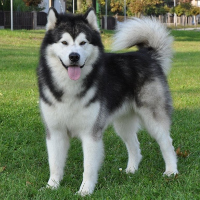
| The Alaskan Malamute is often confused with the Alaskan Husky or the Siberian Husky due to their similar workgroup functions and color markings. The oldest breed of sled dog, the Alaskan Malamute has a deep chest and a strong, well-muscled body, designed for pushing and pulling humans over ice. A purebred dog comes in just one coat variation: white and gray with black shading on the back. Their thick fur is always dense and long to protect them from the cold. An adult Alaskan Malamute reaches a height of 56 to 66 centimeters and a weight of 32 to 43 kilos. It is considered a large breed. In terms of disease, Alaskan Malamutes are prone to elbow dysplasia, knee problems and osteochondritis (inflammation of the joints or bones). The biggest medical problem to worry about is cataracts, a serious eye problem that can lead to blindness if left untreated. The life expectancy of an Alaskan Malamute is 10 to 12 years. |
 |
| Standard of the Alaskan Malamute |
Appearance of the Wolamute |
| It can be extremely difficult to distinguish Wolfhounds from real wolves, as they are similar in appearance and genetics. The only way to tell is by phenotyping, a method that involves observing the animal's physical traits. The Wolf's pointed ears and light and dark grey markings are almost always passed on to Wolfdogs. An adult wolf weighs between 23 and 81.5 kilos and measures between 61 and 91 centimetres. In the wild, a Wolf lives only 6 to 8 years. It's a case of eat or be eaten. Not to mention the fact that wolves are susceptible to over 100 diseases and parasites, including roundworm, tapeworm and cataracts like the Alaskan Malamute. |
Temperament of the Wolamute |
| It's difficult to pinpoint the Wolamute's behavioral traits. In fact, each wolfhound's temperament varies according to how much of each parent's characteristics it inherits. In addition, the environment in which the dog is raised contributes to shaping its behavior. If you want a well-balanced pet, make sure you socialize it from an early age. Due to its killer instinct inherited from its wolf ancestry, the Wolamute has a very strong propensity for hunting. It will chase small domestic animals and may run over small children. However, this dog can be quite friendly and affectionate towards its masters. But it will not show the same affection to a stranger. Although wary of strangers, the Wolamute can be very friendly and affectionate towards family members. And since they shouldn't be left alone for too long, having a large family can help. However, the dog will only thrive in an active family. In general, wolfhounds need plenty of physical and mental exercise to stay healthy and happy. If you don't offer him enough stimulation, he'll get angry by digging, chewing and adopting similar destructive behaviors. |
Needs and activities of the Wolamute |
| A Wolamute needs plenty of exercise and high-energy activities to stimulate his body and mind. Otherwise, he'll redirect that energy elsewhere by engaging in destructive behavior. For example, he may climb fences, dig dens and chew up your home's valuables. This dog prefers vigorous exercise. Therefore, he prefers to pull and push heavy objects rather than run aimlessly around the dog park. A Wolamute also enjoys hiking and could benefit from participation in agility classes. The type of exercise a Wolamute requires requires a lot of space. So it may not work out between the two of you if you live in an apartment building. Ideally, your home should have a large fenced-in yard all around to prevent the dog from wandering off. This wolfhound is one of the most intelligent breeds of dog, and responds well to training. However, the territorial instincts and aggression characteristic of its wolf ancestry can sometimes get in the way. You need to be firm and consistent to tame this undesirable behavior. It can also help to socialize the dog from an early age. A Wolamute sees himself as a pack leader, especially if he's not trained from an early age. If you want him to follow your commands, you have to take charge. You need strong, consistent leadership. But don't resort to harsh reprimands; they'll respond better to treats and rewards. |
Maintenance of the Wolamute |
| The canine's thick, weather-resistant coat requires only moderate grooming. Brushing once a week is enough to maintain its natural shine. However, you may need to brush more often during shedding seasons. Regular bathing is not necessary. Excessive bathing robs the body of its natural oils. But don't forget to brush his teeth regularly and clean his ears to remove any wax build-up. In addition, the sound of their nails on the hard floor should remind you to trim their long claws. Wolfdogs have a reputation for being healthy and robust. Nevertheless, wolfhounds are just as susceptible to health problems as other breeds. Common health problems include arthritis, bone cancer, elbow dysplasia and hip dysplasia. Buying from a reputable breeder is the surest way to ensure you get a healthy puppy that will live as long as nature allows. In fact, the breeder will examine the puppy for any underlying health problems and vaccinate him against rabies and similar canine diseases. |



 English (United Kingdom)

Comments