
 |
Weston |
|
He is not recognized by the F.C.I. |
Origin |
Scotland <> Madagascar -> U.S.A. | |
Translation |
Francis Vandersteen |
A brief presentation of the Weston |
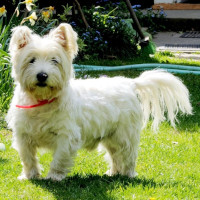
| Westons are light, miniature companions that are very family-oriented and easy to get along with. These dogs love to mix and mingle with others, and make excellent companions because of their surprisingly rapid rate of socialization. The Weston is a cross between a West Highland White Terrier and a Coton de Tulear (Cotie), and as such may possess inherent hypoallergenic qualities. The Weston also prides itself on being a non-aggressive dog, unlikely to cause problems with other dogs or humans. These toy-like Terriers just want to find a family to love, and spread their wings as social butterflies and lovable companions. |
History of the Weston |
| Westons, like many designer dog breeds, are relatively new dogs, so they don't have much of a history. But many of their personality traits and mannerisms can be gleaned by examining the well-known and well-documented past of their Westie and Cotie parents. The Westons are comparatively less well-known and less popular than either of their parents, but the Weston is an emerging hybrid with tons of energy and a big heart. |
A little of the West Highland White Terrier |
||
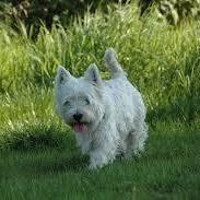
| The West Highland White Terrier originated in 17th-century Scotland, where it was bred to be an excellent vermin hunter and to help hunt badgers and foxes. Westons, because of their non-aggressive nature, are not renowned for their hunting prowess, despite the Westie blood that runs through their veins, but the Weston has retained the same level of intelligence that helped its West Highland White Terrier ancestors in their hunts. The Weston's behavior and attitude more closely resemble those of its Coton de Tulear ancestors, an equally intelligent breed that also displays less aggressive tendencies. | ||
 |
||
| Standard of the West Highland White Terrier |
A little of the Coton de Tuléar |
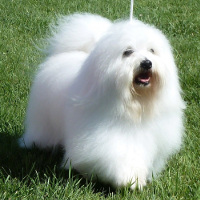
| The history of the Coton de Tuléar is far more mysterious and ambiguous than that of the West Highland White Terrier, as the Coton de Tuléar was discovered on the island of Madagascar many centuries ago. In many ways, we still wonder how the Coton de Tuléar ended up on the island, as its physical features and temperament clearly indicated that it was not native to the African island. Coton de Tuléar became highly prized for their gentle, easy-going nature once they were brought inland, and they have since passed these traits on to their Weston offspring over the last few decades. |
 |
| Standard of the Coton de Tuléar |
Appearance of the Weston |
| Westons are small dogs with the floppy ears and longer coat of a Coton de Tulear attached to a light, slender frame inherited from the West Highland White Terrier. The Weston's coat comes in a true assortment of earthy colors such as brown, black and cream, while potentially retaining the white pigmentation for which its Westie parents are known. The Weston has two friendly, fluffy eyes hidden beneath flaps of fur, giving it an endearing, playful appearance. The Weston may have physical characteristics that favor one of its parents over the other, such as an even shorter coat more like that of the West Highland White Terrier, or a bushier tail that would bring it closer to its Cotie parent, but the Weston will always have a compact, cute appearance. |
Temperament of the Weston |
| The Weston is a very easy-going dog that gets on very well with children and other dogs. Westons are very sociable, well-behaved creatures with no particularly aggressive personality traits or attitudes. This is not to say that Westons should be considered lethargic creatures, as they are still very energetic dogs, just like their Westie relatives. The Weston has the particularity of being able to channel its energy more appropriately than most other breeds. The Weston's innate sense of discernment probably stems from its high intelligence, which helps it to remain calm and even-tempered in the presence of other dogs and children. As intelligent as they are, Westons should not be left alone too often, as they are sociable by nature. Although Westons are able to cope a little better than many other breeds when left to their own devices, it is strongly advised not to get into the habit of leaving these intelligent, friendly dogs alone. |
Needs and activities of the Weston |
| Like its Westie and Cotie relatives, the Weston needs moderate physical activity to stay healthy and burn off excess energy. As already mentioned, Westons are not particularly aggressive or overtly energetic breeds. So you won't need to run a triathlon with a Weston for this breed to get some exercise. Around 30 minutes of daily physical activity will suffice in the case of the Weston, helping to make this breed ideal for any potential owner with a busy schedule and very little free time. Westons love to run and play whenever they get the chance. It would therefore be prudent for potential owners to ensure that the Weston's weekly regimen includes at least 10 km of walking. |
Maintenance of the Weston |
| Westons have long, straight coats that need daily brushing to keep them smooth and healthy. Westons don't shed much despite their length, but their coat does need to be detangled from time to time. A pincushion brush will keep the Weston's coat healthy and untangled, and keeping your dog's nails trimmed will reduce the amount of scratches and abrasions the Weston could cause. However, if you're not particularly skilled or comfortable trimming your Weston's nails, don't try to do it yourself. Very sensitive nerves run through the nails of all dogs, and an untrained hand could end up causing your Weston a lot of pain and misery during an impromptu nail-cutting session, so seek professional help if you're unable to trim your Weston's nails without risk of injury. |



 English (United Kingdom)

Comments