
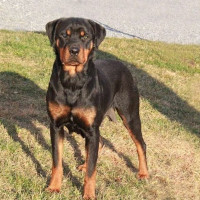
 |
Weiler Dane |
|
He is not recognized by the F.C.I. |
Origin |
Germany -> U.S.A. | |
Translation |
Francis Vandersteen |
A brief presentation of the Weiler Dane |
| The Weiler Dane is a hybrid dog of mixed conception. Its parents are the Rottweiler and the Great Dane. His personality shines through as a combination of the natures of both dogs. He is protective and gentle. This giant lumberjack is extremely loyal and maintains close ties with his family. He normally remains aloof with strangers. His size is intimidating for most people. He's very tall, and it's not unusual for him to reach 84 centimetres at the shoulders. His body is extremely muscular and he weighs between 66 and 79 kilos. Its only drawback is that it can be stubborn and have a mind of its own. Although large, its gentle temperament means it can live happily in a small home, provided it gets enough exercise. |
History of the Weiler Dane |
| The Weiler Dane has inherited traits from both of its parents' unique bloodlines. The Weiler Dane possesses many of the noble characteristics of its parent breeds, to create an ideal mixed breed. |
A little of the Rottweiler |
||
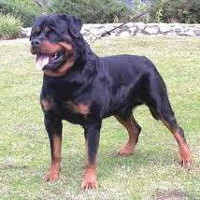
| The Rottweiler is a noble guardian. He was once a herding dog. He was responsible for the safety of the herd and took this responsibility very seriously. The Rottie is thought to be an ancient breed, dating back to the days of the Roman Empire. When the Roman army crossed the Swiss Alps into Germany, they brought the Rottweiler with them. The dogs quickly gained popularity as cattle drovers. They became known as Rottweiler Metzgerhunds, which translates as meat dogs. During the 19th century, cattle breeding declined and the breed suffered. By the 1880s, the breed had become rare. When the First World War broke out, the breed regained its popularity as a police and war dog. In 1931, the Rottweiler was recognized by the American Kennel Club and enrolled in the working group. | ||
 |
||
| Standard of the Rottweiler |
A little of the Great Dane |
| The Great Dane's origins date back to 3,000 B.C. It is thought to have originated in Egypt. The Assyrians spread the breed around the world during their travels. The Romans and Greeks also took an interest in these dogs and began breeding them. Their popularity spread throughout Europe, and they were often called boar hounds as they were used to hunt wild boar. In 1700, Denmark's large lumberjacks began to be called Great Danes. In 1889, the Great Dane was officially recognized by the American Kennel Club and entered into the working group. |
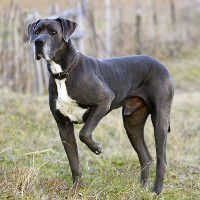 |
| Standard of the Great Dane |
Appearance of the Weiler Dane |
| The Weiler Dane is large and powerful. It has the size of the Great Dane but the muscle mass of the Rottweiler. Their head tends to be huge and massive. They generally have the reddish-brown and black coloring of the Rottweiler, but occasionally appear more brown than black. Unlike the Great Dane, its chest is extremely broad. Its ears are heavy and floppy. Its tail is long and straight, like that of the Great Dane. Its appearance and size are disconcerting to most people. His gait is determined and proud. |
Temperament of the Weiler Dane |
| If you're looking for a loyal companion that looks intimidating but is rarely dangerous, the Weiler Dane is an ideal choice. They are gentle at heart. He adores children and fits perfectly into a family. He can be stubborn, so it's important to start obedience classes when he's young so you can control him, because once he's grown up, he's very muscular and you don't want him dragging you around on a leash. When raised with small animals, he usually ends up getting on well with them. His stubborn personality can make him a challenge to manage, but consistent authority will be welcome. Consistency in training, as well as socialization, are also important if he is to behave well with other dogs. |
Needs and activities of the Weiler Dane |
| Although the Weiler Dane is large and muscular, it doesn't need an excessive amount of exercise. He's generally happy to go for a daily walk. If you like jogging, this is not the dog for you, as he doesn't like to run excessively. Despite his imposing size, he generally gets on well with other animals, so he enjoys a trip to the dog park for a bit of socialization. At home, he tends to be quiet and generally likes to lie down and sleep. This big boy isn't aware of his size, so he'll often try to crawl into bed with you or climb onto the sofa to relax. |
Maintenance of the Weiler Dane |
| The Weiler Dane often has the short coat of the Great Dane or the slightly longer coat of the Rottweiler. They shed moderately. Brush once or twice a week to keep his coat shiny and remove any loose fur. His floppy ears also benefit from weekly cleaning with a cloth to remove earwax or debris. He doesn't really have a dog smell and only needs a bath once a month. Many owners choose to brush their dog's teeth to keep them white and his breath fresh. Brushing every other day also reduces the risk of plaque and gum disease later in life. His nails should generally be trimmed or filed once a month, as his relatively sedentary lifestyle doesn't wear them down easily. |



 English (United Kingdom)

Comments