
 |
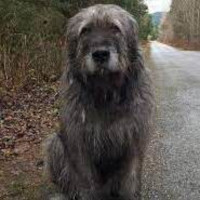
Tibetan Wolfhound |
|
He is not recognized by the F.C.I. |
Origin |
Tibet <> Ireland -> U.S.A. | |
Translation |
Francis Vandersteen |
A brief presentation of the Tibetan Wolfhound |
| The Tibetan Wolfhound is a hybrid dog. Its parent breeds are the Tibetan Mastiff and the Irish Wolfhound. It's a giant-sized dog and, unfortunately, this breed is not recommended for novice dog owners. It's best suited to a home with a large yard, with or without a fenced-in area. A lot of patience and perseverance will be needed to train this hybrid breed. He sheds seasonally and will require moderate maintenance. Despite its size, it is good with children. He has a reputation for being affectionate and playful, especially with children. They are also moderately active. |
History of the Tibetan Wolfhound |
| The Tibetan Wolfhound is a rare hybrid breed. For this reason, we need to study parent breeds to find out the origins of the hybrid. |
A little of the Tibetan Mastiff |
||
| The Tibetan Mastiff has its origins in the Orient. Little is known about the Tibetan Mastiff before the 1800s, although historians believe it existed for several centuries before then. The first written mention of these dogs is in Captain Samual Turner's memoir, An Account of an Embassy to the Court of the Teshoo Lama in Tibet. Even so, Turner didn't describe the Mastiff as anything other than a large dog during his visit. In 1847, Queen Victoria was presented with a large Tibetan dog. In 1873, the Tibetan Mastiff was imported to England, and people began showing the dog. In 1931, the Tibetan Mastiff Breed Club was founded. In the 1950s, two Tibetan Mastiffs were presented to the sitting American president. This pair was taken to a farm; no one knows exactly what happened to them. In the 1970s, another pair was imported to the USA. In 2007, the Tibetan Mastiff was finally recognized by the American Kennel Club. | ||
 |
||
| Standard of the Tibetan Mastiff |
A little of the Irish Wolfhound |
| The Irish Wolfhound was a great war dog, prized by royal courts for its size and prowess on the battlefield. The Irish Wolfhound was present in many royal courts and, at one time, the law stipulated that only royalty could legally own an Irish Wolfhound. Irish Wolfhounds were often given as gifts by one royal family to another. They were used for hunting, especially wild boar. However, in Roman times, the Irish Wolfhound was trained to pull men from their chariots or from the backs of their horses. In the 18th century, the Irish Wolfhound almost became extinct. However, breeders introduced Scottish Deerhounds, a Pyrenean Wolfhound and possibly Great Danes into the lineage, giving rise to the Irish Wolfhound we know today. |
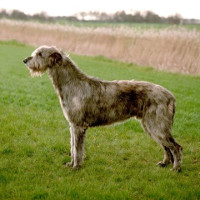 |
| Standard of the Irish Wolfhound |
Appearance of the Tibetan Wolfhound |
| The Tibetan Wolfhound is a very large dog; in fact, it falls into the giant category. They can weigh up to 91 kilos when fully grown. Their bone structure is described as solid and robust. He'll probably stand almost a metre tall at the shoulders. He usually has a ruff of fur around his neck. It may be black with reddish-brown markings. It can also be red all over its body. He may be gray with tan markings, like the Irish Wolfhound. His ears are likely to be floppy; if so, you'll need to pay close attention to this area. His tail is likely to be short and may curl over his back. It may also be feathered. Its coat is likely to be hard and thick. It may also have a dense undercoat. |
Temperament of the Tibetan Wolfhound |
| The Tibetan Wolfhound is a gentle giant. He is kind to all family members, but especially to children. He's not usually aggressive, but early and proper socialization is the key to a well-behaved dog. Well socialized, he gets on well with other dogs. However, he can be aloof with strangers. He doesn't like to spend much time alone, and separation anxiety can become a problem if you're away for long periods. Not recommended for first-time dog owners. He needs discipline and a firm leader; he tends to take over the pack if his master doesn't show leadership qualities. An obedience school or puppy kindergarten may be a good idea for the Tibetan Wolfhound. He doesn't adapt very well to a variety of situations. He is very intelligent and can be somewhat stubborn. It also has a tendency to wander if not placed in a fenced-in area. |
Needs and activities of the Tibetan Wolfhound |
| If it lives indoors, and surprisingly even if it's a big dog, the Tibetan Wolfhound can adapt to apartment life, but it needs exercise. The Tibetan Wolfhound is not active indoors; however, its size makes it better suited to a larger apartment. He will need to be walked daily. The Tibetan Wolfhound loves to play and will happily join you outdoors for any activity. He'll enjoy hiking or following you on bike paths. He'll also enjoy outings to the dog park. Again, he tends to put on weight if he's not properly active, so don't take his inactivity indoors as a sign of good health. Offer him toys that stimulate his mind and provide physical activity. |
Maintenance of the Tibetan Wolfhound |
| The Tibetan Wolfhound requires moderate maintenance. Although he doesn't need to be plucked or trimmed, as is the case with many thick-coated breeds like his, he will need daily brushing to keep his coat clean and healthy. Don't forget that the Tibetan Wolfhound, like many other large dogs, will need to get used to a grooming routine. He can be quite sensitive to touch, and it's highly recommended to get him used to a grooming regime from an early age. Brush his teeth two or three times a week to prevent bad breath and tartar build-up. However, if you want to prevent tooth decay, brush his teeth every day. Cut his nails every two or three weeks, unless he wears them out on his own. |



 English (United Kingdom)

Comments