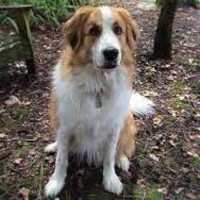
 |
Swissneese |
|
He is not recognized by the F.C.I. |
Origin |
Switzerland <> France -> U.S.A. | |
Translation |
Francis Vandersteen |
A brief presentation of the Swissneese |
| The Swissneese is a magnificent mix of Great Swiss Mountain Dog and Pyrenean Mountain Dog. Both breeds are considered giant dogs, so your Swissneese will be giant too. However, they are extremely laid-back, calm dogs with gentle temperaments that make wonderful pets for anyone with lots of space. They are not ideal for small houses or apartments because of their size, and are best kept in a home with a large garden where they can run around off-leash. They need a lot of grooming because of their long, thick, double coat, but it's worth it in the long run to have such a beautiful, loyal pet. |
History of the Swissneese |
| To learn about the history of the Swissneese, you need to look at the history of the Great Swiss Mountain Dog and the Pyrenean Mountain Dog. |
A little of the Great Swiss Mountain Dog |
||
| The Great Swiss Mountain Dog originated in Switzerland 2,000 years ago. It was bred from the Roman Mastiff for draft work, guarding and herding, but is also used for tracking, carting and obedience and agility trials. These dogs are thought to have been brought to the Alps by the Roman army. The breed was entered in the Swiss Herd Book in 1990 and recognized by the American Kennel Club five years later, where it ranks 78th among the most widespread dog breeds. | ||
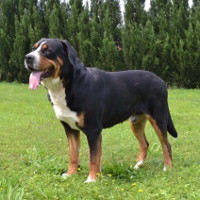 |
||
| Standard of the Great Swiss Mountain Dog |
A little of the Pyrenean Mountain Dog |
| The Pyrenean Mountain Dog is an ancient Asian dog that originated around 10,000 BC from the combination of the Maremmano-Abruzzese and Hungarian Kuvasz breeds to create the perfect sheep guardian and watchdog. They owe their name to the Pyrenean mountains, where they were first discovered. In the late 17th century, the breed was named chien royal de France by the court of King Louis XIV, and France's royal families used them as guard dogs. In the 19th century, Pyrenean Mountain Dogs arrived in England, Europe and America, where they immediately became popular due to their beauty and affectionate temperament. In 1933, the breed was also recognized by the American Kennel Club, and the Great Pyrenees Club of America was founded in 1935. They are the 67th most popular dog breed in the United States. |
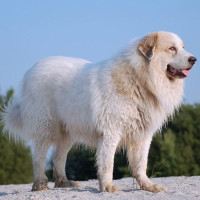 |
| Standard of the Pyrenean Mountain Dog |
Appearance of the Swissneese |
| The Swissneese is a giant breed weighing between 45 and 59 kilos and measuring between 63.5 and 76 centimeters. It has a thick, wavy coat, usually very fluffy, which can be long or medium, as the Pyrenean Mountain Dog has a long coat and the Great Swiss Mountain Dog a short coat. The color can be all white, cream or tricolor (black, brown and white) like the Great Swiss Mountain Dog. It has drooping, pendulous ears, large brown eyes and a black nose on a rounded muzzle. Its long, thick legs are straight and muscular with huge paws, and it has a long tail that can hang down or stand up. |
Temperament of the Swissneese |
| Because of its size, this dog is a good watchdog, but it is friendly and affectionate, so it needs to be trained to protect if that's what you want. Otherwise, the Swissneese is an excellent pet for any family, and even enjoys playing with children and other animals. You'll need to use strict, consistent discipline when training him, as he can be a bit stubborn. However, be sure to use positive reinforcement, otherwise he may become temperamental or even aggressive. Some may like to chase cats and other small animals, so you need to train your dog if you don't want him to do this. |
Needs and activities of the Swissneese |
| The Swissneese is a large dog that needs lots of room to play. So it's best if you have a large fenced-in area for him to play in. However, these dogs can jump high and, because of this ability, your fence will need to be at least 1.80 m high. They need about 45 minutes to an hour of constant activity every day. Let him play in the yard for about an hour or more when you let him out. However, he'll want company and, as with all dogs, it's best not to leave him outside alone. You can also take your dog for a walk around the neighborhood, go to your favorite dog park or take him to play at the beach. This hybrid can appreciate an activity that involves work. Enroll him in obedience classes and even give him the chance to take part in an obedience trial or two. |
Maintenance of the Swissneese |
| Your Swissneese needs a lot of grooming. You'll need to brush him thoroughly, using a plucking tool, a sturdy metal comb and a pin brush. Plan to spend at least 30 minutes a day brushing your dog. He sheds a lot, which means you'll probably need to brush him more during the moulting season. The hair on your dog's face, paws and ears is often trimmed, as it grows faster in these areas and can become a nuisance to eyes, ears and when walking. You should also clean your dog's ears and trim his nails once or twice a month. Teeth also need to be cared for, and brushing at least 3-4 times a week is highly recommended. |



 English (United Kingdom)

Comments