 |
Spantriever |
|
He is not recognized by the F.C.I. |
Origin |
Great Britain <> Canada -> U.S.A. | |
Translation |
Francis Vandersteen |
A brief presentation of the Spantriever |
| The Spantriever is a hybrid dog. Its parent breeds are the English Cocker Spaniel and the Labrador Retriever. The Spantriever is a medium-sized dog. Its coat is generally of medium length, and it may have a few feathers on its ears, feet and tail. Affectionate and loyal, they are an asset to any household. He gets on well with all family members, especially children. He's happy in an apartment or house with a garden. However, he can get into mischief if left unsupervised outside, so it's essential to provide a fenced-in area for him to play. The Spantriever is an affectionate and friendly companion for any family. |
History of the Spantriever |
| The Spantriever is a hybrid dog; as such, little is known about its history. We must therefore study the origins of its parent breeds to understand the history of the Spantriever. |
A little of the English Cocker Spaniel |
||
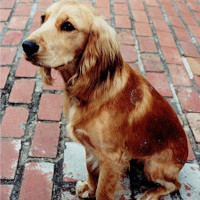
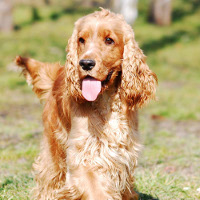
| The modern Cocker Spaniel is a descendant of the ancient Spaniel family. The dog is thought to have originated in Spain, which would explain why it's called a Spaniel. The English Cocker Spaniel and Springer Spaniel were closely related, and the smaller of the two was considered the Cocker because of its excellence at hunting woodcock. In the late 1870s, Americans began introducing the Cocker Spaniel to the United States. Eventually, this dog was bred to be smaller in size, with certain restrictions in breeding guidelines. The English Cocker Spaniel is popular throughout the United States. | ||
 |
||
| Standard of the English Cocker Spaniel |
A little of the Labrador Retriever |
| The Labrador Retriever originated in Newfoundland, Canada. Originally, the Labrador Retriever was called the St. John's Dog after the capital of Newfoundland. In the 1700s, the Labrador Retriever helped fishermen retrieve fish that escaped from hooks and towing cables. Experts believe that the St. John's dog was a mix of the Newfoundland dog and local water dogs. Around 1830, the third Earl of Malmesbury imported several St. John's dogs to England. The Earl coined the term Labrador Retriever, and the name stuck. In the 1880s, the breed almost became extinct. The Malmesbury family dedicated themselves to preventing the breed's demise. The breed developed in England. The American Kennel Club recognized the breed in 1917. Today, Labrador Retrievers work in search and rescue, as therapy dogs and in drug detection missions. Hunters also continue to make use of the Labrador Retriever's hunting prowess. It is currently one of the most popular dog breeds in America. |
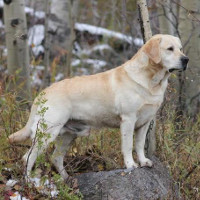 |
| Standard of the Labrador Retriever |
Appearance of the Spantriever |
| The Spantriever is a medium to large dog. At maturity, it will weigh around 22.5 kilos. It is likely to have a double coat with medium-length hair, although it can be as long as that of the English Cocker Spaniel parent. Coloration will largely depend on the dominant parental breed. It can be cream, red, black, fawn or gray. It may even be white or multicolored. He'll have floppy ears, which need special attention. He'll probably have feathers on his feet and legs. Feathers may also appear on the belly and tail. His tail is likely to be long and may curve slightly at the tip. It will be well muscled all over. It may also have webbed feet, depending on whether it inherited this trait from its Labrador Retriever parent. |
Temperament of the Spantriever |
| The Spantriever is a very intelligent and loyal dog. He's energetic and can get into mischief if he doesn't get enough activity during the day. They get on very well with all members of the family, but especially with children of all ages. He's easy to train, and potty training is no problem for the Spantriever. He's affectionate and lively. He never meets strangers and can easily make friends with humans and other dogs. He'll also get along with other types of pets, provided he's properly socialized. Don't forget that he's a hunter at heart. He may tend to wander if you let him out without a leash or place him in an enclosed area. |
Needs and activities of the Spantriever |
| The Spantriever is a rather active dog. It will need mental stimulation as well as physical activity. Provide him with toys that he can chew and that will provide mental activity. Allow him sufficient physical activity too. He'll love walking around the neighborhood with you; however, you should always make sure to keep him on a leash, unless you're in a fenced-in area. Speaking of a fenced-in area, make sure that the fence is at least 1.80 m high and that a good part of the board is buried so that he doesn't dig out of the enclosed area. Trips to the dog park are not a good idea, unless your Spantriever is very well trained. He has a tendency to run away if he's not on a leash. However, if he's very attentive to his master's wishes, he'll stay by your side, unless you allow him to do otherwise. |
Maintenance of the Spantriever |
| Spantrievers can be very high-maintenance dogs, but this will depend on the type of coat they inherit from their parents. In this case, we'll assume he's acquired the double coat of the Labrador Retriever and the longhair of the English Cocker Spaniel. In this case, he should be brushed daily. Special care should be taken with the Spantriever's undercoat. Some owners may choose to shear the long hair that may accompany the Spantriever. In this case, daily brushing is still required. Give him a bath once a month to keep his hair clean. Brush his teeth every other day to prevent tartar build-up and bad breath. Brush his teeth daily to prevent tooth decay. Trim his nails every two weeks, unless he wears them out naturally. |



 English (United Kingdom)

Comments