
 |
Spanierd |
|
He is not recognized by the F.C.I. |
Origin |
Great Britain <> Germany -> U.S.A. | |
Translation |
Francis Vandersteen |
A brief presentation of the Spanierd |
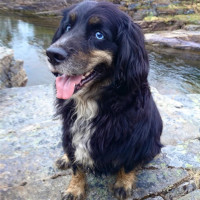
| The Spanierd is a hybrid dog. Its parent breeds are the English Springer Spaniel and the German Shepherd. They have an affable personality. He's known for entertaining family and friends with his antics. He's a friendly dog, and is known to be good with children of all ages. He also gets on well with other pets. He will probably have a long coat that requires a moderate amount of grooming. He's easy to train, but training should start as soon as possible. An obedience school could be an option. He'll also need plenty of exercise to stay healthy. |
History of the Spanierd |
| The Spanierd is a hybrid dog. While not necessarily a rare hybrid dog, there isn't much information regarding the hybrid's origins. However, by studying the history of related breeds, we can learn more about the Spanierd. |
A little of the English Springer Spaniel |
||
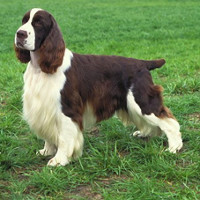
| The Spaniel's ancestor is thought to have originated in Spain, hence its name, and was brought to other parts of Europe by trading ships. The first Spaniel was mentioned in Welsh artefacts almost 2,000 years ago. Before the invention of the rifle, the Spaniel was used to flush out birds and other small animals. Once rifles came into general use, the Spaniel continued to flush out game in the open air. The English Springer Spaniel was named for its hunting method. The first English Springer Spaniel arrived in North America via Canada. The breeder imported the first English Springer Spaniel to America in 1913. In 1923, the first English Springer Spaniel was registered by the American Kennel Club. | ||
 |
||
| Standard of the English Springer Spaniel |
A little of the German Shepherd |
| In Germany, Captain Stephanitz strove to produce a sensitive, obedient and handsome working dog, in particular a sheepdog, by crossing local farm dogs. In April 1899, Captain Stephanitz registered his dog Horan as the first German Shepherd. It was billed as a working dog for sheep guarding, but as sheep guarding had gone out of fashion, Stephanitz eventually presented his dogs to the German army, who gladly trained the breed for military and police work. Eventually, the German Shepherd was introduced to the United States by Allied soldiers returning home after World War II. The German Shepherd was used in the movie Rin-Tin-Tin, contributing to its popularity in America. |
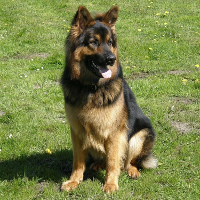 |
| Standard of the German Shepherd |
Appearance of the Spanierd |
| The Spanierd is a large dog. It will weigh around 22.5 kilos as an adult. Depending on the breed of the dominant parent, it may be slightly larger. He is likely to be black with some white markings. They may also be brindle or gray. It may also be black with some tan markings. It also depends on the breed of the dominant parent. He's likely to have long, floppy ears. If so, the ears will need a little extra care. He's likely to have a long coat, and may have a thick, double coat like the parent breed of the German Shepherd. The tail is long and may curl at the tip. It may also be feathered. |
Temperament of the Spanierd |
| The Spanierd is a gentle, funny and affectionate dog. He loves to chew, so you'll need to provide him with toys that allow him to exercise without damaging your furniture or shoes. He gets on well with all members of the family, but is particularly wonderful with children of all ages. In fact, he's quite protective of them. He can also be somewhat aloof with strangers, until he realizes that they present no danger to his family. He can sometimes be a clown, and your visitors will certainly appreciate his antics, as will you. He's also good with other dogs and animals, but early socialization will help your Spanierd learn what's expected of him. |
Needs and activities of the Spanierd |
| The Spanierd needs at least 90 minutes of activity a day to stay happy and healthy. He'll enjoy walks around the neighborhood with you, but he'll also happily accompany you on hikes or run alongside you on his bike. He'll also enjoy the dog park; however, it's advisable to complete obedience training before exposing him to unlimited opportunities at the dog park. He'll also love spending time in the yard, whether fenced or unfenced. However, he must be supervised. Remember, he belongs indoors with his family, not tied up outside or left to fend for himself. |
Maintenance of the Spanierd |
| The Spanierd will probably have two problems requiring special care: long hair and floppy ears. He'll need daily brushing. Be sure to comb out the thick, dense undercoat he's likely to inherit. You'll need to wipe his ears weekly with a damp cotton pad. Make sure there's no redness or strange smell, as these are signs of an ear infection. Brush his teeth two or three times a week to prevent tartar build-up and bad breath. Brush daily to prevent tooth decay. Trim his nails every two weeks, unless he wears them down naturally. If you hear his nails clicking on a tile or granite floor, it's time to trim them. |



 English (United Kingdom)

Comments