
 |
Silky-Lhasa |
|
He is not recognized by the F.C.I. |
Origin |
Australia <> Tibet -> U.S.A. | |
Translation |
Francis Vandersteen |
A brief presentation of the Silky-Lhasa |
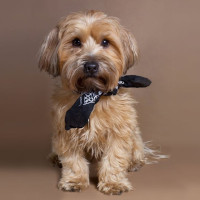
| A Silky-Lhasa is a combination of the Lhassa Apso breed and the Australian Silky Terrier breed. As both are toy breeds, your Silky-Lhasa should measure no more than 30 centimeters and weigh around 6 kg as an adult. This breed has a long, silky coat that can be blond, chocolate, black, orange, brown and cream, sable, brindle, pied, red, silver or blue. This breed is a good choice for a family pet, but is best suited to a home without young children. However, they do enjoy playing with older children and other pets, provided they are trained and socialized early and correctly. |
History of the Silky-Lhasa |
| As the Silky-Lhasa is a new breed, it is necessary to use the history of the Lhassa Apso and the Australian Silky Terrier. |
A little of the Australian Silky Terrier |
||
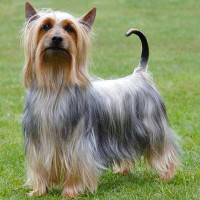
| The Australian Silky Terrier was born in the 1800s from the combination of the Yorkshire Terrier and the Australian Terrier to make a wonderful pet. In the early 1900s, the Australian Silky Terrier was recognized as a breed in Victoria and New South Wales. Soldiers returning to America after World War II brought some of these adorable furry dogs with them, and they became very popular. They are also known for their bravery and, in 1996, a Silky Terrier was awarded Australia's Purple Cross of Bravery for protecting his 9-year-old owner from a venomous snake. The breed was recognized by the American Kennel Club in 1959 and ranks 100th among America's most popular dog breeds. | ||
 |
||
| Standard of the Australian Silky Terrier |
A little of the Lhassa Apso |
| The Tibetan Lhassa Apso was bred to guard monasteries and temples in the Tibetan mountains thousands of years ago. It was Buddhist monks who developed the Lhassa Apso to perfection from the Tibetan Terrier and perhaps a variety of mountain wolf. They were specially chosen for their excellent judgment of character, superior hearing and ability to withstand the cold of the Tibetan mountains. Because of their superior talents, they were protected by the monks from outside interference and were never sold to commoners. However, some Dalai Lamas have offered a few of these little dignitaries to royal visitors. These gifted dogs are thought to have contributed to other small breeds that appeared at this time, such as the Shih Tzu. In fact, the two breeds were often confused until the Lhassa Apso Foundation was founded in the USA in 1933. Two years later, the Lhassa Apso was recognized by the American Kennel Club and is now the 71st most common dog breed in America. |
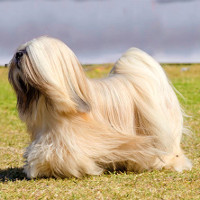 |
| Standard of the Lhassa Apso |
Appearance of the Silky-Lhasa |
| This small dog has a coat full of long, silky hair that looks more like human hair than dog fur. Colors can range from blond to piebald, with just about any color combination in between. The Silky-Lhasa has large, pointed ears that can be pricked or laid back, depending on genes. These dogs are small, weighing around 6 kg and standing no more than 30 centimetres tall. They have compact bodies, short legs and medium-length tails that curl over their backs. They usually have large brown eyes and a black nose on a shortened muzzle that may be brachycephalic. You should therefore have your dog examined for brachycephalic syndrome, which is a serious respiratory disorder. |
Temperament of the Silky-Lhasa |
| Although the Silky-Lhasa loves to play with children and other pets, it's best if it's placed in a home where there are no young children, as it can become nervous and attack them if frightened. They are generally energetic and playful, but also like to lie on your lap or on the sofa. This breed is sometimes wary of strangers and needs to be introduced to your guests and visitors. That's why they make good watchdogs. However, they are somewhat difficult to train and seem to have a somewhat stubborn personality when it comes to housetraining. |
Needs and activities of the Silky-Lhasa |
| The Silky-Lhasa needs a moderate amount of exercise every day to stay in shape and avoid boredom. Ideally, he should be out and about for 45 to 60 minutes a day. Some dogs that don't get enough exercise can develop bad habits, such as barking excessively or chewing things out of boredom. The best physical activities for the Silky-Lhasa are: playing with other dogs at a local dog park, hiking, walking around the neighborhood, swimming, playing ball or Frisbee and running around the garden. This hybrid adapts very well to any living environment, as long as it gets fresh air, exercise and human contact every day. |
Maintenance of the Silky-Lhasa |
| Because of its long, silky coat, the Silky-Lhasa needs to be brushed carefully every day. Their hair is so similar to human hair that it needs to be trimmed and shampooed regularly. They should be groomed using a detangling tool and metal comb, as well as a stiff bristle brush or slicker brush. Loosen knots and tangles with your fingers before brushing to avoid breakage and split ends. Use a conditioning shampoo and cream rinse once a month to prevent your dog's hair from becoming dry and frizzy. Also, clean your dog's teeth once a week and trim his nails with nail clippers to prevent splitting. |



 English (United Kingdom)

Comments