
 |
Silky Jack |
|
He is not recognized by the F.C.I. |
Origin |
Australia <> Great Britain -> U.S.A. | |
Translation |
Francis Vandersteen |
A brief presentation of the Silky Jack |
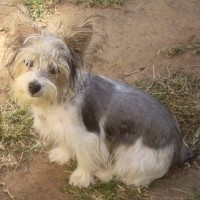
| This little dog with long, silky hair is called the Silky Jack, which is a combination of the Jack Russell Terrier and the Australian Silky Terrier. As both breeds are small dogs, the Silky Jack generally stands no taller than 30 cm and weighs around 7 kilos on average. Their long, straight, silky coat comes in a variety of colors, including cream, chocolate, black, gray and many others. They are easy to train but, as Terriers, they have high energy levels and need frequent exercise to stay healthy. In addition, they need to be brushed and bathed regularly due to their long coats. |
History of the Silky Jack |
| The Silky Jack doesn't yet have a well-known history, as it's a new hybrid, but you can check out the history of the Jack Russell Terrier and the Australian Silky Terrier. |
A little of the Australian Silky Terrier |
||
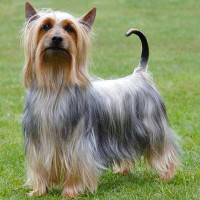
| The Australian Silky Terrier is an Australian dog that was bred in the 1800s from the Yorkshire Terrier and the Australian Terrier to create a good pet. It wasn't recognized as a breed until 1906 in New South Wales, then in Victoria three years later. However, breed standards varied from country to country, and there was no universally accepted breed standard until 1926. Six years later, the Silky Terrier was christened the Sydney Silky, and the Kennel Control Council of Victoria made it illegal to cross Australian Silky Terriers with Yorkshire Terriers. The breed was introduced to America in 1955, when American soldiers returned from World War II, and the Silky Terrier Club of America was founded. The AKC recognized the breed in 1959, ranking it 100th among the most popular breeds. | ||
 |
||
| Standard of the Australian Silky Terrier |
A little of the Jack Russell Terrier |
| The Jack Russell Terrier is an English breed that was created in the 1800s by a reverend named John Russell, who was an avid fox hunter. He bred these dogs to create the perfect breed for foxhunting and water hunting. At the time, they were called Parson Russell Terriers and were bred from different types of Terrier. Eventually, the Parson Russell Terrier was changed to the Jack Russell Terrier in some regions, but was still considered the Parson Russell Terrier in others. In fact, there are two clubs in the USA for this same breed, one called the Jack Russell Terrier Club of America and the other the Parson Russell Terrier Association of the United States. The American Kennel Club actually listed the breed as the Jack Russell Terrier in 1997, but changed the name to Parson Russell Terrier in 2003. It is the 109th most common breed in the United States. |
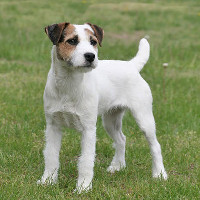 |
| Standard of the Jack Russell Terrier |
Appearance of the Silky Jack |
| The Silky Jack has a coat that matches its name and can come in many color variations such as chocolate and cream; black, white and brown; gray, blue and black; sable and white; blue and silver; red, brindle and white; curd; or any combination of these colors. They are very small, weighing less than 7 kilos and measuring less than 30 centimeters in height. Their bodies are sturdy but short, with small legs, almond-shaped brown eyes and a black nose on a small snout. Its hairy ears can stand up or hang down, and its tail can be short or medium-sized and feathered. |
Temperament of the Silky Jack |
| This affectionate breed can make a wonderful family pet if properly socialized and trained. They are alert and cheerful for the most part, with a loyal heart and fun-loving temperament, but they can be wary of strangers. It's best to introduce them to visitors, as they tend to bark or become defensive if they suspect danger. Silky Jacks are easy to train, provided you set the rules from the outset and remain firm. Be sure to use positive reinforcement rather than physical punishment to avoid aggression. As long as he gets enough exercise and attention, your Silky Jack should have no problem staying at home alone for a few hours a day while you work, but if you're away for longer, you should ask someone to look after your dog. |
Needs and activities of the Silky Jack |
| Silky Jacks need plenty of activity to stay healthy, as they have tons of anxious energy to release. If you have a fenced-in yard, it's great if you can let your dog run around for a few hours a day chasing rabbits and squirrels, but you also need to spend some quality time with him. At least once or twice a day, you should take him for a walk, and you can also take him to play with other dogs at a dog park, to the beach or lake for a swim, or into the woods for a hike. |
Maintenance of the Silky Jack |
| You should be prepared to brush your Silky Jack every day because of its long, soft coat. It has a tendency to tangle or mat, so you'll need to use a pimpled brush and comb, and possibly a detangler. Silky Jacks need to be bathed in a special conditioner to prevent their coats from becoming frizzy and tangled. We recommend bathing him twice a month. You should also trim his nails with nail clippers once a month or as needed, and clean his teeth with a soft toothbrush once a day. |



 English (United Kingdom)

Comments