
 |
Silky Coton |
|
He is not recognized by the F.C.I. |
Origin |
Australia <> Madagascar -> U.S.A. | |
Translation |
Francis Vandersteen |
A brief presentation of the Silky Coton |
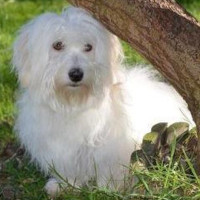
| The Silky Coton is a hybrid breed created by crossing an Australian Silky Terrier and a Coton de Tuléar. These affectionate little dogs are designed to be loving companions and fit perfectly into any home. Weighing just 3.5 to 5 kilos and measuring only 20.5 to 28 centimeters, these compact dogs don't need much space. Their silky coats are easy to care for and come in many colors, including white, gray, red, blue, silver, black and fawn. Both the Australian Silky Terrier and the Coton de Tuléar have been bred as pets, making the Silky Coton an ideal companion animal. |
History of the Silky Coton |
| Like most other hybrid breeds, the history of the Silky Coton is unknown. The breed was probably developed with the aim of creating a compact, affectionate pet. |
A little of the Australian Silky Terrier |
||
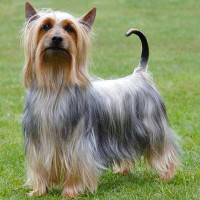
| The Australian Silky Terrier originated in Australia in the 1800s. Although bred as pets, they retain their Terrier instincts and are excellent snake and rat hunters. The breed entered the United States with returning soldiers at the end of the Second World War. In 1959, the Silky Terrier was officially recognized by the American Kennel Club. In 1996, a brave Australian Silky Terrier was awarded the Australian Purple Cross of Bravery for fearlessly diving from a balcony and protecting his nine-year-old owner from a venomous brown snake. | ||
 |
||
| Standard of the Australian Silky Terrier |
A little of the Coton de Tuléar |
| The Coton de Tuléar has a much longer history, having been discovered in Madagascar in the 1600s. Legend has it that these little canines arrived on the shores of Tuléar after surviving a shipwreck. Once known as the “Royal Dog of Madagascar”, these resourceful dogs developed their intelligence and adaptability over centuries of survival on the island, with little human intervention. In the 1970s, these dogs were discovered by a Frenchman and brought back to France, where the breed was given its name. Shortly afterwards, they made their debut in the United States, where they became a popular pet. Although the breed has existed for centuries, it has only been officially recognized by the American Kennel Club since 2014. The United States of America Coton de Tulear Club, meanwhile, was founded in 1993. |
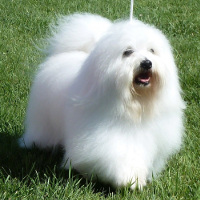 |
| Standard of the Coton de Tuléar |
Appearance of the Silky Coton |
| As a mixed breed dog, the Silky Coton can vary considerably in appearance. Most are shades of white, black and brown, but other colors are possible, such as sable, silver, blue, gray and red. Silky Cotons often have a thick, fluffy coat, but some have a fine, silky coat that more closely resembles that of the Australian Silky Terrier. These dogs have a small, light frame. The eyes are dark and expressive, although sometimes hidden by the dog's coat. The muzzle is short, ending in a small black or brown nose. The legs are short but often powerful, due to the breed's Terrier ancestry. |
Temperament of the Silky Coton |
| Both the Australian Silky Terrier and the Coton de Tuléar have been bred to be loyal, affectionate companions, and the Silky Coton retains these qualities. The Silky Coton has a lively, affectionate personality and fits in well with any family. They adapt well to singles, couples and large families. Its gentle nature makes it excellent with children, dogs and other pets. Because of their small size, however, they can be nervous around small, fast-moving children. Silky Cotons are intelligent and eager to please their owners. They respond very well to positive training techniques. However, the breed retains some of the hunting and scavenging instincts of its ancestors, making these dogs sometimes difficult to train to stay in the yard. |
Needs and activities of the Silky Coton |
| The Silky Coton is a moderately active breed, but it doesn't need much exercise. Because of their small size, they're content with a few walks around the block or a trip to the local dog park every day. Being friendly and curious by nature, these dogs generally enjoy outings where they can meet new people and animals. As they are an intelligent breed, to keep them happy, you need to make sure they get plenty of mental stimulation as well as physical exercise. Puzzles are a great way to keep Silky Cotons happy, while giving them the mental exercise they need. |
Maintenance of the Silky Coton |
| Despite their long coats, most Silky Cotons don't need intensive grooming. Most need brushing only a few times a week, but some need daily brushing to avoid tangles and knots. They shed very little and should be bathed only when necessary. As their hair can grow into their eyes and cause eyesight problems, it's important to have them trimmed regularly. Most Silky Cotons benefit from professional grooming several times a year. Like all dogs, they need their nails trimmed and ears cleaned regularly. Their teeth should also be brushed at least two or three times a week. |



 English (United Kingdom)

Comments