
 |
Siberian Indian Dog |
|
He is not recognized by the F.C.I. |
Origin |
Siberia <> U.S.A. -> U.S.A. | |
Translation |
Francis Vandersteen |
A brief presentation of the Siberian Indian Dog |
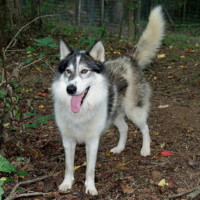
| The Siberian Indian Dog is a hybrid cross between the Siberian Husky and the Native American Indian Dog. It combines the favorable characteristics of its two parent breeds to create a happy, highly intelligent dog that loves to please its owner. Siberian Indian Dogs measure between 58.5 and 86.5 centimeters and weigh between 22.5 and 54.5 kilos. Females tend to be considerably smaller than males. Average life expectancy is 14 to 19 years. The Siberian Indian Dog is a true companion and makes an exceptional pet for children. It has a gentle nature and learns quickly. Ideally, he should live in a home with a large yard where he can run and play. His quick nature makes him an excellent candidate for obedience training. |
History of the Siberian Indian Dog |
| The Siberian Indian Dog is a delightful blend of its two parents and boasts a noble lineage. The Siberian Indian Dog is a cross between the Siberian Husky and the modern Native American Indian Dog. |
A little of the Siberian Husky |
||
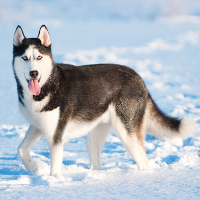
| The Siberian Husky is an extraordinary sled dog. The breed was created by the semi-nomadic Chukchi people of Northeast Asia over 3,000 years ago. The dog's primary function within the tribe was to pull sledges, enabling the nomads to move about with ease. In the 19th century, dogs were widely used as sled dogs by fur traders. In January 1925, dogs made an impressive public debut in the USA when a team was used to pull sleds carrying diphtheria medicine over a long distance in Nome, Alaska. | ||
 |
||
| Standard of the Siberian Husky |
A little of the Native American Indian Dog |
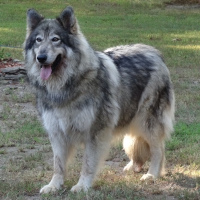
| The history of the Native American Indian Dog goes back to 1500, when dogs were the household pets of many Native American tribes. They were used to pull travois, hunt and protect the tribe. This attractive dog was never actually a purebred, but a crossbreed of several dogs, as Native Americans commonly crossed dogs between tribes and there was never a focused breeding plan. Today, the Native American Indian Dog is the subject of much controversy, as many people say that it is in fact a newly created breed that was first bred by Karen Markel of Majestic View Kennels, and that the dog's links to tribes in the USA are obscure. Karen Markel created Native American Indian Dogs by crossing the Siberian Husky, Alaskan Malamute, Chinook and German Shepherd. |
 |
| Presentation of the Native American Indian Dog |
Appearance of the Siberian Indian Dog |
| The appearance of the Siberian Indian Dog is very striking. This noble dog has a very strong, muscular build. Its head is triangular with exceptionally alert eyes. The eyes can be blue, black, brown or even a combination of colors. It has a long muzzle and straight ears. The coat of the Siberian Indian Dog is varied. Colors range from white to yellow, orange, red, spotted and black. The coat is long, downy and soft. It has a thick undercoat. This dog doesn't need trimming to look good, but it does need brushing. During the year, he doesn't shed much, but once a year, the thick undercoat is removed. This dog's feet are very tight and almost feline. The pads are typically black, as are the nose and the edges of the mouth and lips. |
Temperament of the Siberian Indian Dog |
| The Siberian Indian Dog is an excellent blend of its parents' personalities. They are exceptionally loyal and affectionate. A true athlete, they love to walk, jog, play ball or any other physical activity they can share with their family. Siberian Indian Dogs excel in obedience and agility. They are extremely social dogs who like to be active and involved in all aspects of their family's life. On the whole, this dog is very calm, usually barking only if a stranger approaches. They get on well with other animals and tend to be very gentle. |
Needs and activities of the Siberian Indian Dog |
| The Siberian Indian Dog is a true athlete, just like its parents, the Siberian Husky and the Native American Indian Dog. It's designed to pull, run and walk for miles, thanks to its muscular build. This dog benefits from having a large garden where he can play for a few hours a day. He also loves daily walks and trips to the dog park. Children love to play Frisbee and ball with the Siberian Indian Dog. He's an active companion who thrives in an active family. |
Maintenance of the Siberian Indian Dog |
| Although the Siberian Indian Dog has a thick coat, it doesn't shed much. Only once a year does its thick undercoat fall out in thick clumps. He benefits from occasional brushing to keep his coat shiny and strong. Brushing is also an excellent bonding moment. His nails need trimming from time to time, but the more active he is, the less you'll need to trim them. Running, walking and playing naturally contribute to nail wear. Many owners choose to brush their dog's teeth several times a week to help control plaque build-up and prevent periodontal disease later in life. Once a week, owners should gently wipe the dog's pricked ears to remove accumulated debris. |



 English (United Kingdom)

Comments