Shethund

He is not recognized by the F.C.I.

Origin
Great Britain <> Germany -> U.S.A.
Translation
Francis Vandersteen

A brief presentation of the Shethund

The Shethund is a hybrid of the Shetland Sheepdog and the Dachshund. This interesting hybrid combines two pure breeds that were both bred for hunting and herding. Although this was a very long time ago, these dogs still possess and display these hunting and herding characteristics, which sometimes makes life interesting in the family home, especially if there are other small animals like cats, gerbils or other dogs. It's an adorable mix of loyalty, intelligence and protection, just some of its personality traits, that can fit into any home, of any size and located anywhere.

History of the Shethund

The Shethund is a hybrid of the Shetland Sheepdog and the Dachshund. Very little is known about the hybrid itself, particularly when and where it was developed. In the absence of historical information, we can assume that the hybrid was developed in the USA in the late 1900s or early 2000s, when interest in mixing pure breeds for various purposes became more popular. We'll take a brief look at the history of the parent breeds to see who and what this hybrid may be. The Shetlund hybrid itself is recognized by the Designer Breed Registry.


A little of the Shetland Sheepdog

        
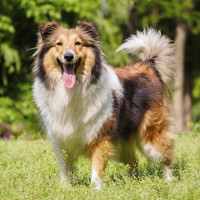
The Shetland Sheepdog, also known as the Sheltie, was born in the Shetland Islands, a region north of mainland Scotland, in the 1700s. Its ancestors are thought to have included, to name but a few, black and tan King Charles Spaniels, Greenland Yakki dogs, Scandinavian Spitz-type dogs and some Scottish Working Sheepdogs, resulting in the Sheltie we know today. The Sheltie was bred to guard flocks and was once considered the farmer's best friend, as it sounded the alarm at the approach of strangers and chased birds and other unwanted animals from property and gardens. Later, crosses with Scottish Sheepdogs made them excellent herders, guarding flocks in line, tasks they still perform today, particularly important for families with cats, gerbils, other dogs and even children. Once known as the Miniature Collie, the Sheltie arrived in North America most likely before the early 1900s, where it was officially recognized by the American Kennel Club in 1911 and is the 24th most popular breed in its registry.
Standard of the Shetland Sheepdog


A little of the Dachshund

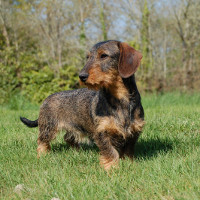
The Dachshund originated in Germany, probably in the 15th century. The Dachshund, whose name means “badger dog”, was bred for badger hunting, but also for fox and even wild boar hunting. At the time, their size varied according to the animals hunted, ranging from 13.5 to 16 kilos for badger and wild boar hunting, 7 to 10 kilos for fox and deer hunting, to 5.5 kilos for hare and weasel hunting. As you can imagine, they had excellent hunting skills, their short legs and robust bodies making them ideal for these tasks. Today's Dachshund, still available in standard and miniature sizes, with different coat types, is still very agile and has a keen sense of smell, with its hunting instinct still intact. The Dachshund was officially recognized by the American Kennel Club in 1885 and is the 13th most popular dog breed in its registry.
Standard of the Dachshund

Appearance of the Shethund

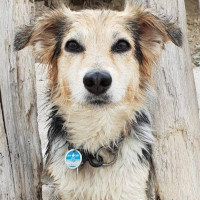
Your hybrid Shethund is a mix of Shetland Sheepdog and Dachshund and, as such, may inherit appearance traits from one or both parent breeds. Shethund breeders and owners describe him as weighing between 4.5 and 8 kilos at full maturity and having the body, coat and muzzle of the Sheltie and the short little legs of the Dachshund parent. In addition, depending on which of the breed's parents has the most influence in the biological mix, its coat colors may be brown, tan, red, sable, blue merle and white, its coat may be double with a long, straight topcoat and a short, downy undercoat, or it may be smooth or harsh, long or short, dark, almond-shaped eyes with blue eyes possible if her color is blue merle, a black nose and high-set ears that are either long and soft and hanging, or smaller and straight with tips breaking forward. She will probably have a longer tail, but not curled or arched over her back.

Temperament of the Shethund

Your hybrid Shethund is a mix of Shetland Sheepdog and Dachshund and can inherit temperament and personality traits from either or both of the parent breeds. The traits it can inherit are kindness, affection, aggression, courage, gentleness and intelligence. They are also known to be independent, social, loving, lively, loyal, playful and reactive. He has a high level of sensitivity and can be a frequent barker. He's well suited to new owners, but if you have children, be aware that he'll need proper socialization from an early age to be more sure of getting along with younger people who may not know how to play with and touch him. He'll probably get on well with the family cat, but don't forget that he has a strong urge to hunt. This could lead him to try to herd small animals and even children because of his deep hunting and herding instincts. He also has a strong tendency to wander, another instinct deeply rooted in his heritage. He's likely to get along with strangers, although he may be wary at first, but will warm to them once he feels they pose no danger to his human family. The Dachshund parent brings a certain independence, but for the most part, he should be relatively easy to train, as he has a strong desire to please those he loves. They have a great deal of energy, which needs to be managed on a daily basis to keep everyone in the household happy.

Needs and activities of the Shethund

Your Shethund Hybrid is an active dog, requiring daily exercise periods of at least 1 to 2 hours a day. This exercise can take the form of several daily walks or jogs, play in a dog park or fenced yard, interactive games such as fetch, Frisbee or flyball, agility or obedience training. He's classified as a hunter and a wanderer, so you'll need to keep him on a leash when he's away from the house, fenced yard or other safe area. If you ignore this recommendation, you'll probably find yourself getting more exercise than you bargained for by chasing him down the street, through the neighborhood or into the woods in search of a small animal or an interesting scent that has caught his eye. He's small enough to cope with an apartment or condominium, as long as noise restrictions are taken into account and appropriate daily exercise opportunities are provided. It can also get along very well in a family home with or without a fenced yard, with appropriate exercise opportunities, in a rural or urban environment. He is best suited to a temperate climate, provided he has adequate protection and appropriate precautions for extreme temperatures, hot or cold.

Maintenance of the Shethund

Your Shethund Hybrid falls into the moderate maintenance and shedding category. His coat is not considered hypoallergenic. Brushing frequency depends on the dominant breed in the biological mix, with smooth coats brushed once a week and longer, thicker coats brushed daily, especially during heavy shedding seasons. He's in the low category for drool and odor. He barks frequently, which should be taken into account for people living in noise-restricted areas. He's in the moderate category for urge to hunt and tendency to wander, which is why it's important to keep him on a leash when he's outside the house, a fenced yard or other safe enclosure. This is an active dog that will need 1-2 hours of daily exercise to stay fit, healthy and happy. His ears should be checked weekly and cleaned if necessary with a cotton ball and a dog-approved ear cleaner. Be sure to check his nails weekly, trimming them if necessary, unless he's able to keep them worn during normal exercise activities. Brush his teeth two or three times a week to prevent the development of periodontal disease and the tooth loss that can accompany it.

Comments

Latest page updates

  • Telomian

    Telomian He is not recognized by the F.C.I. Origin Malaysia Translation Francis Vandersteen A brief presentation of the Telomian The Telomian is a very rare breed of dog, and the only one native to Malaysia to have been bred outside the country. They were originally bred by the indigenous people of Malaysia to combat parasites such as snakes, rats,...
  • King Wheaten -- Cavalier King Charles Spaniel X Irish Soft Coated Wheaten Terrier

    King Wheaten He is not recognized by the F.C.I. Origin Great Britain <> Ireland -> U.S.A. Translation Francis Vandersteen A brief presentation of the King Wheaten The King Wheaten is a small dog with a heart this big and a playful disposition. Borrowing the energy and soft-coated waves of the Irish Soft Coated Wheaten Terrier and the size and...
  • Spanierd -- English Springer Spaniel X German Shepherd

    Spanierd He is not recognized by the F.C.I. Origin Great Britain <> Germany -> U.S.A. Translation Francis Vandersteen A brief presentation of the Spanierd The Spanierd is a hybrid dog. Its parent breeds are the English Springer Spaniel and the German Shepherd. They have an affable personality. He's known for entertaining family and friends with his...
  • Alaskan Goldenmute -- Alaskan Malamute X Golden Retriever

    Alaskan Goldenmute He is not recognized by the F.C.I. Origin U.S.A. <> Great Britain -> U.S.A. Translation Francis Vandersteen This breed is also known as Alaskan GoldenGoldenmuteAlaskan Gold Retriever     A brief presentation of the Alaskan Goldenmute The Alaskan Goldenmute is a descendant of two great dog breeds: the Alaskan Malamute and the Golden...
  • French pointing dog Pyrenean type

    French pointing dog Pyrenean type FCI standard Nº 134 Origin France Translation Mrs. Peggy Davis Group Group 7 Pointing Dogs Section Section 1.1 Continental Pointing Dogs « Braque » Type Working With working trial Acceptance on a definitive basis by the FCI Tuesday 18 January 1955 Publication of the official valid standard Tuesday 01 August 2023 Last...
  • French pointing dog Gascogne type

    French pointing dog Gascogne type FCI standard Nº 133 Origin France Translation Mrs. Peggy Davis Group Group 7 Pointing Dogs Section Section 1.1 Continental Pointing Dogs « Braque » Type Working With working trial Acceptance on a definitive basis by the FCI Monday 17 January 1955 Publication of the official valid standard Tuesday 01 August 2023 Last...
  • Vucciriscu

    Vucciriscu He is not recognized by the F.C.I. Origin Sicily Translation Francis Vandersteen En français, cette race se dit Vucciriscu Diese Norm ist in deutscher Sprache sichtbar Vucciriscu En español, esta raza se dice Vucciriscu In het Nederlands, wordt dit ras gezegd Vucciriscu This breed is also known as Sicilian Vucciriscu Sicilian Butcher...

© 2026 Groupe Milouchouchou ASBL. Tous droits réservés. En savoir plus

Protected by Copyright01
We use cookies

We use cookies on our website. Some of them are essential for the operation of the site, while others help us to improve this site and the user experience (tracking cookies). You can decide for yourself whether you want to allow cookies or not. Please note that if you reject them, you may not be able to use all the functionalities of the site.

Ok