 |
Sheltie Pin |
|
He is not recognized by the F.C.I. |
Origin |
Great Britain <> Germany -> U.S.A. | |
Translation |
Francis Vandersteen |
A brief presentation of the Sheltie Pin |
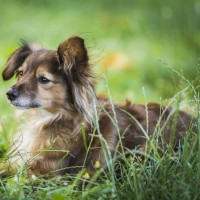
| The Sheltie Pin is a hybrid breed that combines the Miniature Pinscher and the Shetland Sheepdog. This breed is a small to medium-sized dog with a short coat, large ears and an outstanding personality. Thanks to the energetic nature of both parents, the Sheltie Pin is a companion always ready for the next adventure. Although he loves you to bits and follows you faithfully wherever you go, training can be a little tricky due to his independent nature and high energy level. However, once trained, the Sheltie Pin is an excellent choice for any family with older children who want to look after a dog. It's low-maintenance and has a great personality that combines intelligence, playfulness and fearless loyalty, all traits that make the Sheltie Pin so endearing. Don't forget that this dog loves to bark, so close neighbors and apartment dwellers be prepared. |
History of the Sheltie Pin |
| As the Sheltie Pin is a relatively new breed, we need to look at the Miniature Pinscher and the Shetland Sheepdog to find out why it was created in the first place. The origin stories of the parent breeds will help explain the significance of the name, body type and ancestry not only of themselves, but also of the Sheltie Pin. |
A little of the Shetland Sheepdog |
||
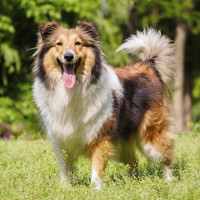
| If we look at the Shetland Sheepdog, we can see where the Sheltie Pin gets its affectionate, easy-going nature. The Sheltie is a breed that gets on well with everyone, and was originally created on the small Shetland Islands to help herd sheep. This makes them gentle, incredibly intelligent and generally happy dogs who love nothing more than to please their owners. Before Shelties became household names, visitors to the Shetland Islands would fall in love with these little “fairy dogs” and end up taking one home as a souvenir. This is how the Sheltie came to see the world and became very popular, as more and more people fell in love with its good looks and golden personality. Among the breeds used to create the Sheltie are the Spaniel King Charles, the Pomeranian and the large Collie, all of which contributed to its stunning personality and long, light coat. Because of this broad mix with a few other breeds added later, today's Shelties can vary widely in color and size. The breed was accepted by the American Kennel Club in 1911, but due to its differences in appearance, the Sheltie was rejected by the Scottish Shetland Sheepdog Club because it offended Collie breeders; this is a real pity, as the Sheltie is a magnificent dog with a great personality that is adored by people all over the world as a companion and show dog. | ||
 |
||
| Standard of the Shetland Sheepdog |
A little of the Miniature Pinscher |
| The Miniature Pinscher is generally thought of as a much smaller Dobermann Pinscher, but in reality, this breed was created some 200 years before the Dobermann appeared. The breeds that make up the Dwarf Pinscher's ancestry are the Dachshund, the Old German Pinscher, the Manchester Terrier and the Italian Greyhound. As you can imagine, the end result of this combination is a lively, animated small dog. Initially, the Miniature Pinscher's popularity as a ratter extended only to Germany and Scandinavia, but its rat-catching skills and proud personality eventually caught the attention of many other dog lovers. He was registered by the American Kennel Club in 1925 as a Terrier, initially on the strength of his rat-catching skills, but this only lasted about four years. After the creation of the Miniature Pinscher Club of America, the Miniature Pinscher was reclassified as a companion dog in 1930. Today, the Miniature Pinscher is one of the most popular breeds in the American Kennel Club, and has been used as a show and companion dog for many years. |
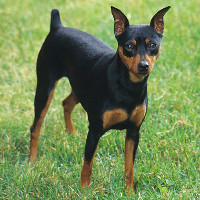 |
| Standard of the Miniature Pinscher |
Appearance of the Sheltie Pin |
| The Sheltie Pin is a small to medium-sized dog that has the body of the Sheltie, with the coat of the Miniature Pinscher. With its large, alert ears, long, slender tail and large, oval eyes, the Sheltie Pin has a slightly mischievous appearance that perfectly reflects its fun-loving personality and affectionate spirit. While the Miniature Pinscher is a small breed, the Sheltie Pin seems most often to be inspired by the size of the Sheltie, with longer legs and a slightly thicker build. Its coat is short and smooth, lying close to the body, and tends to shed very little. Because of this unique coat, the Sheltie Pin prefers warmer weather. |
Temperament of the Sheltie Pin |
| Considering the Sheltie Pin's parent breeds, it's not surprising that it's a proud, energetic dog that loves a good adventure. Very noisy and always ready to play, the Sheltie Pin is an excellent companion for any dog owner who likes a challenge. The Miniature Pointing Dog brings a little independence to the hybrid breed, while the Shetland Sheepdog brings lots of energy and an eager-to-learn attitude. Thanks to these two characteristics, the Sheltie Pin is an excellent dog for experienced owners, as it is intelligent, affectionate, jovial and fearless. Bear in mind that early training and socialization will be important if the Sheltie Pin is to be at ease with young children and other dogs. This comes from the side of the Miniature Pinscher, which is a little more susceptible in such situations. Although the Sheltie Pin is a small dog, its love of talking and energetic nature can make it unsuitable for apartment living, unless it has plenty of opportunity to release its energy through exercise. |
Needs and activities of the Sheltie Pin |
| If you own a Sheltie Pin, you probably know how much this breed loves to run and play. Thanks to its very active parent breeds, the Sheltie Pin is always ready to move on and will be more than willing to do any outdoor activity with you, all day long. This high energy level makes the Sheltie Pin the ideal companion for any outdoor enthusiast; whether hiking or jogging, this hybrid breed will gladly “put on its shoes” and get out there. While physical activity is undoubtedly the key to a fulfilling and happy life for the Sheltie Pin, it's important not to forget its mental health. The Sheltie Pin is a highly intelligent dog and will need toys and training to help stimulate his mind. If this is neglected, he can become bored and even destructive if left unsupervised. |
Maintenance of the Sheltie Pin |
| Thanks to its short coat and low shedding, the Sheltie Pin is a very low-maintenance breed, requiring brushing only a few times a month. A long-haired brush is perfect for removing loose hair from the body and any dirt that may be present, helping to stimulate the skin and leave the coat shiny. Bathing is another grooming activity that's only necessary once every few months, unless your dog is particularly dirty following a fun outdoor activity or mischievous adventure. Finally, be sure to trim your Sheltie Pin's nails every two weeks, or as soon as you hear the nails click against the floor, to keep his paws healthy and limit scratching. Brush his teeth twice a week to keep his gums healthy and his teeth free of plaque. |



 English (United Kingdom)

Comments