
 |
Pekingese |
|
FCI Standard No. 207 |
Origin |
China, patronage Great Britain | |
Group |
Group 9 Companion and Toy Dogs | |
Section |
Section 8 Japan Chin and Pekingese | |
Working |
Without working trial | |
Date of acceptance on a definitive basis by the FCI |
Thursday 03 November 1966 | |
Date of publication of the official valid standard |
Tuesday 08 September 2026 | |
Date of the last update |
Tuesday 06 October 2026 | |
En français, cette race se dit |
 |
Pékinois |
Diese Norm ist in deutscher Sprache sichtbar |
 |
Pekingese |
En español, esta raza se dice |
 |
Pekinés |
In het Nederlands, wordt dit ras gezegd |
 |
Pekinees |
Usage |
| Companion Dog. |
General appearance |
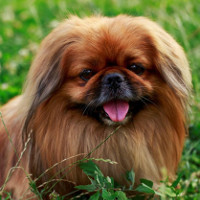
| Leonine in appearance with alert and intelligent expression. Small, well balanced, moderately thick-set with great dignity and quality. Any signs of respiratory distress for any reason or inability to move soundly are unacceptable and should be heavily penalised. Not excessively coated. |
Behaviour / temperament |
| Fearless, loyal, aloof, not timid or aggressive. |
Head |
||
Cranial region |
||
Head |
Fairly large, proportionately wider than deep. | |
Skull |
Moderately broad, wide and flat between ears; not domed; wide between eyes. | |
Stop |
Defined. | |
Facial region |
||
Foreface |
Black pigment essential on nose, lips and eye rims. | |
Nose |
Not too short, broad, nostrils large and open. A slight wrinkle, preferably broken, may extend from the cheeks to the bridge of nose in a wide inverted “V”. This must never adversely affect or obscure eyes or nose. Pinched nostrils and heavy over-nose wrinkles are unacceptable and should be heavily penalised. | |
Muzzle |
Must be evident, but may be relatively short and wide. Firm underjaw. | |
Lips |
Level lips. Must not show teeth or tongue; nor obscuring a well defined chin. | |
Eyes |
Clear, round, dark lustrous and not too large. Free from obvious eye problems. | |
Ears |
Leathers heart-shaped, set level with the skull, carried close to the head and not coming below line of muzzle. Long profuse feathering. | |
Neck |
| Relatively short and thick. |
Body |
||
Body |
Relatively short, distinct waist. | |
Topline |
Level. | |
Chest |
Broad and well sprung ribs slung between forelegs. | |
Tail |
| Set high, carried tightly, slightly curved over back to either side. Long feathering. |
Limbs |
Forequarters |
||
Generality |
Relatively short, thick, heavily boned forelegs. Standing well up on feet, not down on pasterns. Absolute soundness essential. | |
Shoulders |
Laid back and fitting smoothly into the body. | |
Elbows |
Close to the body. | |
Forearm |
Bones of forelegs may be slightly bowed between pasterns and elbows, accommodating ribs. | |
Pastern |
Slightly sloping, strong and not too close together. | |
Forefeet |
Large and flat, not round. May be slightly turned out. Excessively turned out feet highly undesirable. | |
Hindquarters |
||
Generality |
Hind legs strong and well muscled but moderately lighter than forequarters. Excessively narrow hindquarters highly undesirable. Moderate angulation. Absolute soundness essential. | |
Stifle |
Well defined. | |
Metatarsus |
Strong, parallel when viewed from the rear. | |
Hock |
Firm, low. | |
Hind feet |
Large and flat, not round. Hind feet point straight ahead. | |
Gait and movement |
| Typically slow, dignified rolling gait in front. Typical movement must not be confused with a roll caused by slackness of shoulders or with other indications of unsoundness. Any slackness of shoulders and elbows, and any indications of unsoundness in feet and pasterns to be heavily penalised. Movement not to be hindered by excessive body coat. |
Coat |
||
Hair |
Moderately long, straight with mane, not extending beyond shoulders, forming a cape around neck. Top coat coarse with thick, softer undercoat. Feathering on ears, back of legs, tail and toes. Length and volume of coat should neither impair the activity of the dog nor obscure the shapeliness of body. Excessive coat must be heavily penalised. | |
Colour |
All colours and markings are permissible and of equal merit. Parti-colours evenly broken. Albino, liver or merle unacceptable. | |
Size and weight |
||
Weight |
Ideal weight not exceeding 5 kg for males and 5.4 females. Dogs should look small but be surprisingly heavy when picked up; heavy bone and a sturdy well-built body are essentials of the breed. | |
Faults |
| • Any departure from the foregoing points should be considered a fault and the seriousness with which the fault should be regarded should be in exact proportion to its degree and its effect upon the health and welfare of the dog and its ability to perform its traditional work. • Faults listed should be in degree of seriousness. |
Disqualifying faults |
 Aggressive or overly shy. Aggressive or overly shy. |
NB : |
| • Any dog clearly showing physical or behavioural abnormalities shall be disqualified. • The above mentioned faults when occurring to a highly marked degree or frequently are disqualifying. • Male animals should have two apparently normal testicles fully descended into the scrotum. • Only functionally and clinically healthy dogs, with breed typical conformation should be used for breeding. |



 English (United Kingdom)

Comments