 |
Treeing Walker Coonhound |
|
He is not recognized by the F.C.I. |
Origin |
U.S.A. | |
Translation |
Francis Vandersteen |
A brief presentation of the Treeing Walker Coonhound |
| The Treeing Walker Coonhound is descended from both the English Foxhound and the American Foxhound, which were originally used as hunting dogs. Originally, the Treeing Walker Coonhound was used to hunt small game. Today's hunter still uses this breed for treeing and hunting. Treeing is a type of hunting that uses dogs to force prey to climb a tree. This wonderful breed excels not only as a hunter, but also as a companion and family dog. The Treeing Walker Coonhound originated in the United States and is nicknamed TWC or Walker. Due to the short coat of this affectionate dog, very little maintenance is required. |
History of the Treeing Walker Coonhound |
| The Treeing Walker Coonhound is descended from the English Foxhound, which was also called the English Coonhound. The Walker part of its name comes from John W. Walker, a Kentuckian who developed the breed. The other breeder responsible for the breed's initial development was George Washington Maupin. During the colonial era, Mr. Walker and Mr. Maupin imported and bred English Foxhounds. The dogs they bred were called Walker Hounds. In the 1800s, they acquired a black and tan dog named Tennessee Lead, which was then crossed with the Walker Hound. Walker Hound legend has it that Tennessee Lead was stolen on a deer hunt in Tennessee. Tennessee Lead was a black and tan rat-tailed dog sold to Mr. Maupin. The ancestral origins of Tennessee Lead are unknown, but it's clear that the Treeing Walker Coonhound's exceptional speed comes from this legendary dog. Mr. Walker and Mr. Maupin then used Tennessee Lead as a stallion, producing valuable litters. The new breed was first called the Walker Coonhound and was recognized by the United Kennel Club in 1905. The name was later changed to the Treeing Walker Coonhound. The Treeing Walker Coonhound was recognized by the American Kennel Club in January 2012, making it the 174th AKC-recognized breed. |
Appearance of the Treeing Walker Coonhound |
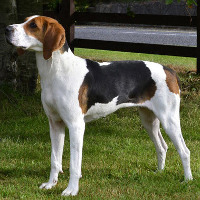
| The Treeing Walker Coonhound has a broad skull. The muzzle is long and narrow. It has large, floppy, hanging ears. The eyes are large, brown and have a gentle, kind expression. The breed has a smooth, glossy coat and comes in a tricolor and bicolor pattern. It can be black, tan and white, or any combination of two or three colors. The Treeing Walker Coonhound's legs are slender and long, but muscular. Its paws are compact and well padded, with a cat-like appearance. The tail is moderately long and set high. His shoulders are powerful. The upper lip hangs below the lower jaw. The breed is known for its agility and grace. The Treeing Walker Coonhound is sometimes mistaken for a large Beagle. |
Temperament of the Treeing Walker Coonhound |
| The breed is intelligent and social, and enjoys spending time with its family. The breed can adapt to life outdoors, but thrives as part of the family, spending time indoors as part of the family dynamic. Because the Treeing Walker Coonhound is exceptionally intelligent, it is very easy to train. The breed is very sensitive and does not react well when treated harshly. It's important to socialize them from an early age. These dogs are extremely prey-driven and should never be walked off-leash, as anything small and moving will be chased. The Treeing Walker Coonhound is a good family dog for an active family. It can be stubborn, although its affectionate nature means it can be successfully obeyed. The Treeing Walker Coonhound loves children and is a gentle dog. They get on well with other dogs, but are generally not good with cats or small pets such as gerbils, rabbits or mice, due to their hunting instinct. They are good companion dogs, but need activity and exercise. They are even-tempered and not an aggressive breed. The Treeing Walker Coonhound is a working dog that loves to work and please its owners. |
Needs and activities of the Treeing Walker Coonhound |
| The Treeing Walker Coonhound's strong tracking instinct makes it a popular hunting dog, mainly for raccoons. Hunting alone or in groups of two or more, they are used to track and pick up raccoons, bobcats, cougars and bears. Individual dogs may be adept at catching small rodents such as squirrels, roof rats, possums and skunks. Because of their speed, Treeing Walker Coonhounds can be used as deer dogs in states where hunting antlered animals with dogs is legal. Although the Treeing Walker Coonhound is better known as a Coonhound, it's not as cold as other Coonhounds. It's the most popular dog for competitive raccoon hunting, as it forgoes an older track for a fresher one, thus increasing the number of raccoons caught in a shorter space of time. A Treeing Walker Coonhound needs its owner's company. The breed's hunting instinct can be used for tracking, field trials or search and rescue. Its stamina and determination also make it an excellent hiking partner. The Treeing Walker Coonhound is expected to have a large yard in which to run, play and explore. |
Maintenance of the Treeing Walker Coonhound |
| A Treeing Walker Coonhound needs its master's company. The breed's hunting instinct can be channeled into tracking, field trials or search and rescue. Its stamina and determination also make it an excellent hiking partner. Its short, smooth coat should be brushed weekly to remove dead hairs, and a monthly bath will help eliminate its musky odor. His ears should be checked weekly for wax build-up, irritation or mites. Your vet can recommend an ear cleaner to use on the breed's hanging ears. Brushing the dog's teeth once a week can help prevent tartar build-up and gum disease. It may be necessary to trim his nails once a month. |



 English (United Kingdom)

Comments