
 |
Ratshire Terrier |
|
He is not recognized by the F.C.I. |
Origin |
U.S.A. <> Great Britain -> U.S.A. | |
Translation |
Francis Vandersteen |
A brief presentation of the Ratshire Terrier |
| The Ratshire Terrier is a mix of the Rat Terrier and Yorkshire Terrier. They are small dogs weighing between 4.5 and 9 kilos as adults. The Ratshire Terrier generally stands around 20.5 to 30.5 centimeters tall and has a thick coat of medium to long straight fur that needs to be brushed fairly often. It's a healthy, active breed that lives to be around 12 to 16 years old, and needs plenty of exercise to work off any extra energy it has. Although they make excellent pets, they do best in a home without small children. They are fairly easy to train, but may sometimes need extra reminders. |
History of the Ratshire Terrier |
| Although the Ratshire Terrier hybrid has been around for some time, they still have no history of their own, so you'll have to rely on the history of the Rat Terrier and Yorkshire Terrier. |
A little of the Rat Terrier |
||
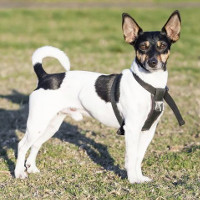
| The Rat Terrier is an American breed derived from Toy Fox Terrier, Bull Terrier, Manchester Terrier, English White Terrier, Whippet, Greyhound and Beagle. They were developed to create a good hunting dog small enough and fast enough to chase rats and other vermin under and above ground. They were so good at this job that they became the most popular dog to work on the American farm. Soon, they became popular as pets when their owners noticed their kindness and bravery. U.S. President Theodore Roosevelt moved into the White House with several of these dogs, which were later named Teddy's Terriers. Although bred in the 1800s, they weren't really popular in America until the late 1900s. In fact, they weren't recognized as a breed until 1999, when they were noticed by the United Kennel Club. It wasn't until 2013 that the Rat Terrier was finally recognized by the American Kennel Club, where it is the 96th most popular dog breed. | ||
 |
||
| Presentation of the Rat Terrier |
A little of the Yorkshire Terrier |
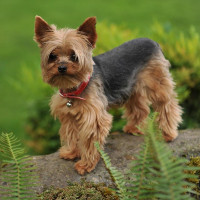
| The Yorkshire Terrier takes its name from its place of origin in Yorkshire, England, in 1861, when it was bred from the Dandie Dinmont, Manchester, Paisley, Waterside and Skye Terriers. They were also used to hunt vermin, but eventually became companion dogs due to their small size, beauty and adorable personality. They were accepted and recognized by the American Kennel Club in 1885 and are the 9th most popular dog in America. |
 |
| Standard of the Yorkshire Terrier |
Appearance of the Ratshire Terrier |
| The Ratshire Terrier has a thick coat of fur that may have the coloring of the Yorkshire Terrier, or it may be dark with patches of white. There are many color variations depending on the parents' colors. Some of the most common are silver, blue, black, piebald, sable, merle, pinto, chocolate, gray, red, brindle and white. They generally have brown or hazel eyes, a black nose on a small, pointed muzzle and an alert expression. Ratshire Terriers are longer than they are tall, with strong necks, flat shoulders and broad chests. They can have floppy or perky ears, depending on parentage, and their tail can be long or short, but usually curls over the back. |
Temperament of the Ratshire Terrier |
| Because the Ratshire Terrier can be temperamental with little ones, they should always be closely supervised with young children. They are likely to bite or nip if teased or teased too much. However, this breed makes an excellent pet for the right family and can learn to get along with other pets and children if socialized early and correctly. To train them, you may need more patience, as some Ratshire Terriers like to do things their own way and can push the boundaries to see what they can do. Just stick to your rules and use positive reinforcement and your dog should respond well. |
Needs and activities of the Ratshire Terrier |
| Your Ratshire Terrier has a lot of excess energy that needs to be worked or played with on a daily basis. It's recommended that your dog has about an hour to 90 minutes of vigorous activity every day, indoors or outdoors. They're small enough to be able to do most of this activity indoors, but they need to go outside at least twice a day to stretch and take a bathroom break. If you have a fenced-in yard, you can let them run around the yard for a few hours a day, but don't forget that they also need to spend time with their human family. |
Maintenance of the Ratshire Terrier |
| It's important that your Ratshire Terrier's coat is brushed regularly or it can become matted. Use a pincushion brush and a metal comb, and be sure to go under his neck, around his ears and tail, and under his legs. Ratshire Terriers should be bathed once or twice a month with a mild dog shampoo and conditioner to keep their skin and coat clean and healthy. Many owners prefer to have their Ratshire Terrier groomed by hand, as Yorkies need to be groomed regularly. During the bathing process, be sure to clean your dog's ears thoroughly and dry them afterwards. |



 English (United Kingdom)

Comments