 |
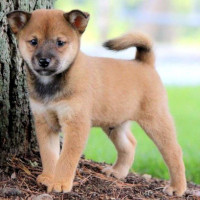
Pug Shiba |
|
He is not recognized by the F.C.I. |
Origin |
China <> Japan -> U.S.A. | |
Translation |
Francis Vandersteen |
A brief presentation of the Pug Shiba |
| The Pug Shiba is a hybrid breed. Its parent breeds are the Shiba and the Pug. Unfortunately, the Pug Shiba will lose frequently, as both parent breeds tend to do. He needs moderate activity and enjoys playing with children and adults. He's happy in an apartment or house, with or without a fenced-in area. He's an excellent pet and gets on just as well with other animals as he does with other people. It's generally a healthy dog, but the parent Shiba breed is a rare breed, and the hybrid breed is even rarer. |
History of the Pug Shiba |
| The Pug Shiba is a rare hybrid breed. To understand the origins of the Pug Shiba, we can study the history of the parent breeds to learn more about the history of the hybrid. |
A little of the Pug |
||
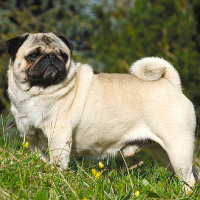
| The Pug originated in China, where it lived a luxurious life as the emperor's favorite type of dog. When China began trading with European countries, the Pug became a commodity. It became a favorite with nobility from France to England. Marie-Antoinette owned a Pug before marrying Louis XVI, and William of Orange claimed that his Pug saved his life, warning him of an attack by Spaniards. As a reward, William named the Pug the official dog of the House of Orange. The Pug found its way to the U.S.A. after the end of the Civil War and was recognized by the American Kennel Club in 1885. | ||
 |
||
| Standard of the Pug |
A little of the Shiba |
| The Shiba originated in Japan. It was used as a hunting dog, flushing out small game and birds for hunters. The breed almost became extinct during the Second World War. The Shiba that didn't die in the bombings died of distemper after the war was over. The Shiba was brought to the USA in 1954 by a military family who returned to the States. The first litter was born in the U.S.A. in the 1970s. The American Kennel Club recognized the breed in 1993. |
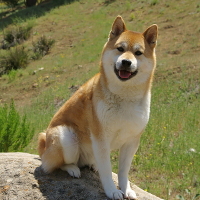 |
| Standard of the Shiba |
Appearance of the Pug Shiba |
| The Pug Shiba is a handsome little dog. Its exact coloring depends on the dominant parent breed. Often, it will be tan or red with white markings. He may also have a brown or fawn “saddle” pattern on his back, with a white chest, belly and legs. He will often have the classic black Pug markings around the mouth, nose and eyes. He may also have the Pug's characteristic curly tail. His chest will be broad and deep. He may look a little chubby like the parent breed Pug. He may also have pointed ears like the parent Shiba breed, and his coat may be more of the light red of the Shiba. They may have short legs and inherit the brachycephalic muzzle of the parent Pug. |
Temperament of the Pug Shiba |
| The Pug Shiba is a charming dog. They are lively, alert and playful. He is fiercely loyal to his family and can be somewhat aloof with strangers. However, once he understands that strangers mean no harm to his beloved family, he's likely to win them over with his charming personality. He's highly intelligent, and it would be wise to buy toys that stimulate him intellectually. Although he's not overly destructive, leaving him alone for long periods can lead to separation anxiety. He's very affectionate and wants to spend most of his time with his human family. He will certainly alert you to anything he thinks is wrong in his territory. |
Needs and activities of the Pug Shiba |
| The Pug Shiba is a moderately active dog. He'll enjoy a quick walk with you around the neighborhood, or a trip to the dog park. Socializing him with other dogs from an early age will help him overcome some of his natural shyness. He loves to play with toys that stimulate mental activity, and he also enjoys bickering with his owner. Bear in mind that the parent breed Pug is prone to brachycephalic syndrome. This condition occurs when a dog's muzzle is very short, and overexertion can easily occur in brachycephalic dogs. Overexertion can lead to shortness of breath and, in some cases, cardiac arrest. Always keep a little water on hand when exercising your Pug Shiba to avoid overheating and overexertion. |
Maintenance of the Pug Shiba |
| The Pug Shiba doesn't require much maintenance. It will be a good choice for those who don't care to spend a lot of time grooming their dog, or for those who don't want to spend a lot of money on professional grooming. However, he has a tendency to shed, so you'll need to brush him regularly to prevent the hair from spilling onto your furniture and clothes. Once a week will suffice for brushing, as its natural oils will keep its coat shiny and healthy-looking. Brush your dog's teeth two or three times a week to prevent tartar build-up, or even better, brush daily to prevent tooth decay. Bathe only when necessary. Trim his nails twice a month, or every three weeks if necessary. Tears and breakage can be painful, so avoid them if possible. |



 English (United Kingdom)

Comments