
 |
Pugador |
|
He is not recognized by the F.C.I. |
Origin |
China <> Canada -> U.S.A. | |
Translation |
Francis Vandersteen |
A brief presentation of the Pugador |
| The Pugador is a hybrid in which the Pug is crossed with the Labrador Retriever. Although there isn't much information available on the hybrid, we can consider the traits of the two parent breeds to get an idea of what the Pugador will look like. Labrador Retrievers are known to be loyal, affectionate and even-tempered, while the Pug will be quiet and sometimes stubborn. Both breeds will enjoy being with their humans. Pugs are relatively small, while Labrador Retrievers are medium to large. You can expect your Pugador to grow to between 13.5 and 22.5 kilos, with a mix of personality traits from its parent breeds. |
History of the Pugador |
| The Pugador is a relatively new hybrid, although the two breeds that make up the hybrid have a long history. |
A little of the Pug |
||
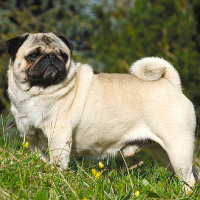
| The Pug originated in China between 206 BC and 200 AD, during the Han dynasty. There is evidence that there were dogs similar to the Pug in ancient Tibet and Japan. When Dutch traders brought these dogs to Europe in the 1500s and 1600s, the dogs were called Mopshond and became popular with royalty. By the 1800s, there were two dominant lines in England, the Morrisson line, based on Queen Charlotte's royal dogs, and the second line started by Lord and Lady Willoughby of Eresby on dogs from Hungary and Russia. The breed made its way to the United States after the Civil War and was recognized by the American Kennel Club in 1885. | ||
 |
||
| Standard of the Pug |
A little of the Labrador Retriever |
| Named after the capital of Newfoundland, the Labrador Retriever was known as the St. John's Water Dog in the 1700s. During this time, he helped fishermen with their nets and brought in fish that had fallen from the nets. Eventually, the breed was named Labrador Retriever after the Labrador Sea. According to records, the Labrador Retriever arrived in London in the 1820s, where the second Earl of Malmesbury was one of the first to own one of the breed. The breed's popularity was the result of the Labrador Retriever's ability to retrieve while hunting with its human. In the 1880s, the breed came close to extinction, but the Malmesbury family and various English breeders worked to perpetuate it. In the 1920s, the Labrador Retriever arrived in the United States. |
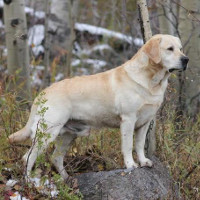 |
| Standard of the Labrador Retriever |
Appearance of the Pugador |
| As the Pug is a relatively small dog, while the Labrador Retriever is medium to large, the size of the resulting hybrid can vary considerably. Your Pugador will have a thick coat, thanks to the double coat of its parent breeds, and can be seen in white, black, brown and tan. A sturdy little body may be inherited from the Pug parent, while the Labrador Retriever may pass on an athletic build. Often, it may have the Labrador Retriever's facial appearance, but the Pug influence is definitely there, with the Pug's bulging eye and snub nose. As with all hybrids, your Pugador will inherit traits from each parent breed, giving it its own unique physical appearance. |
Temperament of the Pugador |
| Although little information is available on the Pugador's temperament, you can consult the temperament of the hybrid's parent breeds to determine what you can see in your pet. A Pug will want to be around you at all times, and the Labrador Retriever is known to be affectionate and loyal, which means it's likely that the hybrid will be affectionate and interested in spending time with its humans. While Labrador Retrievers are easy-going dogs, Pugs can be stubborn on occasion. As both breeds are bright and friendly and will do well with other animals and people, you can expect the same from the hybrid. |
Needs and activities of the Pugador |
| The Pugador will inherit its activity and energy levels from its parent breeds. Pugs tend to be calm indoors, but they need exercise, which may include walks or outdoor playtime. It's important to bear in mind that Pugs shouldn't engage in strenuous activity when the weather is hot and humid. The Labrador Retriever is an active breed that will need regular exercise, which can include long walks and trips to the dog park, as well as outdoor play with its humans. The Pugador will benefit from a large, fenced yard where he can walk around and get out his energy. Depending on the traits your Pugador inherits, it will probably demonstrate an average energy level and require an average amount of daily activity for its health and to avoid causing problems that can be met by boredom or lack of mental stimulation. |
Maintenance of the Pugador |
| The Pugador will require a moderate degree of maintenance. Although the amount of shedding you can expect from a Pugador varies, the Pug tends to shed a lot, especially during the summer months, and this trait can be passed on to the hybrid. Daily brushing of your Pugador will help keep shedding under control and his coat healthy. A bath every one to two months is recommended, depending on your dog's coat and how messy it is. It's a good idea to check his ears on a weekly basis and trim his nails if necessary. If your dog inherits facial wrinkles, you'll want to keep the wrinkle folds clean and dry. As with all dogs, your Pugador's teeth need to be brushed several times a week to ensure long-term dental health. |



 English (United Kingdom)

Comments