
 |
Pomimo |
|
He is not recognized by the F.C.I. |
Origin |
Germany <> U.S.A. -> U.S.A. | |
Translation |
Francis Vandersteen |
A brief presentation of the Pomimo |
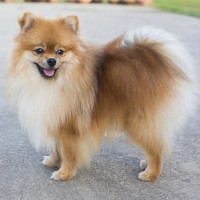
| The Pomimo is a lively, active little dog that makes an excellent pet. They're great with children of all ages and very affectionate. The Pomimo is a hybrid breed and is a specific cross between a purebred German Toy Spitz / Pomeranian and a purebred American Eskimo Dog. They are also known as Eskiranian and Eskipom. Although small in size, they make good watchdogs and bark at strangers. But once they get to know people, they are friendly dogs who also get on well with other dogs. They need plenty of exercise and will love to go for walks around the neighborhood or run on the beach. This breed can have the longer coat of the German Toy Spitz / Pomeranian or the shorter, thicker coat of the American Eskimo Dog side and tends to shed a little. They come in a range of colors that can include orange, red, cream, white, black, blue, brown, sand and tan. They can have combinations of these colors and are also brindle. |
History of the Pomimo |
| The Pomimo is a designer breed and is a cross between a purebred German Toy Spitz / Pomeranian and a purebred American Eskimo Dog. |
A little of the German Toy Spitz / Pomeranian |
||
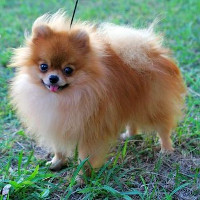
| The German Toy Spitz / Pomeranian is the smallest member of the Spitz family. These tiny little fox-headed dogs with big personalities are descended from large sled dog breeds that weighed around 14 kilos. Queen Victoria owned a small Spitz and during her lifetime, the breed's size halved. It is said that she loved them so much that when she was dying, she asked that her favorite Pom named Turi stay with her. German Toy Spitz / Pomeranians take their name from the province of Pomerania, the region credited with the breeding that led to the original Pomeranian dog type. Closest relatives include the Norwegian Elkhound, Schipperke, German Spitz, American Eskimo Dog and Samoyed. The first Pom was entered in the American Kennel Club stud book in 1888, and the club officially recognized the breed in 1900. Two of the three dogs that survived the sinking of the Titanic were Poms, both escaping with their owners in lifeboats. | ||
 |
||
| Standard of the German Toy Spitz / Pomeranian |
A little of the American Eskimo Dog |
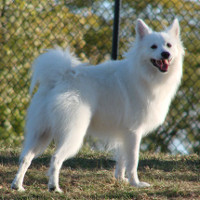
| The American Eskimo Dog originates from Germany and is part of the Spitz family. Its ancestry includes the white German Spitz, the white Keeshound, the white Pomeranian and the Volpino Italiano (white Italian Spitz). They were bred as farm dogs and initially called “Deutch Spitz” in Germany, but due to anti-German prejudice after World War I, they were renamed “American Eskimo Dog”. They are a Nordic dog breed and sometimes nicknamed “the magnificent dog” because of their beauty and gentle expression. In the 19th century, they performed with traveling circuses in the USA, where they gained popularity as a breed. One was famous for walking the tightrope with the Barnum and Bailey Circus. The American Kennel Club recognized the breed in the non-sporting group in 1995. |
 |
| Presentation of the American Eskimo Dog |
Appearance of the Pomimo |
| Pomimo dogs are small hybrid breeds and are a cross between an American Eskimo Dog and a German Toy Spitz / Pomeranian. They are small, elegant dogs weighing up to 7.5 kilos and measuring up to 30.5 centimeters. Some have the longer coat of the parent breed German Toy Spitz / Pomeranian, while others resemble the American Eskimo Dog with a shorter, thicker coat. Common colors include orange, red, cream, white, black, blue, brown, sand and tan or brindle. Although small, they are compact dogs with sturdy bodies. They have fox-like faces with bright, expressive brown eyes and ears that stand upright. Their tails curl over their bodies. |
Temperament of the Pomimo |
| Pomimos are cheerful, affectionate pets that are excellent with children of all ages. They are very playful with children, but it's always a good idea to supervise when children are very small to avoid any rough handling of the dog. They don't like to be left alone for too long and are prone to barking if neglected. They also get on well with other dogs, especially if socialized as puppies. Pomimo are quite territorial and bark at strangers, so they make good watchdogs. But once introduced, they are very friendly with everyone and will love as much attention as possible. They are energetic little dogs who will need physical and mental stimulation to avoid destructive behavior such as chewing or digging. They can be a little stubborn when it comes to training, but lots of positive reinforcement with a confident trainer will see results. |
Needs and activities of the Pomimo |
| These little dogs are full of energy and need regular outdoor activity to burn it off. They'll love going for walks in the mountains or to the beach, and love playing games in a fenced-in yard. They can play ball games, chase Frisbees or play with children. They can become very destructive if they don't get enough exercise, so will suit an active family. They'll do best in an apartment or house with a garden where they can romp about. This breed does not tolerate heat, so take care not to exercise them in very hot weather. |
Maintenance of the Pomimo |
| Pomimos shed a lot and need moderate grooming to stay beautiful. If they have a longer coat, brushing may be necessary twice a week, but the shorter-haired variety should be fine with weekly brushing to keep the coat healthy. You won't need to bathe your dog very often and only with dog shampoo. Try to brush your dog's teeth every day or several times a week to avoid any dental problems. Check ears for mats or dirt and wipe gently with damp absorbent cotton if necessary. Nails should be checked and trimmed if necessary. |



 English (United Kingdom)

Comments