
 |
Peke-A-Chon |
|
He is not recognized by the F.C.I. |
Origin |
China <> France / Belgium -> U.S.A. | |
Translation |
Francis Vandersteen |
A brief presentation of the Peke-A-Chon |
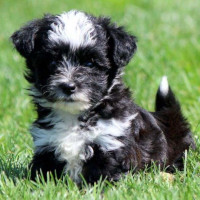
| The Peke-A-Chon is a specific cross between a pure-bred Pekingese and a pure-bred Bichon frise. They are small, friendly dogs that make excellent pets. If your pet follows the Bichon frise, it will be excellent with other dogs and children, but if it has more of a Pekingese temperament, it's not recommended for those with young children. But they are gentle, affectionate dogs that will make an excellent addition to any home. They love to play, but don't need much exercise. Common colors are black, gold, cream and sable, and they often have combinations of these. They have long, thick, soft hair and are generally hypoallergenic on the Bichon side, making them ideal pets for allergy sufferers. Regular grooming is necessary to keep them looking their best. |
History of the Peke-A-Chon |
| The Peke-A-Chon is a hybrid breed made up of a combination of a Pekingese and a Bichon frise. |
A little of the Pekingese |
||
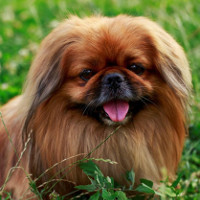
| Pekingese were bred as companions for China's imperial court and are considered one of the oldest dog breeds. They have bulging eyes and, with their short noses, a tendency to snore, but they are as popular today as they were pampered by royalty in ancient times. Chinese legend has it that the Pekingese lineage was created when a lion fell in love with a marmoset and begged the patron saint of animals to transform him to the size of a pygmy, but to keep his lion heart and character. In the past, they were called Lion Dogs, Sun Dogs and Sleeve Dogs because they were worn in the sleeves of those of the imperial court. The first time the Western world heard of these little dogs was when the imperial palace was looted by the British in 1860. Five of them were found inside the palace guarding the body of their owner, who had committed suicide rather than be taken prisoner. They were taken to England and later to America, where they were registered by the American Kennel Club in 1906. | ||
 |
||
| Standard of the Pekingese | ||
A little of the Bichon frise |
||
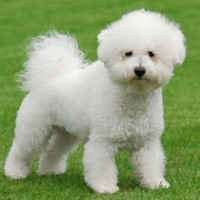
| The fluffy white Bichon frise was also bred as a pet and is native to the Mediterranean. They are thought to be descended from the Barbet, a woolly water dog. This is where the name “Bichon” comes from, as it was derived from the name Barbichon, a diminutive of the word Barbet. The Bichon belongs to the same family as the Maltese, the Havanese, the Bolonais and the Coton de Tuléar. Four groups of Bichons include the Bolognese, Havanese, Maltese and Teneriffe, which were developed on the Canary island of Teneriffe. These cute dogs were also popular with royalty. King Henry III is said to have adored his pet and carried it around his neck in a basket. Later, they were used as circus performers with their cute appearance and charming intelligence for the audience. They were bred in France after the First World War, then introduced to the USA in 1956. The breed was recognized by the American Kennel Club in 1972. | ||
 |
||
| Standard of the Bichon frise |
Appearance of the Peke-A-Chon |
| The Peke-A-Chon is a hybrid breed, a cross between a pure-bred Pekingese and a pure-bred fluffy white Bichon frise. They are toy breeds and fairly small, weighing up to 7 kilos with a height of up to 30.5 centimeters. Common colors are black, gold, cream, white and sand, and they often have variations of these. They have long, thick, soft hair and are hypoallergenic, making them ideal pets for allergy sufferers. It also means they don't shed as much, making them easier to groom. They have brown eyes and black noses and tails that curve over their backs. |
Temperament of the Peke-A-Chon |
| A Peke-A-Chon is an intelligent, affectionate dog that loves to cuddle its owners. They are best suited to people with older children, as the Pekingese side doesn't get on well with very young children and can nip if provoked. But the Peke-A-Chon would learn to adapt if training and socialization started early. They won't enjoy being left alone for long periods, so will suit a family where there's someone at home for much of the day. They are suitable for new owners and will be fairly easy to train, although house-training them can be a little tricky. As with all dogs, they will respond best to positive reinforcement and lots of praise. This breed can bark a lot, so they're good watchdogs, but make sure they learn when to stop. The best way is to keep them busy and give them plenty of exercise and playtime. They can be a little shy around strangers, but with their friendly nature, this won't last long. |
Needs and activities of the Peke-A-Chon |
| A Peke-A-Chon is an active, playful dog, but it doesn't need much exercise to stay fit and healthy. But a daily walk and regular playtime will keep them relaxed and happy. They'll be more than willing to play indoors or curl up on the sofa, so they're suitable for those living in an apartment. These dogs need companionship to prevent any destructive behavior from developing. They are quite sensitive to heat, so be sure to exercise them before it gets too hot in the summer. They can tend to wander off, so keep them on a leash in public. |
Maintenance of the Peke-A-Chon |
| Even if they don't shed much, a Peke-A-Chon's coat should be brushed daily to prevent matting. They should also be trimmed every few weeks to keep them clean and in shape. They are likely to be hypoallergenic; the Bichon frise is, but the Pekingese is not, so it will depend on which breed is the most dominant parent. These breeds need special attention to their faces, which must be cleaned daily to avoid tear stains or any developmental problems with skin folds in the area. They should also be thoroughly dried after bathing. Ears should also be checked weekly for dirt, and teeth brushed daily to maintain good dental hygiene and prevent bad breath. Nails should also be trimmed if necessary. |



 English (United Kingdom)

Comments