
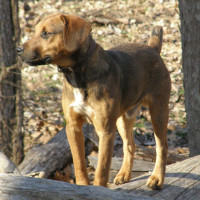
 |
Patterbea |
|
He is not recognized by the F.C.I. |
Origin |
Great Britain -> U.S.A. | |
Translation |
Francis Vandersteen |
A brief presentation of the Patterbea |
| The Patterbea is a breed-specific cross between the purebred Patterdale Terrier and the Beagle. Both parent breeds are used for hunting, and the Patterbea serves as both companion and hunter. The Patterbea is a small to medium-sized dog with good temperament and energy. Little is currently known about the parent breed Patterdale Terrier, which is recognized by the United Kennel Club and not the American Kennel Club. The tenacious, sometimes stubborn personality of the Patterdale Terrier and the prey-minded Beagle can make training a challenge. This hybrid is therefore not a good choice for novice dog owners or families with little time to devote to training and socialization. |
History of the Patterbea |
| The Patterbea is a hybrid of two English breeds, the Patterdale Terrier and the Beagle. Unfortunately, detailed histories are not available for the Patterbea, which is also rare as a hybrid breed. Patterbea owners, or those considering adopting one, may wish to consult the parent breed histories to take a closer look at the possible dispositions of their Patterbea. |
A little of the Patterdale Terrier |
||
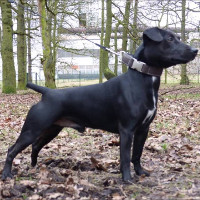
| The Patterdale Terrier developed in the Lake District of northern England along the Scottish border. The Patterdale Terrier shares a close relationship with the Lakeland Terrier, formerly known as the Patterdale Terrier, as well as with the Fell and Cumberland Terriers. All four Terrier breeds can be considered Patterdale types, but today's Patterdale Terrier is distinguished by its smooth, dark coat of short, dense hair. The primary role of the Patterdale Terrier was to protect flocks from predation and vermin by chasing the predator away, or killing it if the predator chose to fight. Because of its historic role and selective breeding, the Patterdale is a tough Terrier that outperforms other vermin-fighting Terriers. The American Kennel Club does not recognize the Patterdale Terrier, but the United Kennel Club, which recognized the breed in 1995, now registers the dogs. | ||
 |
||
| Presentation of the Patterdale Terrier | ||
A little of the Beagle |
||
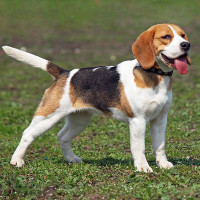
| The Beagle is a beloved old dog whose history is not entirely clear. Most believe that the Beagle arrived in the British Isles during the Norman invasion in the 11th century as the now extinct Talbot dog. The Talbot is thought to have given rise to the Beagle and Foxhound. Beagles first became popular in the 14th and 15th centuries as small hunting companions, but were replaced by the Foxhound as hunting companions in the 18th century. However, in the 1800s, the Reverend Phillip Honeywood established a strong pack in Essex that would become the ancestors of all modern Beagles. The Beagle quickly re-established itself as a hunting companion, and the American Kennel Club recognized the breed in 1885. | ||
 |
||
| Standard of the Beagle |
Appearance of the Patterbea |
| The Patterbea is a small to medium-sized dog measuring up to 38 centimeters. Its head is round on top, with a medium-length muzzle, large, round, dark eyes and a medium-sized black nose. The coat is generally short and dense, but can be slightly rough with long hairs around the face, chest and legs. Ears can vary in size from medium to long, and fold over the sides of the head. Patterbea legs are straight and lean, and the body is compact and proportionate. The Patterbea's tail is of medium length and thickness, without excessive bristles or hair. |
Temperament of the Patterbea |
| The Patterbea is a very active hybrid that can sometimes be stubborn and prey-like, making training difficult. However, the Patterbea is exceptionally loyal to its family, which it considers its pack. The Patterbea is not a vocal dog towards people and does not bark an alarm. However, the Beagle parent likes to howl at its prey or when separated from the pack. This hybrid is friendly to strangers as well as to other dogs and pets. The Patterdale Terrier lineage can, however, enhance the hybrid's protective qualities, especially with young children. The Patterbea is very fond of children and makes an excellent sturdy companion. |
Needs and activities of the Patterbea |
| The Patterbea is a small to medium-sized hybrid with a lot of energy to burn. The Terrier and the Patterbea's prey-like qualities increase activity and intensity levels, and this mix requires a lot of daily outdoor running. With a strong potential for wanderlust, the Patterbea also needs outside supervision and a high fenced backyard. Mental stimulation is equally important for this hybrid to develop an active mind without negative behaviors, such as chewing and digging. The Patterbea prefers temperate climates that are neither too hot nor too cold, and its activity and energy levels dictate living in the country rather than the city. |
Maintenance of the Patterbea |
| The Patterbea is not a hypoallergenic dog, but fortunately, the hybrid doesn't shed much. The short, dense coat is easy to maintain with monthly grooming practices, but the Patterbea can develop a doggy odor. More frequent brushing with a bristle or pin brush will help distribute the natural oils and remove any accumulated dirt or debris. Patterbea's coat is water-resistant, making frequent bathing somewhat difficult to maintain the doggy smell. In addition, regular bathing can irritate the skin, and owners should use only hypoallergenic shampoos. The Patterbea has a much higher risk of developing periodontal disease and requires teeth and mouth cleaning at least three times a week. Providing Patterbea with a hard rubber chew toy can also help reduce tartar and plaque build-up. |



 English (United Kingdom)

Comments