 |
Old Deerhound Sheepdog |
|
He is not recognized by the F.C.I. |
Origin |
Great Britain -> U.S.A. | |
Translation |
Francis Vandersteen |
A brief presentation of the Old Deerhound Sheepdog |
| The Old Deerhound Sheepdog is a specific cross between the ancestral English Sheepdog (Bobtail) and the Deerhound. The result is a large hybrid breed that could be compared to a slightly larger, long-haired Greyhound. With the slim, athletic silhouette of the Deerhound and the easily recognizable long coat of the Old English Sheepdog (Bobtail), the Old Deerhound Sheepdog is very unique in terms of aesthetics and personality. While an attractive breed, don't be fooled by its looks alone. The Old Deerhound Sheepdog is a very active breed that requires a lot of exercise time, but its gentle, loving personality makes up for any difficulties its high energy may present. This gentle hybrid is ideal with children and other dogs, not forgetting that they also make excellent watchdogs. So, if you're looking for a large but gentle guard dog for your family, the Old Deerhound Sheepdog may be the perfect breed for you. |
History of the Old Deerhound Sheepdog |
| When it comes to understanding the importance of why a breed was created, the best place to discover such things is in the beginning. For the Old Deerhound Sheepdog, there isn't much of an early history to study, as it's a relatively new hybrid breed. That's why we have to turn to the parent breeds to uncover the mystery of why this particular hybrid breed is special and what its main purpose may be today. |
A little of the Old English Sheepdog (Bobtail) |
||
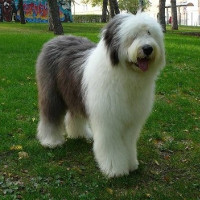
| For example, when we look closely at the origin story of the Ancestral English Shepherd Dog (Bobtail), we discover something interesting. Although its name is the Ancestral English Sheepdog (Bobtail), it is in fact one of the youngest breeds of sheepdog to exist in England. Developed somewhere in south-central England, this sheepdog may have started out as a herding animal, but by the time it was relatively well known in 1885, its fame came mainly from being a show dog. Now, that hasn't stopped its shepherding nature at all, but people everywhere have taken a liking to the shaggy features and gentle disposition of the ancestral English Sheepdog (Bobtail) and its talents have been put to use in many different fields. The American Kennel Club registered the breed in 1888, and it wasn't long before this adorable breed was appearing in movies and TV shows, leading to a rapid rise in popularity between the 1960s and 1970s. The Old English Sheepdog (Bobtail) is still a showman, but it's also extremely popular as a family companion and watchdog. | ||
 |
||
| Standard of the Old English Sheepdog (Bobtail) | ||
A little of the Deerhound |
||
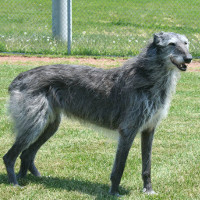
| The Deerhound is one of the well-known ancient breeds that have been around since the 16th century. Part of the Greyhound family, the Deerhound was a slightly larger variant with the specific purpose of hunting and shooting deer, from which it takes its name. Even though this breed was so capable of bringing down the Highland stag at hunting events, it's not surprising that the Deerhound was so popular. In fact, these dogs were so popular that a lord convicted of a capital crime could actually buy his freedom with a few Deerhounds. Unfortunately, even despite their popularity with the people of the time, nature has a way of diminishing the most precious of things. Due to a decline in big game and the deterioration of the Scottish clan system during the 1700s, the Deerhound population became extremely low by 1760. Fortunately, Archibald and Duncan McNeil worked tirelessly to restore the breed a few years later and saved the Deerhound from complete extinction. To this day, Deerhounds are a rare breed, but they are still used to hunt coyotes, small game and sometimes wolves. In addition to hunting, the breed is used in shows all over the world and as a rare family companion. Because of the Deerhound's high energy level and hunting instinct, it will never be fully satisfied as a pet. The right family is needed to own this breed, one that is willing to go out and give the Deerhound a purpose. | ||
 |
||
| Standard of the Deerhound |
Appearance of the Old Deerhound Sheepdog |
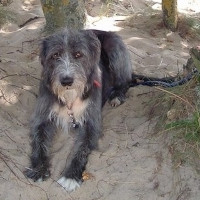
| Because the Old Deerhound Sheepdog is a hybrid breed, its appearance will vary considerably, even within the same litter. Typically, however, its appearance is that of a larger Greyhound, taking after the Deerhound, with a slim body and athletic build. Its long hair is taken from the ancestral English Sheepdog (Bobtail) and although it generally lacks the trademark hairs growing over its eyes, the Old Deerhound Sheepdog retains the trait of much facial hair, almost in a bear-like style with bushy eyebrows. The Old Deerhound Sheepdog is handsome, with intelligent dark eyes and a streamlined body that is an excellent combination of both the ancestral English Sheepdog (Bobtail) and the Deerhound. His coat is long and soft, being both a blessing and a curse. Although it is beautiful, coming in colors such as white, blue or gray, the coat can tangle easily and must be cleaned often to avoid any doggy smell. Loose ears, a large black nose and a full tail are the hallmarks of the Old Deerhound Sheepdog. |
Temperament of the Old Deerhound Sheepdog |
| A perfect blend of Old English Sheepdog (Bobtail) and Deerhound temperaments, the Old Deerhound Sheepdog is a wonderful companion animal. They are gentle, loyal, intelligent, affectionate, playful and not overly energetic. Because his ancestry is made up of a sheepdog and a hunting dog, there's no doubt he'll need plenty of exercise. But his laid-back disposition and loving nature make him an excellent choice for families with young children or other pets, as the Old Deerhound Sheepdog generally has fun with everyone, without exception. Because of its herding nature, this breed makes an excellent watchdog. They bark only when necessary and are very loyal to their family, without any aggressive tendencies. For this reason, even despite its large size, the Old Deerhound Sheepdog will do very well in an apartment building or small neighborhood as long as it has an outlet for its energy. Early socialization and proper training will also be essential to ensure a well-behaved dog, but fortunately, the Old Deerhound Sheepdog responds quite well to training. He can have stubborn moments thanks to the Deerhound's independent nature, but with a gentle hand and clear leadership, he'll do just fine. |
Needs and activities of the Old Deerhound Sheepdog |
| The Old Deerhound Sheepdog is a very active dog. Both its parent breeds were created to have specific jobs, and not easy ones at that. Breeding and hunting require a lot of energy, so you can expect your Old Deerhound Sheepdog to need several play sessions throughout the day. Some good examples of what you can do with this breed would be hiking, jogging, training, retrieving play or even cycling with the right equipment. Although it may seem that training doesn't tire a dog, it's very important for intelligent breeds like shepherds. No matter how much physical activity you provide, unless his mind is also tired, the Old Deerhound Sheepdog won't be entirely satisfied. So make sure you spend time training and playing games with your dog to keep him satisfied and on his best behavior every day. |
Maintenance of the Old Deerhound Sheepdog |
| Although the coat of the Old English Sheepdog (Bobtail) is its most notable feature, this means that your Old Deerhound Sheepdog will tend to shed just like its parent breed. With this in mind, be prepared for lots of hair all over your home and furniture. Careful grooming several times a week will be necessary to keep the hair down and the Old Deerhound Sheepdog's coat well groomed. Like its parents, the Old Deerhound Sheepdog will need frequent baths to keep doggy odors at bay. Because of the composition of his coat, neglecting to brush and bathe your Old Deerhound Sheepdog properly can result in a matted, dirty, smelly mess that will need to be shaved. So keep him clean and brushed to keep everyone happy. In addition to basic brushing and bathing, be sure to clean your dog's ears often and trim his nails every few weeks to keep his paws healthy and snag-free. |



 English (United Kingdom)

Comments