 |
Native American Village Dog |
|
He is not recognized by the F.C.I. |
Origin |
U.S.A. <> Germany -> U.S.A. | |
Translation |
Francis Vandersteen |
A brief presentation of the Native American Village Dog |
| The Native American Village Dog is a specific cross between the German Shepherd and the Native American Indian Dog. The breed can reach up to 50 kilos and 76 centimeters in height as an adult. The breed is good with children and other pets as long as they are properly socialized and trained. They are good working dogs that can hunt, pull sledges or herd sheep, but also enjoy agility training, playing fetch or simply spending time with the family. They are easy to train and obedient dogs that make excellent pets, even for those who have never owned a dog. |
History of the Native American Village Dog |
| The Native American Village Dog is still quite rare, so there's no history yet. Therefore, you must take into account the origins of the parents to determine a history for your dog. |
A little of the Native American Indian Dog |
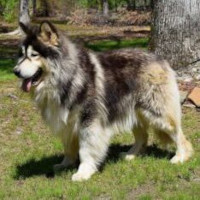
||
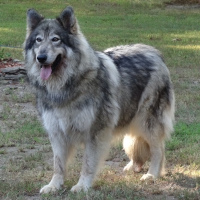
| The Native American Indian Dog originated in the 16th century, when it lived and traveled with Native Americans throughout America. There is some disagreement as to whether the modern Native American Indian Dog is the same as the original breed, and whether it is related to the wolf, the dingo and the Carolina dog. However, their history dates back to the 1500s when these dogs traveled with various tribes and were used to pull sledges, guard and even as babysitters. They have not been recognized by the American Kennel Club, but are registered with the National Kennel Club and the Native American Indian Dog Registry. | ||
 |
||
| Presentation of the Native American Indian Dog | ||
A little of the German Shepherd |
||
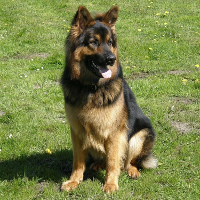
| The German Shepherd originated in Germany in 1899 as a shepherd dog, but was also popular as a guard dog. Their ancestors include several different varieties of local shepherd breeds and possibly a wolf-type dog. The man who single-handedly created the German Shepherd was Captain Max von Stephanitz of Germany, who wanted a dog capable of herding large flocks of sheep. The German Shepherd's loyalty and courage earned it a reputation as an excellent guard dog, and it was even used by the German army during the First World War. It was originally called the German Shepherd Dog, but was modified by the American Kennel Club when it was registered in 1908. It is now the 2nd most popular dog breed in America. | ||
 |
||
| Standard of the German Shepherd |
Appearance of the Native American Village Dog |
| The eyes of the Native American Village Dog are the most striking thing about them, as they can be almost any color, including amber, blue and yellow. They can even have two different-colored eyes. Their slender muzzle has a leathery black nose and pointed upright ears on their large triangular head. This breed has a muscular body with long legs and a hairy, curved tail. Their coats can be black, black and tan, cream, gray, silver, white and various combinations of these colors, and have wolf markings. They have a thick, straight, medium-length double coat that is soft and water-repellent. |
Temperament of the Native American Village Dog |
| The Native American Village Dog is easy to train and gets along well with everyone as long as it's socialized early. They're excellent pets, but they don't like to be alone, so they can become anxious or depressed if you're away for long periods. It's best for them if they have other pets in the house to play with and make sure they get enough exercise, and their separation anxiety shouldn't be a big problem. They are a very intelligent breed and love to learn new tricks and enjoy being the center of attention. |
Needs and activities of the Native American Village Dog |
| Your Native American Village Dog needs at least one hour of exercise a day. They do best in homes with a large, fenced-in yard where they can run around for a few hours a day. However, if you don't have a fenced yard, you can take your dog to the local dog park or park to get the exercise he needs. If your dog doesn't get enough vigorous activity every day, he may develop bad habits such as chewing on objects, barking excessively and may even become aggressive. Try taking your dog for a few brisk walks in the morning and evening, as well as playing fetch to keep him happy between walks. |
Maintenance of the Native American Village Dog |
| The Native American Village Dog should be brushed at least four or five times a week, but daily is preferable. Using a pin brush and a metal comb, you should brush them thoroughly, making sure to get under their legs and neck area, where matting often occurs. They don't need to be bathed unless absolutely necessary, as they keep themselves clean, have no doggy odor and rarely shed. In fact, they're considered almost hypoallergenic. Be sure to clean your dog's ears, trim his nails and brush his teeth regularly. |



 English (United Kingdom)

Comments