
 |
Mini Foxker |
|
He is not recognized by the F.C.I. |
Origin |
Australia <> Great Britain -> U.S.A. | |
Translation |
Francis Vandersteen |
A brief presentation of the Mini Foxker |
| Mini Foxkers, which are known as adorable, lively pets, are a specific cross between a Miniature Fox Terrier and an English Cocker Spaniel. They are a relatively new hybrid whose appearance or temperament is not completely stabilized, meaning they can inherit any combination of traits from their parent breeds. As a result, Mini Foxkers are not yet recognized by the American Kennel Club's list of purebred dogs. Nevertheless, they generally live to 15 years of age, weigh between 6 and 9 kilos and reach a height of 30.5 to 35.5 centimetres. Mini Foxkers with an English Cocker Spaniel parent, as opposed to an American Cocker Spaniel parent, will be at the upper end of these size estimates. |
History of the Mini Foxker |
| The name Mini Foxker is a combination of the names of this dog's parent breeds: the Miniature Fox Terrier and the English Cocker Spaniel. |
A little of the Miniature Fox Terrier |
||
| The Miniature Fox Terrier was developed in the early 1900s in the USA for hunting vermin. Its ancestry consists of the Smooth Fox Terrier and a hodgepodge of toy breeds, including but not limited to the Italian Greyhound, Toy Manchester Terrier, Miniature Pinscher and Chihuahua. This breed has long been admired for its practical size, dexterity and intelligence. In fact, these notable traits led it to become a popular performance animal in the 20th century, commonly appearing in circuses across the United States. During the same period, the Miniature Fox Terrier also gained popularity as a pet, and was officially recognized by the American Kennel Club in 2003. | ||
 |
||
| Standard of the Miniature Fox Terrier | ||
A little of the English Cocker Spaniel |
||
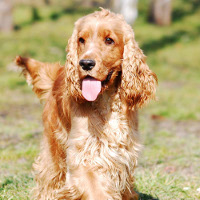
| The English Cocker Spaniel originated in 19th-century England, where it was bred to be an adorable pet and loyal sporting companion. English Cocker Spaniels were particularly adept at hunting woodcock, hence the prefix to their name: "Cocker". The breed also became popular in the USA in the early 1900s. Divergent breeding practices in the two countries led to a split in the breed. Today, there are two varieties of Cocker Spaniel: the "English" version and the "American" version, which is relatively smaller in size. The product of these two breeds, the Mini Foxker, is thought to have originated in the early to mid-1900s, when the two parent breeds first lived together in the same geographical regions. Yet Mini Foxkers have not fully stabilized and remain a rare hybrid in the USA and the rest of the world. As such, they can be a difficult breed to trace, varying considerably in temperament and appearance. | ||
 |
||
| Standard of the English Cocker Spaniel |
Appearance of the Mini Foxker |
| A Mini Foxker is a small, athletic dog that inherits the physical characteristics of both its parent breeds. It is muscular like an English Cocker Spaniel, but never heavy or corpulent thanks to its delicate Miniature Fox Terrier influence. They generally weigh between 6 and 9 kilos and reach a height of between 30.5 and 35.5 centimeters. Mini Foxkers have high, small pendulous ears, round or oval eyes dark brown or hazel, and a brown or black nose. This breed comes in multicolored combinations of colors and patterns common to both parents. They tend to have short to medium coats, straight and silky to the touch. If the dog resembles the Spaniel parent, it may have light feathering around the ears, feet, legs and belly. |
Temperament of the Mini Foxker |
| Mini Foxkers inherit a pleasant balance between the energy of the Miniature Fox Terrier and the friendliness of the English Cocker Spaniel. This breed is loyal, loving and alert. They are athletic and like to play regularly with humans and furry friends. Mini Foxkers require a lot of attention from their owners and are prone to separation anxiety if left alone for long periods or not given regular affirmation. As a result, this breed will do best in a family environment where they are surrounded by people most of the time. Because they are eager to please their owners, Mini Foxkers are fairly easy to train. When it comes to other animals, children and adults other than their owners, Mini Foxkers tend to be approachable and affectionate. However, the best way to ensure that your Mini Foxker gets on well with others is to expose it to early and consistent socialization. Overall, these lively, affectionate pets thrive in structured environments where they have constant companionship. |
Needs and activities of the Mini Foxker |
| As an energetic and athletic dog, it's important for the Mini Foxker to get 30 to 45 minutes of activity a day. It's not a fussy breed, and will be content with moderate walks, play phases with other dogs in the park, or even play sessions with their owners. Bear in mind that these dogs are fast runners with a strong impulse to stroll and hunt, so owners should not leave Mini Foxkers unsupervised when outdoors or in unfenced areas. Otherwise, Mini Foxkers do well in all types of climates and environments. They will even thrive in urban and/or apartment living as long as owners are diligent in providing adequate exercise, as described above. |
Maintenance of the Mini Foxker |
| The silky coat of Mini Foxkers varies from short to medium, sheds moderately and requires occasional grooming with a blade or smoother brush. If your Mini Foxker's coat is particularly long, owners can use a pin brush for grooming and scissors or clippers to trim the feathers around the eyes, ears and legs to avoid infections or impediments to mobility. This breed requires a monthly bath in which ears and eyes are thoroughly cleaned. Like all breeds, Mini Foxkers should also have their teeth cleaned daily to prevent plaque build-up and other dental diseases. Finally, please note that Mini Foxkers are not hypoallergenic, making them unsuitable for owners of pets with allergies. |



 English (United Kingdom)

Comments