Mini English Cocker

He is not recognized by the F.C.I.

Origin
Germany <> Great Britain -> U.S.A.
Translation
Francis Vandersteen

A brief presentation of the Mini English Cocker

The Mini English Cocker is a cross between two breeds, the Dachshund and the English Cocker Spaniel. The result is a handsome dog who is affectionate and gentle but has a tendency to be stubborn, rather like his two parent dogs. They are average in terms of activity level, but are born hunters and can therefore chase smaller animals and birds, or go off to try out an interesting scent. Mini English Cockers can vary from small to medium-sized, depending on the genetics they inherit from their two different parent breeds. They tend to have a delicate face and pointed muzzle with long, floppy ears. Their coat is generally soft and feathered around the legs and ears. The Mini English Cocker is a dog that loves to be with its humans, they pine if left alone for long periods. These intelligent, affectionate dogs make good pets, but there is one drawback - they can nip or growl with rough handling.

History of the Mini English Cocker

The Mini English Cocker is a hybrid breed, so to understand its origins, we need to study the history of its parent breeds.


A little of the Dachshund

        
The Dachshund originated in Germany, where it was used to hunt badgers, foxes and wild boar in the 16th century. These dogs varied in size, being bred to match what they hunted. Originally known as the Dachshund in Germany, the breed was refined by German foresters in the 18th and 19th centuries. These dogs were intrepid hunters, penetrating the burrows of their prey. Other breeds have contributed to the development of Dachshunds: the smooth-haired variety, a cross between French Braques and Bassets, and the long-haired Dachshund, a cross between various Spaniels and Terriers. It is the only dog recognized by the American Kennel Club that hunts above and below ground. The breed became popular in the early 1900s, but fell on hard times during the First World War due to the German connection. But they became popular again in the 1950s. Today, they rank 6th in popularity out of 155 breeds recognized by the AKC.
Standard of the Dachshund

A little of the English Cocker Spaniel

Spaniels have a long history and can be classified as either terrestrial or aquatic. Known for their hunting and retrieving skills on land and water, they varied in size and weight. It was only towards the end of the 19th century that breeders began to divide them into specific breeds. All Spaniels weighing less than 11.5 kilos were classified as Cocker Spaniels. But disputes between breeders led to reclassification to create standard breeds for each type of Spaniel. American breeders were more interested in a smaller dog and bred accordingly, while the English preferred a larger dog. In 1936, a special classification was considered for the English Cocker Spaniel to separate it from its smaller American cousin. The English Cocker Spaniel had finally found its place in the history of dog breeding.
Standard of the English Cocker Spaniel

Appearance of the Mini English Cocker

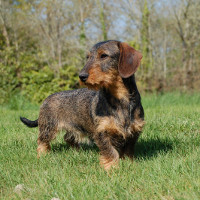
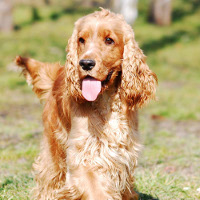
The Mini English Cocker can vary in appearance depending on which of the parents' genetics is most dominant. Even puppies from the same litter can vary, some looking more like English Cocker Spaniels with soft, wavy coats and feathers on ears, tail and legs. Other puppies may resemble the Dachshund, looking more elegant, longer and with a straight or stiff coat. It's pure luck of the draw as to what the puppies will look like, but one thing is certain and that is their soulful eyes, sturdy little body and affectionate nature. Short legs with well rounded paws, a rounded head with a slightly pointed muzzle and long, floppy ears are the Mini English Cocker's trademark. A long tail held at mid-height, which can be fluffy or smooth, and dark eyes and nose, as well as a combination of colors, often two-tone, offer many attractive features.

Temperament of the Mini English Cocker

Cute and adorable, but also clever and intelligent, Mini English Cockers also have a stubborn side that can be overcome with patience and kindness. These dogs love being with their family and are definitely indoor dogs. Although they love to explore the outdoors, they seek human contact. Early socialization with people and other dogs will enable them to become well-balanced dogs with pleasant personalities. They are generally calm and quiet dogs, making them ideal for a pet. They have a strong hunting instinct, a gift from their parent breeds, and may be inclined to chase anything that gets away from them. The use of a leash is therefore important when you're out and about. Training and early socialization will help overcome this, especially if they are purchased with other pets. They love games that challenge them mentally, and are happy dogs who love nothing more than snuggling up to you and the family. The Mini English Cocker can be entertaining and funny, or calm and somber. Although they may inherit the lively, courageous nature of their fearless ancestors, the mixed breed generally tempers this trait and is described as a mild-tempered dog.

Needs and activities of the Mini English Cocker

The Mini English Cocker has moderate exercise requirements, making it ideal for apartment living, and the fact that they are not barkers is a bonus. A walk around the neighborhood, or an hour or two at the dog park will burn off their energy and engage their inquisitive nature. Some days, they'll just want to stay by your side, enjoying the attention they get. Other days, they'll disappear after an interesting scent, so if you're in an unfenced area, a leash is advisable. They'll happily walk or trot alongside you on your daily outings, or sit and contemplate life while you sip your coffee. At home, they're more interested in cuddling up with the family, and appreciate any petting and attention you can give them.

Maintenance of the Mini English Cocker

The Mini English Cocker is a medium-maintenance dog, requiring brushing twice a week to get rid of loose hair and prevent matting. They are not great excretors, but good brushing will keep the coat shiny and looking its best. Because they have floppy ears, be sure to check for accumulated dirt and if so, wipe them gently with a damp cloth to clean them. Never push anything into the ear canal, as this could damage your dog's hearing. Inflammation can start in the warm, moist environment of the ear, so it's a good idea to include this maintenance as a regular task. Brushing your dog's teeth will ensure good hygiene and prevent doggy breath, keeping teeth strong and healthy. As for bathing, they only need it if they've been rolling around in mud or something a bit smelly. Use a mild dog shampoo to protect their coat and skin.

Comments

Latest page updates

  • Telomian

    Telomian He is not recognized by the F.C.I. Origin Malaysia Translation Francis Vandersteen A brief presentation of the Telomian The Telomian is a very rare breed of dog, and the only one native to Malaysia to have been bred outside the country. They were originally bred by the indigenous people of Malaysia to combat parasites such as snakes, rats,...
  • King Wheaten -- Cavalier King Charles Spaniel X Irish Soft Coated Wheaten Terrier

    King Wheaten He is not recognized by the F.C.I. Origin Great Britain <> Ireland -> U.S.A. Translation Francis Vandersteen A brief presentation of the King Wheaten The King Wheaten is a small dog with a heart this big and a playful disposition. Borrowing the energy and soft-coated waves of the Irish Soft Coated Wheaten Terrier and the size and...
  • Spanierd -- English Springer Spaniel X German Shepherd

    Spanierd He is not recognized by the F.C.I. Origin Great Britain <> Germany -> U.S.A. Translation Francis Vandersteen A brief presentation of the Spanierd The Spanierd is a hybrid dog. Its parent breeds are the English Springer Spaniel and the German Shepherd. They have an affable personality. He's known for entertaining family and friends with his...
  • Alaskan Goldenmute -- Alaskan Malamute X Golden Retriever

    Alaskan Goldenmute He is not recognized by the F.C.I. Origin U.S.A. <> Great Britain -> U.S.A. Translation Francis Vandersteen This breed is also known as Alaskan GoldenGoldenmuteAlaskan Gold Retriever     A brief presentation of the Alaskan Goldenmute The Alaskan Goldenmute is a descendant of two great dog breeds: the Alaskan Malamute and the Golden...
  • French pointing dog Pyrenean type

    French pointing dog Pyrenean type FCI standard Nº 134 Origin France Translation Mrs. Peggy Davis Group Group 7 Pointing Dogs Section Section 1.1 Continental Pointing Dogs « Braque » Type Working With working trial Acceptance on a definitive basis by the FCI Tuesday 18 January 1955 Publication of the official valid standard Tuesday 01 August 2023 Last...
  • French pointing dog Gascogne type

    French pointing dog Gascogne type FCI standard Nº 133 Origin France Translation Mrs. Peggy Davis Group Group 7 Pointing Dogs Section Section 1.1 Continental Pointing Dogs « Braque » Type Working With working trial Acceptance on a definitive basis by the FCI Monday 17 January 1955 Publication of the official valid standard Tuesday 01 August 2023 Last...
  • Vucciriscu

    Vucciriscu He is not recognized by the F.C.I. Origin Sicily Translation Francis Vandersteen En français, cette race se dit Vucciriscu Diese Norm ist in deutscher Sprache sichtbar Vucciriscu En español, esta raza se dice Vucciriscu In het Nederlands, wordt dit ras gezegd Vucciriscu This breed is also known as Sicilian Vucciriscu Sicilian Butcher...

© 2026 Groupe Milouchouchou ASBL. Tous droits réservés. En savoir plus

Protected by Copyright01
We use cookies

We use cookies on our website. Some of them are essential for the operation of the site, while others help us to improve this site and the user experience (tracking cookies). You can decide for yourself whether you want to allow cookies or not. Please note that if you reject them, you may not be able to use all the functionalities of the site.

Ok