Mi-kitese

He is not recognized by the F.C.I.

Origin
U.S.A. <> Central Mediterranean Basin -> U.S.A.
Translation
Francis Vandersteen

A brief presentation of the Mi-kitese

The Mi-kitese is a hybrid breed. Its parent breeds are the Maltese and the Mi-ki. The Mi-kitese is compatible with many types of family, couples, families with children, seniors and singles. He's happy in an apartment or house, with or without a fenced-in yard. The Mi-kitese is highly intelligent and its antics can be very entertaining for its family. He is calm and gentle, even with strangers. He can be somewhat difficult to house-train, and you may want to crate-train him to facilitate housetraining. He's often curious and playful, and may follow you from room to room just to be with you.

History of the Mi-kitese

The Mi-kitese is a rare hybrid breed, and this is partly due to the fact that the Mi-ki parent breed is itself a rare breed. To learn more about the hybrid breed, it's essential to know the origins of the parent breeds.


A little of the Mi-Ki

        
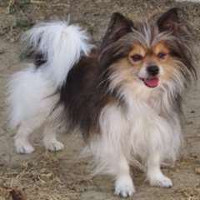
The Mi-Ki is a relatively new breed. It was developed in the 1980s. It is related to the Japanese Spaniel, Maltese and Continental Toy Spaniel. No one knows exactly how it came into being, but most people agree that it originated in Asia. The most popular story surrounding the Mi-Ki is that breeder Micki Mackin used Shih Tzu, Japanese Spaniels and Continental Toy Spaniels to develop the Mi-ki. However, as Mackin did not keep accurate records, there is no verification to this story. Some believe he also crossed Yorkshire Terriers into the Mi-Ki mix, but this is not certain. There are several Mi-Ki clubs across the U.S.A., however, each club has its own standard for the breed.
Presentation of the Mi-Ki

A little of the Maltese

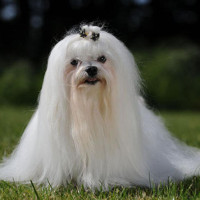
The exact origin of the Maltese is unknown, however, dogs similar to it have been depicted on works of art from Greece, Rome and Egypt. It is said that the Egyptians believed Maltese dogs had healing powers and would place a dog on a sick person's pillow. Many believe that the modern Maltese developed on the island of Malta and became a popular dog throughout the Mediterranean. French and English nobility fell in love with the little dogs. Queen Elizabeth I had one, as did Mary, Queen of Scots, and Queen Victoria. However, in the 17th and 18th centuries, irresponsible breeders attempting to create an ultra-small version of the Maltese almost destroyed the breed. However, breeders added Poodles and East Asian miniature dogs to the line, and saved the breed. Most Maltese in the U.S.A. today can be traced back to British imports, which arrived here in the late 1800s and remain a very popular breed today.
Standard of the Maltese

Appearance of the Mi-kitese

The exact appearance of the Mi-kitese is unknown, as this will be determined by the dominant parental breed. However, we can expect him to be a beautiful blend of his parent breeds. The Maltese was used to create the Mi-ki dog, so it's likely that he'll carry many of the same traits. He'll probably have long, silky hair. However, he may inherit a short, smooth coat close to the body. If Mi-kitese inherit a short, smooth coat, expect him to have bangs around the ears. Color depends, once again, on the dominant parental breed. The Mi-ki dog is usually a mixture of colors, rarely a solid color. For this reason, your Mi-kitese may be black and white, gray with dark markings, and it may also have tan or brown markings.

Temperament of the Mi-kitese

The Mi-kitese will be a gentle, good-natured dog. Be prepared for him to be rather entertaining too. He's good with children, especially with early socialization. Be sure to supervise him with young children. He'll be a very small dog, and any roughhousing, while he may enjoy it, can actually hurt him. The Mi-ki has a reputation for being very calm, and Mi-kitese will probably be too. however, the parent breed Maltese is curious and playful, so you can count on the Mi-kitese to be curious and active too. He'll enjoy playtime with you, but he'll also be an excellent cuddly companion. The Mi-ki is renowned for being easily trainable, while the Maltese is generally more stubborn when it comes to cleanliness. It's likely that the Mi-kitese will be easier to train than its parent breed, the Maltese, due to the influence of the Mi-ki dog. Overall, you can expect the Mi-kitese to be a gentle, playful addition to your family.

Needs and activities of the Mi-kitese

The Mi-kitese is not a high-energy dog, but it will need enough exercise to maintain a healthy weight. He'll need at least one long walk a day to satisfy his activity requirements, but you can also divide his activity into two or more short, brisk walks. He'll enjoy active play with toys designed to stimulate his mind, but he also needs this walk time. He's not prone to destruction when he's not working off his energy, but it can make him unhappy. He likes to be free to run and play. He'll be happy in an apartment as long as he gets enough exercise. However, if you have enough space outdoors, he loves to run and play.

Maintenance of the Mi-kitese

The Mi-kitese will require much the same care as its parent breed, the Maltese, depending on the type of coat it inherits. If he inherits a short, smooth coat, he'll need weekly brushing and bathing only when necessary. If he inherits the Maltese's long, silky coat, he'll need daily brushing to avoid matting. However, some owners choose to cut the coat close to the body to meet grooming needs. If this is the case, he will only need weekly brushing and baths if necessary. The Maltese is known for its sensitive skin, so choose an all-natural shampoo - a dry shampoo is an excellent alternative - for its soft skin. Brush your Mi-kitese's teeth two or three times a week to prevent tartar build-up and bad breath. Maltese can have dental problems, so you can brush your Mi-kitese's teeth daily to prevent tooth decay. Trim your dog's nails every two weeks, unless they wear naturally. As a general rule, if you hear your dog's nails clicking on the tile floor, it's time to trim them.

Comments

Latest page updates

  • Telomian

    Telomian He is not recognized by the F.C.I. Origin Malaysia Translation Francis Vandersteen A brief presentation of the Telomian The Telomian is a very rare breed of dog, and the only one native to Malaysia to have been bred outside the country. They were originally bred by the indigenous people of Malaysia to combat parasites such as snakes, rats,...
  • King Wheaten -- Cavalier King Charles Spaniel X Irish Soft Coated Wheaten Terrier

    King Wheaten He is not recognized by the F.C.I. Origin Great Britain <> Ireland -> U.S.A. Translation Francis Vandersteen A brief presentation of the King Wheaten The King Wheaten is a small dog with a heart this big and a playful disposition. Borrowing the energy and soft-coated waves of the Irish Soft Coated Wheaten Terrier and the size and...
  • Spanierd -- English Springer Spaniel X German Shepherd

    Spanierd He is not recognized by the F.C.I. Origin Great Britain <> Germany -> U.S.A. Translation Francis Vandersteen A brief presentation of the Spanierd The Spanierd is a hybrid dog. Its parent breeds are the English Springer Spaniel and the German Shepherd. They have an affable personality. He's known for entertaining family and friends with his...
  • Alaskan Goldenmute -- Alaskan Malamute X Golden Retriever

    Alaskan Goldenmute He is not recognized by the F.C.I. Origin U.S.A. <> Great Britain -> U.S.A. Translation Francis Vandersteen This breed is also known as Alaskan GoldenGoldenmuteAlaskan Gold Retriever     A brief presentation of the Alaskan Goldenmute The Alaskan Goldenmute is a descendant of two great dog breeds: the Alaskan Malamute and the Golden...
  • French pointing dog Pyrenean type

    French pointing dog Pyrenean type FCI standard Nº 134 Origin France Translation Mrs. Peggy Davis Group Group 7 Pointing Dogs Section Section 1.1 Continental Pointing Dogs « Braque » Type Working With working trial Acceptance on a definitive basis by the FCI Tuesday 18 January 1955 Publication of the official valid standard Tuesday 01 August 2023 Last...
  • French pointing dog Gascogne type

    French pointing dog Gascogne type FCI standard Nº 133 Origin France Translation Mrs. Peggy Davis Group Group 7 Pointing Dogs Section Section 1.1 Continental Pointing Dogs « Braque » Type Working With working trial Acceptance on a definitive basis by the FCI Monday 17 January 1955 Publication of the official valid standard Tuesday 01 August 2023 Last...
  • Vucciriscu

    Vucciriscu He is not recognized by the F.C.I. Origin Sicily Translation Francis Vandersteen En français, cette race se dit Vucciriscu Diese Norm ist in deutscher Sprache sichtbar Vucciriscu En español, esta raza se dice Vucciriscu In het Nederlands, wordt dit ras gezegd Vucciriscu This breed is also known as Sicilian Vucciriscu Sicilian Butcher...

© 2026 Groupe Milouchouchou ASBL. Tous droits réservés. En savoir plus

Protected by Copyright01
We use cookies

We use cookies on our website. Some of them are essential for the operation of the site, while others help us to improve this site and the user experience (tracking cookies). You can decide for yourself whether you want to allow cookies or not. Please note that if you reject them, you may not be able to use all the functionalities of the site.

Ok