
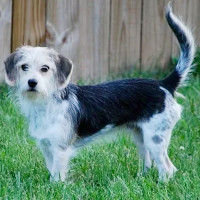
 |
Malteagle |
|
He is not recognized by the F.C.I. |
Origin |
Central Mediterranean <> Great Britain -> U.S.A. | |
Translation |
Francis Vandersteen |
A brief presentation of the Malteagle |
| The Malteagle is a hybrid of a Beagle and a Maltese. Being a relatively new hybrid, there isn't that much information available about it. Although we don't know where or when the hybrid was born, we do know that this cute, cuddly little dog, who loves everyone, will warm the hearts of all who approach him, making him one of the most sought-after canine companions, especially for the elderly and those with children. Malteagles live from 12 to 15 years, vary in height from 23 to 38 centimeters and weigh between 7 and 10 kilos. |
History of the Malteagle |
| The Malteagle is a hybrid of a Beagle and a Maltese. Being a relatively new hybrid, the place and date of origin are unknown, as is the purpose for which the two pure breeds were mixed. The Malteagle hybrid is recognized by the following organizations: American Canine Hybrid Club, Designer Breed Registry, Designer Dogs Kennel Club, Dog Registry of America, Inc. and International Designer Canine Registry. |
A little of the Maltese |
||
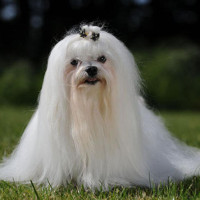
| The Maltese originated in Italy and Malta, where it was formerly known as the Ye Ancient Dogge of Malta. The Maltese has the dubious honor of being the oldest known pocket dog, with origins dating back to at least 3500 BC on the island of Malta, off the southern coast of Italy, and seems to have been purely for companionship, a purpose that continues today. It is entirely possible that this is the oldest known European toy breed. The breed's popularity waned as the popularity and need for hunting dogs increased. Interest was revived in the mid-1800s when meticulous breeding and record-keeping resulted in a purer Maltese breed. The Maltese first appeared in the show ring in England in 1859 and in America in 1877. The Maltese breed was finally recognized by the American Kennel Club in 1963. | ||
 |
||
| Standard of the Maltese | ||
A little of the Beagle |
||
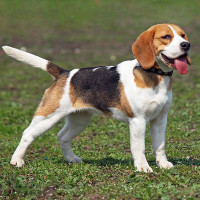
| The Beagle originated in the United Kingdom and is also known as the English Beagle, Regal Beagle and Jelly Dog. Although the origin of the name Beagle is also unknown, it is thought that it may derive from the Gaelic word “beag” meaning “small”. The Beagle has a miniature Foxhound look and is very popular in the UK as well as America, as most of us will probably remember the Peanuts comic strip and Charlie Brown's pal, the Beagle named Snoopy. The breed's exact date of origin is shrouded in mystery, but it dates back to the time of King Arthur, when packs of excellent white dogs were hunted in Britain. These light dogs are thought to be the ancestors of all dog breeds, especially those that hunt on scent. The Beagle is now, and always has been, a scent-hunting canine. The Beagle breed was recognized by the American Kennel Club in 1885. | ||
 |
||
| Standard of the Beagle |
Appearance of the Malteagle |
| The Malteagle is a hybrid of the Beagle and Maltese breeds. As a hybrid, this dog can take on the physical traits of one or both of its parent breeds. Owners of these breeds have described these adorable bundles of love as measuring from 23 to 38 centimeters and weighing between 7 and 10 kilos, with coats described as glossy, short, soft and thick. It is said that the Malteagle seems to inherit the coat of the Maltese side and the brown, white, black and cream coloration of the Beagle side. Apart from these descriptions, the eyes could be dark, brown or hazel, the nose black, the ears hanging or drooping and the tail carried erect or draped over the back. |
Temperament of the Malteagle |
| The Malteagle hybrid has been described as gentle and outgoing by owners and breeders alike. In addition, other descriptive terms associated with this hybrid's personality enclosede: energetic, intelligent, loving, loyal and social. The Malteagle is great with children as well as strangers and other animals, although early socialization is probably necessary to prevent possessiveness and aggressive behavior. This behavior can occur when the dog becomes strongly bonded, and becomes spoiled, to its owner, and then feels threatened when other animals and children compete for the beloved owner's attention. The earlier this socialization can be started will help modify this trait in your pet. Your Malteagle is moderately difficult to train, having high energy levels that can divert its attention from the task at hand. He's also part Beagle, so he may need firm training techniques that may not be available to the first-time dog owner. He's considered an occasional barker, so if you're looking for a guard dog, keep looking as he probably won't alert you to the approach or presence of a stranger. |
Needs and activities of the Malteagle |
| The Malteagle hybrid is an energetic little dog. He'll need plenty of exercise to expend that energy and avoid the annoying destructive behaviors that accompany boredom. He'll love going for a walk or jog with you several times a day, and don't forget to let him play and let off steam in the dog park along the way. Because of his small size, he makes an excellent apartment or condo pet as long as the owner is able to exercise him appropriately on a daily basis. It can tolerate heat well, but falls into a low-to-moderate category for cold temperatures. It can live in urban or rural settings, in an apartment or condo, or in a family home with or without a fenced yard. |
Maintenance of the Malteagle |
| The Malteagle is a hybrid mix of Beagle and Maltese and, as such, will probably inherit the coat of the parent breed Maltese, making the hybrid possibly hypoallergenic since the parent breed Maltese is and requires brushing several times a week if not daily. The hybrid is a minimal to moderate excretor and has a low drool and odor rate among canine breeds. Ears should be checked and cleaned weekly, especially as they are likely to be folded, increasing the risk of infection. Dental examinations and cleanings should be carried out systematically, and teeth brushed at home several times a week to prevent periodontal disease and the tooth loss that accompanies it over time. Monthly nail trimming should keep them under control. |



 English (United Kingdom)

Comments