
 |
Labrasenji |
|
He is not recognized by the F.C.I. |
Origin |
Canada <> Democratic Republic of Congo -> U.S.A. | |
Translation |
Francis Vandersteen |
A brief presentation of the Labrasenji |
| The Labrasenji hybrid is a combination of a Basenji and a Labrador Retriever. Since the Basenji is a small dog and the Labrador Retriever is large, your Labrasenji can range from medium to large in size. They have short, straight, dense coats that come in many colors, including red, black, brown and sable. Your Labrasenji can be a little stubborn to train, so you may need to spend more time working on it, or you can try obedience classes. They love other pets and children, but need to be supervised with younger children, as they can be a bit boisterous when playing. |
History of the Labrasenji |
| Because your Labrasenji hasn't been around long, you'll need to refer to the parents' history to determine your Labrasenji's characteristics. |
A little of the Labrador Retriever |
||
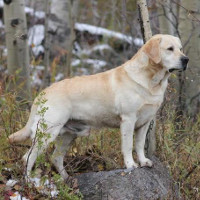
| The Labrador Retriever is the most popular dog breed in the United States and has been a member of the American Kennel Club since 1917. They were originally known as Saint John's Dog of Newfoundland, Canada in the 1700s, but were renamed after the Labrador Sea, where they were developed. These handsome, friendly dogs loved to help local fishermen bring in their catch from the sea, and would retrieve any fish that came out of the net. The Earl of Malmesbury was one of the first owners of a Labrador Retriever and discovered how good they were at retrieving ducks and geese when he took his dog hunting with him. Soon they were brought to the USA, where they became America's most lovable pet. | ||
 |
||
| Standard of the Labrador Retriever | ||
A little of the Basenji |
||
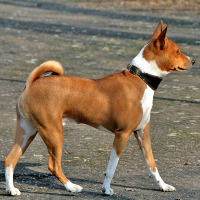
| The Basenji originated in Central Africa in ancient times, but there are also records of similar dogs in Egypt at that time and were companions of the pharaohs. The name, Basenji, means "dog of the savages" in the local Lingala language of the Congo. The Basenji "yodels" instead of barks, and this is one of the characteristics that made it so popular when it was introduced to the USA. They were originally brought to hunt small game, but Americans discovered what good companions they were and they became popular as pets and were even placed in shows. Eventually they were discovered to be Greyhounds and began to compete in trials. The Basenji Club of America was founded in 1942 and the breed was accepted into the American Kennel Club the following year, where it is the 88th most popular dog breed. | ||
 |
||
| Standard of the Basenji |
Appearance of the Labrasenji |
| The Labrasenji is a medium to large-sized dog that can weigh from 13.5 to 32 kilos and measures around 56 centimeters when fully grown. They have a short, thick coat that is usually two-tone black, brown, red, cream, fawn, piebald, brindle or any combination of these. Their large eyes can be brown, hazel or amber, and their noses are brown or black. Because the Basenji is a lighter, smaller dog and the Labrador Retriever is heavier and more solid, Labrasenji body type can vary considerably, but they generally have a rectangular head, long legs, pointed ears and a long, curved tail. |
Temperament of the Labrasenji |
| The Basenji looks more like a cat than a dog and is an affectionate, lovable pet like the Labrador Retriever, so your Labrasenji will be a wonderful family companion for everyone. However, they can be stubborn, so training them may require a little extra patience. If you're firm and use positive reinforcement, your Labrasenji should be able to learn what you want to teach him. Basenji don't bark, but "yodel", so your Labrasenji can be a barker or a "yodeler". Although they love to play with children and other pets, they do best with older children and should be supervised with children under five. |
Needs and activities of the Labrasenji |
| Both the Basenji and the Labrador Retriever are good hunters and love to chase rabbits and squirrels, so be sure to put your dog on a leash when not in a fenced yard or paddock. Your Labrasenji needs 60 to 90 minutes of vigorous activity every day to stay healthy and happy. When your dog doesn't get the exercise he needs every day, he can become bored and develop behavioral problems. They enjoy brisk walking, running or jogging, hiking, swimming, playing with other dogs at the dog park and are excellent for agility and obedience training. |
Maintenance of the Labrasenji |
| Labrasenji are easy to care for, and you should only need to brush them with a rubber or smooth brush once or twice a week. They may need bathing if they become particularly dirty, but not too often as this can dry out your dog's skin. Their ears should be cleaned regularly with a damp cotton ball to prevent ear infections and watch for signs of irritation or redness. Brush your dog's teeth once or twice a week with a special dog toothpaste to prevent tooth decay. Also, trim their nails about once every six to eight weeks or as needed. |



 English (United Kingdom)

Comments