
 |
Kobetan |
|
He is not recognized by the F.C.I. |
Origin |
Great Britain <> Tibet -> U.S.A. | |
Translation |
Francis Vandersteen |
A brief presentation of the Kobetan |
| The Kobetan is a specific cross between an English Cocker Spaniel and a Tibetan Terrier. The Kobetan is not as well known as some designer dogs, but it has a gentle, family-oriented temperament. The hybrid is considered a high-energy dog, but has varying degrees of activity intensity. The Kobetan can have a high-maintenance coat, but its sometimes hypoallergenic coat may not irritate allergy sufferers at home. Given their thick coats, both parents have a high tolerance for colder climates and prefer cool to warm places. The Kobetan's size and exercise requirements also enable this breed to live comfortably in an urban area or apartment. |
History of the Kobetan |
| The Kobetan is a small to medium-sized hybrid of the English Cocker Spaniel and the Tibetan Terrier. Both parent breeds make excellent companions, especially in the home, where they receive a great deal of love and attention. The Kobetan is not a well-known hybrid and is recognized by only two registries and competitive organizations: the American Canine Hybrid Club and the Dog Registry of America. People considering adopting a Kobetan, or who already share their lives with one, can review the histories and traits of the parent breeds to gain a better understanding. |
A little of the English Cocker Spaniel |
||
| Developed in England, the English Cocker Spaniel is a descendant of the medium-sized sporting Spaniel group and excelled at woodcock hunting, earning its name. The English Cocker Spaniel proved to be a good field dog with a gentle, domestic temperament, making the breed ideal for families, and the breed attracted the attention of American fanciers during the 20th century. In the USA, the English Cocker Spaniel's show ring qualities were valued over its field ability, leading to a variation between the English and American breeds. The American Kennel Club first recognized the English Cocker Spaniel in 1878, but later in the 20th century, a distinction was made between the American and English breeds, and the AKC recognized the English breed in 1945. | ||
 |
||
| Standard of the English Cocker Spaniel | ||
A little of the Tibetan Terrier |
||
| The Tibetan Terrier has a long history as the "Holy Dog" of Tibetan monks. For centuries, Tibetan monks have given away their beloved dogs, which were never allowed to be sold. A special gift to a Western doctor in the 20th century introduced the Tibetan Terrier to the world for the first time. The Tibetan Terrier breeding program began when the doctor acquired a male as a gift a few years later. Terrier destination doesn't accurately describe the Tibetan Terrier, but the breed was neither a sporting dog nor a hybrid. The Tibetan Terrier's size was the contributing factor to its grouping. The American Kennel Club recognized the breed in 1973. | ||
 |
||
| Standard of the Tibetan Terrier |
Appearance of the Kobetan |
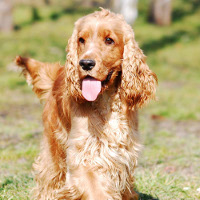
| The Kobetan is a small to medium-sized hybrid with a thick coat of wavy hair. The Kobetan's head is broad and proportionate to its body, and the muzzle is medium-sized with a black nose. The Kobetan has large, dark eyes with thick lashes. The Kobetan's ears are triangular in shape and fall with considerable feathering. Long, wavy hair covers this hybrid's robust, compact frame, and the Kobetan has a deep chest. The tail has plenty of feathers and curls on the back. |
Temperament of the Kobetan |
| The Kobetan is an excellent alarm barker but is generally good with strangers. However, some English Cocker Spaniels can be shy. Socialization is essential to raise a confident, friendly dog. Otherwise, the Kobetan is considered a very affectionate family dog with a cheerful disposition and a penchant for children. Older children who don't tease the dog are a perfect match for the Kobetan. The Kobetan is quite friendly with dogs and will increase its acceptance of other pets with proper socialization. When it comes to training, the Kobetan is child's play and always eager to please. However, he is a sensitive hybrid who can develop anxiety if spoken to harshly or left alone for too long. Anxiety in dogs can lead to destructive and depressive behavior. Both parent breeds are active and playful, but the intensity of activity varies between the two and can create a range of exercise needs in the Kobetan from regular walks several times a day to good romping in the yard. |
Needs and activities of the Kobetan |
| The Kobetan's energy levels are constant, but the degree of intensity can vary from dog to dog. Whatever the intensity levels, the Kobetan is a playful hybrid that needs daily activity. Some dogs are able to get all their exercise needs met with a few walks a day, while others need to run and play a little more. The Kobetan does remarkably well in apartments and urban areas if it gets all its daily exercise. The Kobetan also has a high tolerance to cold, but is also capable of living in warmer climates. However, be aware of your dog's increasing heat stress in warmer climates, as dense coats are well insulated. |
Maintenance of the Kobetan |
| The Tibetan Terrier parent can add hypoallergenic qualities to the Kobetan, but also increases the hybrid's shedding potential. The Kobetan's hairs are long and require weekly grooming to remove loose and dead hairs. A pin brush and a Greyhound comb are the best tools for the job. Young dogs need their coats brushed daily, but the average Kobetan requires brushing several times a week thereafter. While brushing your dog, use a fine spray to help clean the coat, and only bathe the Kobetan when necessary. Ears have a large amount of feathers and need to be checked and cleaned regularly to prevent ear infections and keep them clean. The Kobetan has no doggy odor and is not known for drooling. |



 English (United Kingdom)

Comments