
 |
Kimola |
|
He is not recognized by the F.C.I. |
Origin |
Tibet <> U.S.A. -> U.S.A. | |
Translation |
Francis Vandersteen |
A brief presentation of the Kimola |
| The Kimola is a specific cross between a fox-faced breed, the American Eskimo Dog, and the bearded Lhassa Apso. This combination makes for an intelligent hybrid that is courageous and protective of its family, yet cheerful, playful and friendly. A social and fun-loving dog, the Kimola will benefit from interaction with other animals, children and strangers to enable it to develop to the best of its abilities. Expect a moderate to high grooming regime for your Kimola, starting the grooming routine early in life will get your puppy used to the process. Bonding with your hybrid will be easy, he's adorable and eager to please. |
History of the Kimola |
| The Kimola hybrid is a new dog breed and there isn't much information available about the hybrid itself. So, in order to get an idea of the history that makes this hybrid the wonderful pet that it is, we need to look at the individual parent breeds. The Kimola hybrid itself is recognized by the following organizations: American Canine Hybrid Club, Designer Dogs Kennel Club, Dog Registry of America, Inc, International Designer Canine Registry and United Kennel Club. |
A little of the American Eskimo Dog |
||
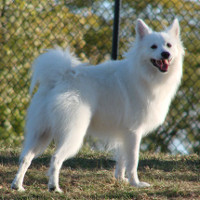
| The American Eskimo Dog originated in the USA and Germany, and is thought to be descended from several European Spitz breeds, in particular: the Keeshound from Holland, the white German Spitz, the white Pomeranian also from Germany, and the Volpino Italiano (aka white Italian Spitz). By the middle of the 19th century, the courageous little white Nordic dogs were popular in American communities of German immigrants and the breed took the name American Spitz, later changed to American Eskimo Dog, but the reason for this is unknown. The purpose of creating this American Eskimo Dog, also known as the Eskie, seems to be companionship and watchdog. This breed is extremely intelligent and learns very quickly to do tricks, making it very versatile in the circus, an activity for which it has become very famous and popular. The American Eskimo Dog Club of America was formed in 1985, and the Eskie breed was recognized by this body shortly afterwards. The American Kennel Club then fully recognized the breed in 1995. Today, the American Eskimo Dog is quite competitive in activities such as agility, obedience, rally and conformation ring performance. They are also used in drug detection and guard dog activities. The breed is quite popular in the USA, but unfortunately not well known in other countries. | ||
 |
||
| Presentation of the American Eskimo Dog | ||
A little of the Lhassa Apso |
||
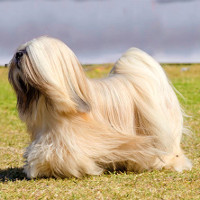
| The Lhassa Apso is a sturdy little dog with its roots in the Himalayan mountains of China. The exact heritage of this robust little breed is not known, but it is suggested that it comes from the larger Tibetan Terrier sheepdog, tradition explaining that dogs whose legs were too short for Tibetan Terrier breeding activities were given to Buddhist monks and kept in their monasteries. These rejected dogs were then used as breeding stock to create the smaller, more coveted Lhassa Apso we know today. The breed's original purpose seems to have been the protection and guarding of Buddhist monasteries and the homes of Tibet's nobility. Due to confusion over the centuries with the larger Tibetan Terrier, the Lhasa Apso breed was finally recognized by the American Kennel Club in 1935 and in 1965, it was finally recognized by the Kennel Club (England). | ||
 |
||
| Standard of the Lhassa Apso |
Appearance of the Kimola |
| The Kimola hybrid is the result of crossing an American Eskimo Dog (Eskie) with a Lhassa Apso. As such, the Kimola hybrid can take on the appearance characteristics of one or both parent breeds. What we do know about them is that they have a life expectancy of 10 to 15 years, are considered small to medium in size, can weigh between 7 and 18 kilos, reach a height of 30.5 to 48 centimeters, and have a thick, dense coat of medium length and silky feel. Resembling the Lhasa relative, which is colored gray, cream, white or a mixture of the three, the Kimola has a medium-sized head and floppy ears with feather-like hairs. Its eyes are almost almond-shaped, and its muzzle is proportional to the size of its head, making it more like the Lhasa parent than the Eskie. |
Temperament of the Kimola |
| Your Kimola hybrid, being a cross between the American Eskimo Dog (Eskie) and the Lhasa Apso, can take on the temperament characteristics of one or both of the parent breeds. The Kimola hybrid has been described as: intelligent, affectionate, gentle, good with children and good with other animals if properly socialized from an early age. They are likely to be wary of strangers in the home and will bark an alarm until they are satisfied that the stranger poses no danger to his beloved human family. They'll form close bonds with their human family and want to be involved in everything they do. They may even keep that ever-important watchful eye on the children when they're in another room while Mom's cooking. |
Needs and activities of the Kimola |
| The Kimola hybrid is considered a dog that needs moderate levels of exercise. He doesn't need as much exercise as larger, high-energy dogs, but he still needs daily walks and playful games in the park or backyard. His size and activity level make him perfect for an apartment or condo, or a family home with or without a fenced yard. He'll love walking with you, following you from room to room as you go about your daily activities, and will probably get involved in everything you and your family do. |
Maintenance of the Kimola |
| The Kimola hybrid is the product of crossing an American Eskimo (Eskie) with a Lhassa Apso. Neither parent breed is considered hypoallergenic; they are moderate excretors and fall into the moderate-to-high maintenance category. Both parent breeds contribute longer, thicker coats to the biological mix, making it necessary to brush your Kimola hybrid family member daily and bathe him with dog shampoo as needed. You'll also need to inspect and wipe his ears once a week, brush his teeth at least twice a week and trim his nails as needed. Both drooling and odor levels are considered low for the parent breeds as well as for the hybrid. |



 English (United Kingdom)

Comments