 |
Huskimo |
|
He is not recognized by the F.C.I. |
Origin |
Siberia <> U.S.A. -> U.S.A. | |
Translation |
Francis Vandersteen |
A brief presentation of the Huskimo |
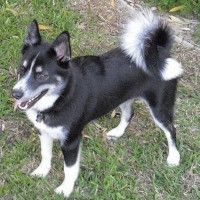
| Huskimos are created from a cross between a Siberian Husky and an American Eskimo Dog. They are medium-sized dogs with a ton of energy. These dogs are loyal, playful pets that need a lot of exercise or can be difficult to control. Huskimos are excellent family dogs as they are very social and affectionate, which means they are perfect with children and strangers. With highly intelligent dogs like the Huskimo, it's important that the owner can clearly and confidently show authority. If it's not made clear who's boss, these dogs will automatically assume the role of top dog themselves. |
History of the Huskimo |
| Specific crossbreeds have become a new trend in recent decades. One very popular combination is the Huskimo, which is a cross between the Siberian Husky and the American Eskimo Dog. These dogs have been crossbred since the 1990s until 2000, when the first Huskimo dogs were created. Since then, new dogs have been born from two Huskimo parents. |
A little of the Siberian Husky |
||
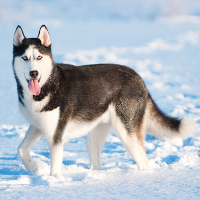
| The Siberian Husky has been used as a sled dog, guard dog and reindeer herder for centuries by the Chukchi tribe. They were perfectly suited to the job, as they could withstand the elements. The breed originated in Siberia and was later brought to Alaska by fur traders. There, they took part in Arctic Malamute races, where they excelled due to their speed. In 1908, these dogs took part in the All-Alaskan Sweepstakes, a 250-kilometer race by dog sled. In Nome, Alaska, there was a diphtheria epidemic in 1925. This event was the reason why the Siberian Husky became so popular, as it was recognized after carrying medicine to the people. They were also used in Admiral Byrd's Antarctic expeditions throughout the 1900s. These dogs were also used in the army's Arctic Search and Rescue unit during the Second World War. | ||
 |
||
| Standard of the Siberian Husky | ||
A little of the American Eskimo Dog |
||
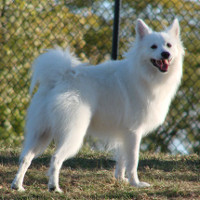
| American Eskimo Dogs are part of the Spitz family of Nordic breeds. They are related to the German Spitz, whose name was changed to American Eskimo Dog once they were brought to America. Other closely related breeds include the Samoyed, the white Toy / Pomeranian Spitz, the white German / Keeshond Spitz and the white Italian Spitz. These white Spitz breeds have no connection with Eskimo culture, having been brought to the USA by German settlers. | ||
 |
||
| Presentation of the American Eskimo Dog |
Appearance of the Huskimo |
| These dogs have long, thick fur with soft inner coats and rough outer coats. The fur lies close to the skin, helping to keep the dog warm in winter. While this is an important trait when living in the Arctic, it means you need to be careful when training your dog in the heat. These dogs have sharp teeth, and medium-sized heads in proportion to the body. The muzzle is of similar length and has a nose that matches the coat color. Overall, they are medium-sized dogs with pointed, erect ears. The tails curve up and to the side of the dog and are very fluffy. Huskimos have black or dark brown almond-shaped eyes. To determine more specific hybrid breed characteristics, research parental appearances. Keep in mind that some dogs may look slightly different from others of the same designer breed, as they may develop different traits from their parents. |
Temperament of the Huskimo |
| Huskimos are intelligent, docile dogs that make excellent pets. They get on very well with children, as they are loyal and love to play. However, these dogs are very energetic, which means they represent a major commitment for owners who are not naturally active. Getting enough activity is essential for these pets, as they can be destructive and disobedient if they don't get enough exercise. Huskimos are easy to train, as long as the owner is experienced and knows how to be dominant. With these dogs, you can't let them think they're the boss, or you'll obey them, not the other way around. They are very social pets and get on well with everyone they meet. Since they're easily socialized, it shouldn't be difficult for them to get along with other types of pets and dogs. However, an adult dog's personality will depend on his experiences as a puppy. So be sure to expose your Huskimo puppy to all kinds of people and environments. |
Needs and activities of the Huskimo |
| These energetic dogs need plenty of exercise to stay happy and healthy. Therefore, owners should be prepared to devote at least one to two hours a day to exercising these dogs. If they don't exercise, they may start to misbehave. Remember to challenge your dog mentally and physically, as the mind needs to be exercised as well as the body. Activities similar to agility, long walks or hikes, sled pulling and obedience training are all fun for this breed of dog. However, you should bear in mind that the Huskimo has a long, thick coat that prevents it from adapting to hot climates, so its activity should be moderate during the hot summer months. These dogs are generally too large and energetic to be suited to apartment living. |
Maintenance of the Huskimo |
| Huskimos shed a lot, so will need regular brushing. This should be done every day if possible, or at least two or three times a week. They should be bathed every few months or as often as necessary. There are no special maintenance requirements for these dogs. The only other care they'll need in addition to bathing and grooming is tooth brushing, nail clipping and ear cleaning. Dogs of all breeds should have their teeth brushed with dog toothpaste at least two or three times a week. Do this daily to ensure healthy teeth and gums. As for nail trimming, the frequency depends mainly on the dog's activity. As Huskimos are quite active, they may need to have their nails trimmed less frequently than other breeds. The standard frequency is once or twice a month. To prevent ear infections, dogs should have their ears wiped every week. |



 English (United Kingdom)

Comments