
 |
Hug |
|
He is not recognized by the F.C.I. |
Origin |
Siberia <> China -> U.S.A. | |
Translation |
Francis Vandersteen | |
This breed is also known as |
Siberian Hug |
A brief presentation of the Hug |
| The Hug is a specific cross between the Siberian Husky and the Pug. It's considered a designer breed because two pure breeds of dog were deliberately bred to produce it. This hybrid is attractive and affectionate and will make a good addition to an active family. Easy to care for, the Hug's coat can be medium to long, or straight and smooth and will require low to moderate maintenance. Pugs are affectionate, friendly and playful. Because they are highly intelligent, the breed can be quick to learn. Its Siberian Husky side can make it a little stubborn, so firm leadership is needed. They are good with children and other dogs. The Hug can easily live in an apartment if it is walked and exercised daily. |
History of the Hug |
| Because the Hug is a modern designer breed, its history is poorly documented. We can examine the origins of the Siberian Husky and Pug parents to get an idea of the background of this interesting hybrid. |
A little of the Siberian Husky |
||
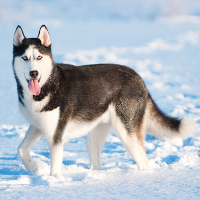
| The original Siberian Husky was bred 3000 years ago by the nomadic Chukchi people of Northeast Asia. They were trained to help the tribe hunt, herd cattle and pull sleds loaded with the tribe's business. Only children, the sick or the very old were allowed on the sled. The tribe believed that anyone who hurt a dog could not enter paradise. Unfortunately, under the Stalinist regime, the Chukchi and their dogs were expelled from the region. Fortunately for the Husky, some dogs were exported to North America in 1929. The Siberian Husky was officially recognized by the American Kennel Club in 1930. It currently ranks 12th in the American Kennel Club's list of most popular dog breeds. | ||
 |
||
| Standard of the Siberian Husky | ||
A little of the Pug |
||
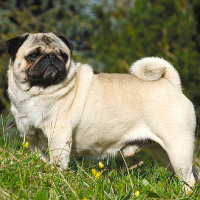
| The Pug is one of the oldest dog breeds, dating back to 400 B.C. These cute dogs are thought to have originated in China and were considered prized possessions of royal families. Carlins were highly guarded and protected. They were also the companions of Buddhist monks in Tibet. The ancient Carlins were called "Foo Dogs". Eventually, Carlins became popular in European royal courts. In 1572, a brave Carlin named Pompey rescued Prince William of Holland. Pompey alerted the prince that there were assassins just outside his tent. Prince William and Pompey escaped. Pompey was a hero and became the official dog of the House of Orange in Holland. Pugs arrived in the United States in the 19th century. The Pug was officially recognized by the American Kennel Club in 1885. The Pug Club of America was founded in 1931. In 2011, a Pug named Lodi won Best of Breed at the Westminster Dog Show. | ||
 |
||
| Standard of the Pug |
Appearance of the Hug |
| Your Hug will have the physical characteristics of both the Siberian Husky and the Pug. Their exact appearance is unpredictable. The Hug will be larger than the Pug and may weigh from 13.5 to 27 kilos. It will have a stocky, muscular body. His Pug side may give him a short muzzle with a flattened face, although his face is not as "pushed" as the Pug's. Your Hug may have a curly or straight tail. Ears can be flat and hanging or pointed. Some Hugs have the Pug's dark melanic mask (mask-like appearance). Their coats are smooth and can be medium to long. Hugs' eyes may be larger than what we see in the Siberian Husky, but will not be as prominent as the Pug. Eye color can be brown, blue or black. Sometimes a Pug can have two different eye colors. |
Temperament of the Hug |
| The personality and character of the Hug will be a combination of the two temperaments of its parents. Siberian Huskies are outgoing, cheerful and friendly. They are gentle, kind and adore children. Siberian Huskies are not aggressive towards dogs and are not wary of strangers. They love to play and explore the outside world, and will enjoy hiking, biking and jogging. They are not recommended for new dog owners, as they require extensive obedience training and lots of exercise. Without the opportunity to expend energy, the breed can develop behavioral problems such as excessive barking, chewing furniture and urinating in the house. What's more, they're considered escape artists and can't be left alone outdoors. Carlins are charismatic, intelligent and rarely aggressive. They are eager to please. The breed craves and demands attention and affection. They can be a little lazy, which can lead to obesity. Carlins have low to moderate energy levels and are happy to be homely. Carlins are hardy and generally good with other dogs and children. Your Hug will be adorable, charming, intelligent and a happy dog. He'll need lots of attention, play and regular, consistent training. |
Needs and activities of the Hug |
| Siberian Huskies are a high-energy dog breed, and Pugs tend to have low energy levels. Your Hug can have moderate to high energy levels. When he's a puppy, he'll be more energetic and need more playtime. The Hug is a social dog who will enjoy visiting and making new friends in a dog park. Both the Siberian Husky and the Pug are sensitive to heat stroke. Therefore, during the hot summer months, they should not be walked during the hottest hours of the day. Keep them well hydrated during walks and exercise, and be sure to give them a break in the shade. Hug can live comfortably in an apartment or house, but will be more content with a yard to explore. |
Maintenance of the Hug |
| The Hug can have a medium to long coat. It should be brushed or combed weekly to remove dead hairs and keep its coat shiny. If your Hug has thick, long hair, it may need to be brushed several times a week to prevent tangling. Nails should be trimmed every month, as overgrown nails can cause the dog pain and can become infected. Daily walks or jogs can help to wear down nails naturally. Soft, floppy ears should be cleaned weekly with earwash. Your vet can recommend the product best suited to your dog and advise you on the safest method of ear cleaning. The Hug should only be bathed when dirty, or every few months. If your Hug has folds on his face, they should be wiped daily, taking care to wipe them well. Hug's teeth should be brushed weekly to prevent tartar build-up and bad breath. The affectionate Hug is a family dog and demands a lot of attention. To avoid boredom when you're not at home, provide him with chew toys. |



 English (United Kingdom)

Comments