
 |
Havaton |
|
He is not recognized by the F.C.I. |
Origin |
Western Mediterranean <> Madagascar -> U.S.A. | |
Translation |
Francis Vandersteen |
A brief presentation of the Havaton |
| The Havaton is a playful bundle of fur who loves nothing more than to be with his human family. The best way to describe this little dog is that they have an infectious spirit and a lot of courage for such a small animal. They are truly loyal and loving, and have a friendly personality. The Havaton, like many dogs, forms a strong attachment to its family and is happiest when it is the center of attention and receives lots of praise. They make ideal companion and family dogs because of their gentle nature. Although they are fairly easy to train, they do have a stubborn streak that can sometimes test your patience, but calm behavior and lots of praise will help you overcome this minor character flaw. Early socialization will see it become a well-balanced dog with a great nature with other pets and young children. |
History of the Havaton |
| The Havaton is a recent hybrid breed of dog that has yet to make its own history, but we can look to the history of the parent dogs to see the characteristics they have shaped over time. |
A little of the Havanese Bichon |
||
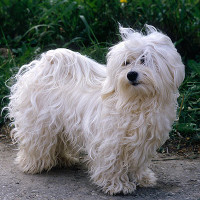
| The history of the Havanese Bichon begins in Spain. When Christopher Columbus claimed Cuba in 1492, Spanish settlers were drawn to the new land and arrived on the island, taking their small companion dogs with them. These dogs were bred with the local island dogs, resulting in the development of the Bichon havanais breed. The new breed had a thick, silky coat to protect them from the scorching sun. These little dogs became very popular with the wealthy in Cuba in the early 1800s and became equally popular with the wealthy and famous elite in Europe. By the end of the 1800s, they had lost their popularity and virtually disappeared from breeding circles and were even quite rare in Cuba. The breed was revived when Cubans arrived in America after the 1959 revolution, bringing with them what was left of the Havanese Bichon breed. Careful breeding has now saved this affectionate, gentle dog, and it has won a new place in people's hearts as a great companion dog. | ||
 |
||
| Standard of the Havanese Bichon | ||
A little of the Coton de Tuléar |
||
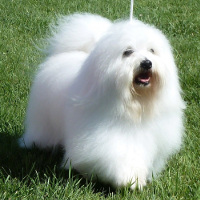
| The Coton de Tuléar can be found on the island of Madagascar, just off the southeast coast of Africa. Although it's not known how he arrived on the island or where he came from before that time, it's generally assumed that he may have been a survivor of a shipwreck. Although his lineage is unknown, they roamed the streets of Madagascar and became popular with royalty and the general population, who welcomed them and made them pets. It was in the 1970s when a visiting Frenchman admired this pretty little dog and took some home with him. From then on, they were selectively bred and established themselves as a genuine breed in their own right. They have now spread all over the world and still exist in Madagascar. The Coton de Tuléar is a gentle, cheerful dog with a playful character, devoted to its human family. | ||
 |
||
| Standard of the Coton de Tuléar |
Appearance of the Havaton |
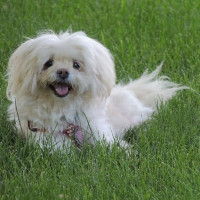
| The Havaton is a charming little dog with an attractive face and a long, fluffy coat that makes it look like a teddy bear. Their small, rounded head features brilliant, almond-shaped black eyes that lack nothing. Their bodies are slightly longer than they are tall, and they have short, stocky legs. Their tails are of medium length, fluffy and proudly carried. Their small muzzle slopes upwards to form a black button nose, and they have long eyebrows and fringe around the mouth. Their faces are engaging, and their teeth come together in a scissor bite. Their fur can be a mixture of colors or a single color. With small feet, floppy ears and an engaging smile, these cheerful little dogs offer as much to the family as to a single person. |
Temperament of the Havaton |
| Active, playful and affectionate is the best way to describe the Havaton dog. These dogs are human dogs, they love to be with you and will stay by your side to see what you're doing and how they can help. If you don't like a dog following your every move, this is not the dog for you. They can get pretty lonely if left to their own devices, and that's when bad habits can start. Havatons can never have enough affection; they'll absorb as much as you can give them. But they'll repay you with their unwavering loyalty and devotion. They respond well to training as long as you maintain a positive tone and make it fun. These little dogs have a tendency to stubbornness that requires patience, as well as firmness mixed with kindness, to overcome. Always eager to please, the Havaton is a good family dog who, if well socialized when young, is good with other pets and gentle and affectionate with children. These dogs adapt well to life in an apartment, but need daily walks to stay healthy. A small yard isn't essential, but if you have one, the Havaton will make it his own. They like to snoop around you while you're working, and will happily sit on your lap to be close to you. These little dogs are very adaptable, but do better in warmer climates than colder ones. |
Needs and activities of the Havaton |
| The Havaton is an active little dog, but he gets most of his exercise playing around the house or following you around. A short daily walk around the neighborhood is always essential to keep him fit and healthy, and a little free time with his dog friends at the pet park will help him socialize. Games and activities where he's the center of attention will see him at his best. They do well with challenging games such as hidden object searches, tug-of-war games and anything involving a ball. Children will be entertained for hours with this attractive little dog, making this breed an ideal pet and devoted companion. |
Maintenance of the Havaton |
| The Havaton dog requires frequent grooming to keep that long, silky coat looking its best. They shed a moderate amount and have seasonal shedding when brushing must be increased to cope with loose hair. When bathing this dog, use a gentle dog shampoo designed to maintain the dog's natural skin oils. By doing so, it will keep the coat shiny and help minimize matting. Because they have hairy floppy ears, Havatons should have their ears checked regularly. Use a damp cloth or ear cleaner to gently wipe away dirt and debris from the inner ear. Never push anything deeply into the ear canals, as this can cause damage. They may need a dog groomer to trim around the eyes and their fuzzy feet, and while they're doing it, it's good practice to clip the nails and keep them short. Finally, brush your dog's teeth thoroughly to maintain oral hygiene. |



 English (United Kingdom)

Comments