
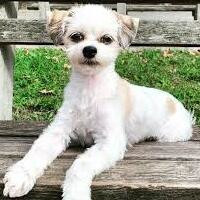
 |
Havallon |
|
He is not recognized by the F.C.I. |
Origin |
Western Mediterranean <> France and Belgium -> U.S.A. | |
Translation |
Francis Vandersteen |
A brief presentation of the Havallon |
| The Havallon is a hybrid mix of two toy-sized breeds, the Havanese Bichon and the Continental Toy Spaniel. The Continental Toy Spaniel is slightly smaller than the Havanese. Both parents do not tolerate solitude well and, although they can live in extreme temperatures, they prefer warmer climates. The main point of difference between the two parents is their tendency to bark. The Havanese Bichon is a vocal dog, whereas the Continental Toy Spaniel is not. The Havallon may show vocalizing tendencies towards one parent or the other, but will often find a good balance between the two. |
History of the Havallon |
| The Havallon is a specific cross between the Havanese Bichon and the Continental Toy Spaniel. The hybrid is a modern breed, and although standards are not available, the American Canine Hybrid Club, Designer Dog Kennel Club, Dog Registry of America and International Designer Canine Registry all recognize the Havallon. Despite its many accolades, the Havallon is not widely known. However, owners can review the character and physical traits of the parent breeds to better understand their Havallon. |
A little of the Havanese Bichon |
||
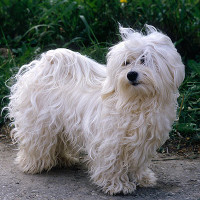
| The Havanese Bichon originated in Cuba and is considered a rare Bichon-type dog. The Havanese's predecessors arrived on ships with Spanish settlers in the 15th century and remained isolated on the islands. As a companion dog, the little Havanese was popular among Cuban aristocrats before the Cuban Revolution. Many wealthy people fled Cuba during the revolution, but Havanese remained on the island and, by the 1970s, only 11 Havanese dogs were known outside Cuba. Fortunately, the breed was saved from extinction by enthusiasts who wanted to preserve the breed. All Havanese living outside Cuba can trace their lineage back to the same 11. The American Kennel Club officially recognized the Havanese in 1996, and although the Havanese enjoys great popularity, it remains a rare breed. | ||
 |
||
| Standard of the Havanese Bichon | ||
A little of the Continental Toy Spaniel |
||
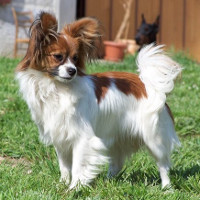
| The Continental Toy Spaniel is a descendant of the first Toy Spaniels dating back to the 16th century. The Continental Toy Spaniel was a popular companion dog at the French, Spanish and Italian courts, and soon became known throughout Europe. The name Continental Toy Spaniel comes from the French court, meaning butterfly, and refers to the breed's straight, feathery ears, which resemble butterfly wings. The floppy-eared variety of the Papillion is called the Phalene and is considered rare today. The American Kennel Club first recognized the Continental Toy Spaniel in 1935, and today this small breed enjoys moderate popularity. | ||
 |
||
| Standard of the Continental Toy Spaniel |
Appearance of the Havallon |
| The Havallon is a toy-sized hybrid of the Havanese Bichon and the Continental Toy Spaniel. Your Havallon is a small dog measuring between 21.5 and 29 centimeters and weighing no more than 5 kilos. The Havallon has a slightly rounded head with erect ears well covered with long silky hair, like that of the Continental Toy Spaniel. The muzzle is fine and tapers to a small nose. If your Havallon resembles the Havanese Bichon, the nose will be larger. A Havallon's body is longer than it is tall, but slightly more delicate and larger than the Havanese. Often, the coat corresponds to the continental Miniature Spaniel, and the tail is curled over the back with a full plume. Havallons are always multicolored, with two or three color combinations and white markings. |
Temperament of the Havallon |
| The Havallon is a highly sensitive companion dog that needs family companionship. This hybrid is affectionate and loyal to its family, including children, but is slightly more delicate, so is not suited to small children or rough play. When it comes to strangers, the Havallon is friendly but can be shy or reserved at first. The Havanese parent will increase the guard dog traits in this hybrid, so you can expect your Havallon to bark at strangers too. The Havallon adapts well to other dogs and pets. The Havallon's energy levels are moderate but can be higher depending on the individual. Daily exercise will keep the Continental Toy Spaniel in good physical and mental health. The Havallon needs moderate-intensity exercise and is considered a playful dog. Training is easy for this intelligent hybrid who wants to please his family. The Havanese tends to bark, while the Continental Toy Spaniel is quieter, so you can expect the Havallon to fall between the two parents when it comes to vocalization. |
Needs and activities of the Havallon |
| The Havallon has average energy and needs daily exercise. However, it is a small hybrid capable of doing most of its daily exercise indoors as long as walks and fresh air are part of the daily mix. The Havallon is an elastic hybrid but can be delicate, so avoid high jumps if possible. If the Havallon gets enough exercise, this hybrid is well suited to life in an apartment. The Havallon is a versatile dog capable of living quite well in any climate. However, Havallons prefer warmer climates. |
Maintenance of the Havallon |
| The Havallon is not a hypoallergenic dog, but this mix won't shed as much, no matter which parent it most resembles. The Havallon's long hair needs daily brushing to avoid tangles and matting. The hair around the Havallon's ears is long, and regular ear cleaning with a vet-approved solution will help prevent ear infections. The teeth of small-breed dogs are prone to dental disease. Tooth care should be a daily routine. Trim your dog's nails twice a month. Havallons are medium-energy, moderate-intensity dogs requiring daily exercise. They are intelligent, attentive dogs, which makes them easy to train. The high intelligence of both parent breeds also means that the Havallon needs mental stimulation to prevent the development of bad behavior. What's more, this hybrid cannot tolerate being left alone for long periods. The Havallon is a companion breed and requires socialization for its mental and emotional health. |



 English (United Kingdom)

Comments