 |
Griffonshire |
|
He is not recognized by the F.C.I. |
Origin |
Belgium <> Great Britain -> U.S.A. | |
Translation |
Francis Vandersteen |
A brief presentation of the Griffonshire |
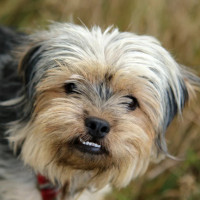
| The Griffonshire is an adorable mix of the Brussels Griffon and the Yorkshire Terrier, both of which are miniature breeds. They range in size from 3.5 to 4.5 kilos and stand around 20 to 25.5 centimeters tall. This breed can have a rough, stiff coat like the Brussels Griffon, or long, silky hair like the Yorkie. It's important to socialize your Griffonshire early in life so it gets on well with children and other pets. However, they should not be left alone with young children because of their small size. They may need a little more patience when training, and you should ask for help if necessary. |
History of the Griffonshire |
| The Griffonshire is a modern dog with little documentation. The history of its parents can help to understand its instincts and background: the Brussels Griffon and the Yorkshire Terrier. |
A little of the Brussels Griffon |
||
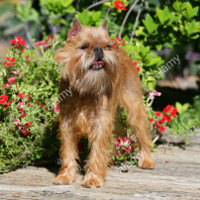
| The Brussels Griffon dates back to the 1800s, when this small Terrier-like breed was used to hunt and kill mice and rats in Brussels, Belgium. They were particularly common in the stables where cab horses were kept, and cab drivers kept the dogs with them while driving to use them as a deterrent against theft. The breed was created from the English Toy Spaniel, where it got its big eyes, the Affenpinscher, where it got its stiff coat, and the Pug, where it got its dark muzzle and amusing expressions. The smooth-coated Griffon Bruxellois is also thought to be related to the Yorkshire Terrier. The breed standard was developed in Europe in 1883 and they began to be shown in competitions in 1889. The Queen Consort of the Belgians, Marie Henriette, really loved the breed and owned several. The American Kennel Club (AKC) began recognizing the Brussels Griffon in 1910, making it the 97th most popular dog breed. | ||
 |
||
| Standard of the Brussels Griffon | ||
A little of the Yorkshire Terrier |
||
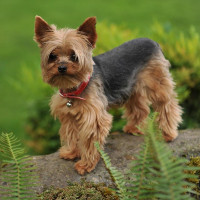
| The Yorkshire Terrier made its debut in England in the 1800s as a vermin hunter. They are thought to be descended from Waterside, Manchester, Paisley, Skye and Dandie Dinmont Terriers. Yorkies were used to hunt rats and other vermin in factories and mills until their beauty made them popular in shows in the late 1800s. In fact, it was fashionable at the time for Victorian women to carry these handsome little dogs in their handbags or under their arms. They were officially accepted by the AKC in 1885 and are now the 9th most popular dog breed in the USA. | ||
 |
||
| Standard of the Yorkshire Terrier |
Appearance of the Griffonshire |
| The Griffonshire is a miniature breed, measuring around 20 to 25.5 centimeters and generally weighing 3.5 to 4.5 kilos. They have large brown eyes that are generally energetic and inquisitive. Because of their small size, they look like puppies for most of their lives. Griffonshires have black noses, short muzzles and small but stocky bodies that are not delicate. They can have long, silky, stiff hair like a Yorkie, or they can have a rough, medium-length coat like a rough-coated Griffon Bruxellois. Since there are two types of Griffonshire coat, it depends on the type of parent breed. They can come in a variety of colors, but the most common are black, brown, cream and blue. |
Temperament of the Griffonshire |
| Your Griffonshire is an intelligent, energetic dog with lots of happy, excited energy. Some say they're almost as smart as humans and can have a bit of sass in them, but they're generally very loyal and lovable. They can be difficult to train, and some owners decide to enroll their Griffonshire in obedience school to solve this problem. However, if you have the time and patience, you can do it yourself with positive reinforcement. They don't like to be left alone for long periods, so you may need to make some adjustments or ensure that your dog has a friend to play with while you're away. |
Needs and activities of the Griffonshire |
| The level of activity depends on your dog, but all Griffonshires need at least moderate exercise for 45 to 60 minutes a day. Because they sometimes have a lot of energy, you should choose their activities according to your dog's energy levels. For example, if he's energetic in the morning and evening, take him for a brisk walk or jog in the morning, then you can take him to the dog park or for a hike in the local park in the evening. They enjoy all types of dog games like frisbee, retrieve and flyball as well as agility training, which she could be quite good at, despite her size. |
Maintenance of the Griffonshire |
| Griffon Bruxellois and Yorkshire Terriers require a lot of maintenance, and your Griffonshire will too. It all depends on your dog's coat type. If your dog has long, silky hair, daily brushing with a pin brush and metal comb is necessary, but with a stiff coat, you may only need to brush with a pin brush a few times a week. A detangler or detangler may be necessary with some coats, and some require grooming with clippers every few months to keep their coats manageable. Also clean his ears once a week and trim his nails if necessary. |



 English (United Kingdom)

Comments