
 |
Golden Cavalier |
|
He is not recognized by the F.C.I. |
Origin |
Great Britain -> U.S.A. | |
Translation |
Francis Vandersteen |
A brief presentation of the Golden Cavalier |
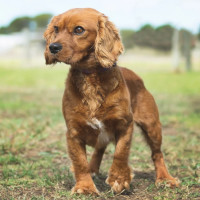
| The Golden Cavalier is a hybrid of the Cavalier King Charles Spaniel and the Golden Retriever. The aim of crossing these two pure breeds is to reduce the size of the Golden and create a small or miniature Golden Retriever. These hybrids, as well as other crosses of designer parents, are popular, and breeders may use other dogs, such as the Cocker Spaniel or Poodle, but Golden Cavaliers always have both Golden Retriever and Cavalier parents. Currently, the Designer Dog Kennel Club and the Dog Registry of America recognize the Golden Cavalier as a designer hybrid. |
History of the Golden Cavalier |
| The Golden Cavalier is a hybrid of two adorable companion dogs, the Cavalier King Charles Spaniel and the Golden Retriever. The hybrid is a modern dog with little documentation in the last decade of intentional breeding. Owners interested in understanding the potential characteristics and traits of the Golden Cavalier will need to examine the parent breeds for insight. |
A little of the Golden Retriever |
||
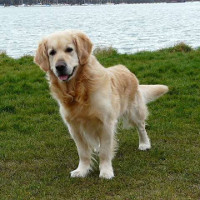
| Golden Retrievers are well known for their excellent companionship and gentle nature. The Golden Retriever breed needs a lot of human attention and makes an excellent watchdog. The Golden Retriever was developed in Scotland at the end of the 19th century as a hunting and retrieving dog for waterfowl. The aim of the breeding program was to create a breed that was unsurpassed in the field, but gentle, calm and loyal indoors. This was achieved by crossing a wavy-coated Retriever with a now extinct Tweed Water Spaniel. Only golden-colored dogs were chosen from subsequent litters for the breeding program, and by the end of the early 20th century, the Golden Retriever was recognized as a breed in England. The American Kennel Club recognized the Golden Retriever in 1925, and the breed has been the first choice of families for many years. | ||
 |
||
| Standard of the Golden Retriever | ||
A little of the Cavalier King Charles Spaniel |
||
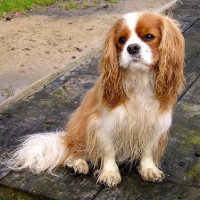
| The Cavalier King Charles Spaniel has a colorful but private history and was recreated in the 19th century. The Cavalier's ancestor is the English Toy Spaniel, which resembles today's Cavalier standard. The English Toy Spaniel was a favorite of Queen Mary of Scotland and her family. Her grandson, King Charles, and her great-grandson, King Charles II, also kept the dogs, which take their names from these 15th-century rulers. However, the English Toy Spaniel soon lost popularity to the Pug and other short-nosed, flat-headed breeds. The English Toy Spaniel has been crossed with many of these other dogs throughout history, changing the dog's appearance. By the mid-nineteenth century, the King Charles Spaniel was accepted as having a flat head and face, and the English Toy Spaniel of earlier centuries was all but extinct. However, in the 1920s, an American began searching in England for a pair that resembled the English Toy Spaniels of King Charles. Fortunately, a pair was found and a new breeding program was established to restore the Cavalier King Charles. In 1954, the Cavalier King Charles Spaniel Club was formed, and the club chose not to promote the breed for fear of poor breeding practices that would not meet standards. The American Kennel Club asked the CKCSC to be the parent club for the Cavalier breed in 1992, but the club refused out of the same desire to maintain high standards. A secondary parent club, created in 1995, enabled the Cavalier King Charles Spaniel to be fully recognized by the American Kennel Club. | ||
 |
||
| Standard of the Cavalier King Charles Spaniel |
Appearance of the Golden Cavalier |
| The Golden Cavalier is a specific cross between the Cavalier King Charles Spaniel and the Golden Retriever. The aim of crossing these two pure breeds is to produce a smaller Golden Retriever, and many times the Golden Cavalier will resemble the Golden Retriever in appearance. However, the Cavalier face and muzzle may be present in some hybrids. The muzzle is shorter than the Golden Retriever's and wider, with a large black nose. A Golden Cavalier's head is round on top, with expressive brown eyes. The ears are longer than those of the Golden Retriever and are often feathered, like the Cavalier. The coat is silky and can be flat or wavy. Legs are short and the body is equally compact. Some Golden Cavaliers can weigh up to 18 kilos, making them a little too big for lounging on towers. |
Temperament of the Golden Cavalier |
| The Golden Cavalier has moderate energy requirements and is very affectionate with its family. The Golden Cavalier is almost equally affectionate towards non-family members and strangers. Both parent breeds are considered people-loving dogs. The Golden Cavalier is patient and, with good socialization, will do well with children. The Golden Cavalier adapts well to sharing space with other dogs and cats, and treats other pets as part of the family. However, early socialization with other dogs and cats will help a Golden Cavalier to live in harmony with all pets. The Golden Retriever parent is always eager to please, as is the Cavalier King Charles Spaniel, making this hybrid a breeze for training and novice dog owners. |
Needs and activities of the Golden Cavalier |
| The Golden Cavalier is a hybrid of two breeds with medium but less intense energy requirements. Trips to the dog park or backyard recreation will suit these hybrids well. However, the Golden Cavalier should always be on a leash when outside an enclosed space due to its higher potential for wanderlust. With proper exercise, the Golden Cavalier does well in an apartment, but a house with a yard is ideal. The Golden Cavalier prefers temperate climates, and while it tolerates both hot and cold environments, extremes are not well tolerated. |
Maintenance of the Golden Cavalier |
| The Golden Cavalier is not a hypoallergenic dog, and sheds considerably regardless of which parent the hybrid resembles. Daily brushing will help remove dead and loose hairs and keep your Golden Cavalier's coat healthy and mat-free. The hair around the long ears is longer and feathered. Pay particular attention to ear grooming and look for any build-up of wax, dirt or debris. Cleaning your dog's ears will prevent ear infections. Your Golden Cavalier, who may not have much opportunity to wear down his nails naturally, should have his nails trimmed frequently. |



 English (United Kingdom)

Comments