
 |
Golden Boxer |
|
He is not recognized by the F.C.I. |
Origin |
Great Britain <> Germany -> U.S.A. | |
Translation |
Francis Vandersteen |
A brief presentation of the Golden Boxer |
| The Golden Boxer is a hybrid of the Boxer and the Golden Retriever. Both parents are excellent companions and excellent with children. The Golden Retriever is much gentler than the Boxer, and the intensity of activity levels will vary from dog to dog. The two parent breeds are the top-ranked in terms of popularity, with the Golden Retriever holding the top spot for many years. Despite the popularity of the parents, this hybrid is a modern dog with less than 15 years of intentional breeding. |
History of the Golden Boxer |
| The Golden Boxer is a hybrid of two great companion hunting dogs, the Boxer and the Golden Retriever. The hybrid is a modern dog with little documentation in the last decade of intentional breeding. Being a modern hybrid, bred as a designer dog, those wishing to understand the potential characteristics and traits of the Golden Boxer will need to examine the parent breeds for insight. The Golden Boxer hybrid is a popular choice for mixed breeds and is currently recognized by the Designer Dogs Kennel Club and the Dog Registry of America. |
A little of the Golden Retriever |
||
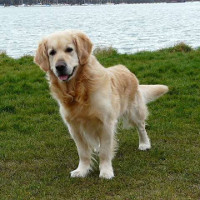
| The Golden Retriever has its origins in Scotland on the estate of a man known as Lord Tweedmouth (real name Sir Dudley Majoribanks). Lord Tweedmouth bred animals of all kinds and kept records of his breeding program. Tweedmouth was a waterfowl hunter and, in his notes, he described aiming for a superior retriever. He wanted the Retriever to have a superb nose, but he also wanted the dog to be more attuned to its human hunting companion than other popular hunting dogs of the day. He also wanted the Retriever to be loyal and have a good disposition away from the hunting ground. Lord Tweedmouth bred a dog he owned, Nous, to a now extinct Tweed Water Spaniel. The Tweed Water Spaniel was known for being extremely calm and loyal, but also an excellent Retriever. These characteristics were passed on to the Golden Retriever. He bred the descendants of Nous and the Tweed Water Spaniel with wavy and flat-coated Retrievers and a Red Setter. The result was the direct ancestor of the Golden Retriever we know today. | ||
 |
||
| Standard of the Golden Retriever | ||
A little of the Boxer |
||
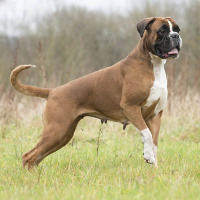
| The Boxer is of Tibetan Mastiff stock and was developed mainly in Germany in the 16th century. The Boxer Breed Club was founded in Munich in the 1800s, and it is thought that the Boxer takes its name from the boxer-like way it uses its paws in a fight. The American Kennel Club first recognized the Boxer in 1904, and today the breed ranks in the top ten in terms of popularity. | ||
 |
||
| Standard of the Boxer |
Appearance of the Golden Boxer |
| The Golden Boxer is a hybrid between the Boxer and the Golden Retriever, and can resemble either parent breed depending on dominant appearance. They are large dogs, weighing between 27 and 34 kilos, with a robust, muscular build. If the Golden Boxer leans more towards the Boxer parent, it will have a square-shaped head and a shorter muzzle. If the Golden Boxer leans more towards the Golden Retriever, its head will be round on top and have a longer muzzle. A Golden Boxer's ears are elongated, like those of the Golden Retriever, but have the same perky, inquisitive look. The eyes are light to dark brown and oval-shaped. Feet are medium-sized, round and compact, and the body is muscular. |
Temperament of the Golden Boxer |
| The Golden Boxer is a high-energy, family-loving hybrid. Unlike the friendly Golden Retriever, the Boxer parent makes this mix slightly wary of strangers. The Golden Boxer can be a good watchdog, and you can expect him to bark at the approach of unfamiliar strangers. Otherwise, the Golden Boxer is quiet. The Golden Boxer is patient and, with good socialization, will do well with children. However, they are a larger, more energetic breed and may not be well suited to living with very young children. Always teach your children how to approach and interact with a dog. Rough play, tail-pulling and teasing should be avoided. The Golden Boxer adapts well to sharing space with other dogs and cats, although the cat's small size and willingness to run away from the Golden Boxer can excite the prey mind, and your Golden Boxer may chase the cat away. Early socialization with other dogs will help a Golden Boxer to live in harmony with other dogs. The Golden Retriever parent is always eager to please, just like the Boxer, making this hybrid a breeze for training and novice dog owners. |
Needs and activities of the Golden Boxer |
| The Golden Boxer is a hybrid of two breeds with high energy requirements of varying intensity. Your Golden Boxer will need plenty of exercise, but not high-intensity exercise, if it resembles the Golden Retriever. If your Golden Boxer resembles the Boxer, he'll love to jump and needs much more intense exercise. Being a big dog, the Golden Boxer has to run and run hard every day to expel his extra energy. Its high energy level means it's not well suited to apartment and city living. A backyard and running space are more suitable for this hybrid. With discipline, the Golden Boxer is an excellent jogging partner. The Golden Boxer prefers temperate climates, and while it tolerates both hot and cold environments, extremes are not well tolerated. |
Maintenance of the Golden Boxer |
| The Golden Boxer is not a hypoallergenic dog, and sheds considerably regardless of which parent the hybrid resembles. Twice-weekly grooming by brushing with a smoother brush will help remove dead and loose hairs and keep your Golden Boxer's coat healthy. This mix isn't known for smelling, but weekly grooming will help distribute the oils and remove dirt and dead skin that could lead to a hound-like odor. Frequent nail trimming is also suggested for your Golden Boxer. Golden Boxers don't usually drool, but an increase in drooling may indicate that your Golden Boxer is suffering from a dental or gum problem. Regular brushing and cleaning of the teeth will enable you to check his gums and prevent disease. |



 English (United Kingdom)

Comments