 |
Glechon |
|
He is not recognized by the F.C.I. |
Origin |
Great Britain <> France / Belgium -> U.S.A. | |
Translation |
Francis Vandersteen |
A brief presentation of the Glechon |
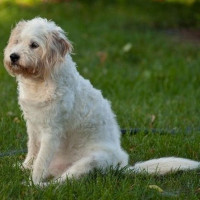
| The Glechon is a hybrid breed where the alert Beagle is crossed with the loving Bichon à poil frisé. Hybrid dogs tend to be medium-sized, weighing from 12 to 18 kilos, and are usually seen with a stiff coat, floppy ears and a short muzzle. The Glechon will generally be feisty and love attention, enjoying being around other dogs as well as people. Hybrids can be easily excited and are generally bright, with lots of energy. Daily exercise, as well as mental stimulation, will be important for the Glechon. The Glechon's owners say he's a lot of fun. |
History of the Glechon |
| The hybrid called the Glechon is a new dog on the scene with no detailed history, although the two breeds that combine to create this dog have histories that can be examined. |
A little of the Beagle |
||
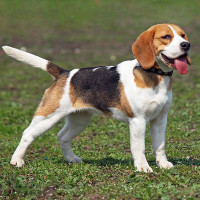
| The history of the Beagle is not well documented, but it is thought that the Beagle may be descended from pack dogs before the Roman era. Originating in England, the breed's compact size made it popular with hunters, where the Beagle worked in packs of dogs to hunt deer and hare. The Beagle we know today was developed in the 1800s from the Talbot Hound, North Country Beagle and Southern Hound to be an easy-going breed. In the 1840s, the breed was imported to the USA for hunting purposes and was recognized by the American Kennel Club in 1885. | ||
 |
||
| Standard of the Beagle | ||
A little of the Bichon frise |
||
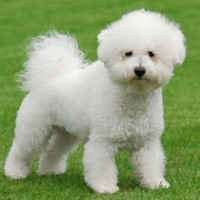
| There are many beliefs about the history of the Bichon Frise. Some claim that the breed has Maltese lineage and Mediterranean ties. Other documents show the Bichon à poil frisé originating from the Barbet or Water Spaniel and say it may even be linked to the Coton de Tuléar. This is where some believe the name "Barbichon" originated and was eventually shortened to "Bichon". These dogs are said to be divided into four categories: Bolognese, Havanese, Maltese and Tenerife. History shows that the breed was often bartered by sailors. The dogs were very popular in Spain, and it is thought that Spanish sailors introduced the breed to Tenerife, an island in the Canary Islands. In the 1300s, the dogs were rediscovered by Italian sailors and became popular among the Italian nobility. During the Renaissance, the breed was popular in France and was much appreciated by Henri III, who took his Bichons with him wherever he went. The Bichon Frise became less popular in the late 1800s, at a time when it was found at fairs and circuses. The first domestic Bichon Frise litter was born in the United States in 1956. | ||
 |
||
| Standard of the Bichon frise |
Appearance of the Glechon |
| Small to medium-sized, the Glechon generally has floppy ears like those of the Beagle. The hybrid will often have a short muzzle like its Bichon à poil frisé parent, although a Beagle muzzle is sometimes seen. It will have a long, robust body. The Glechon's bright, mischievous eyes are usually large and round, as is its head. Hybrid dogs can be seen in yellow, brown, black, gray and white. They can be seen in one color or a mix of colors, and their coats can vary according to dominant parental genes, usually from wavy to rough and wiry. |
Temperament of the Glechon |
| The Glechon is a courageous, highly intelligent, laid-back dog that will be affectionate and loyal to its humans. These gentle hybrids enjoy cuddling on your lap or at your feet, and are always ready to play. The Glechon will love to attract your attention and will do well with other dogs and even strangers, although it may chase small animals. The hybrid gets on well with children and will love to play with them as much as possible. The Glechon's curiosity and keen sense of smell make it good at tracking. |
Needs and activities of the Glechon |
| The Glechon will need at least one or two walks a day for at least 30 to 60 minutes. It's important that you help your Glechon expend its energy, as the hybrid has a lot of it and loves to play, so this can be quite a challenge. In addition to multiple walks, Glechon will enjoy running, playing in a fenced yard and visiting the dog park. Mental stimulation will also be important to the Glechon's well-being. He'll appreciate retrieving games, and a selection of toys for him is nice to keep close at hand. |
Maintenance of the Glechon |
| The Glechon's coat should be brushed with a pincushion brush at least three to four times a week to avoid tangles in his coat. The fur around the eyes may need trimming from time to time. Bathing should also take place as required. The Glechon is generally a low shedder and easy to care for. We recommend cleaning his ears once a week to prevent infections caused by dirt and excess moisture. As with all dogs, the Glechon's teeth should be brushed several times a week to prevent gum pain and maintain long-term dental health. His nails should be trimmed as needed, depending on his activity level and the rate at which they wear down on their own. |



 English (United Kingdom)

Comments