
 |
Wire Foxker |
|
He is not recognized by the F.C.I. |
Origin |
U.S.A. <> Great Britain -> U.S.A. | |
Translation |
Francis Vandersteen |
A brief presentation of the Wire Foxker |
| Descended from the American Cocker Spaniel and the Wire Fox Terrier, the Wire Foxker is a very family-friendly creature, with a very relaxed personality overall. Wire Foxkers can be quite tense when approaching strangers, which can even lead this breed to make sounds in order to alert the family to potential danger. But Wire Foxkers are ultimately gentle by nature and can learn to behave well with strangers and other dogs with a lot of time, patience and love from their owners. A newly conceived hybrid dog, the Wire Foxker isn't as well known as other older breeds that have been around for centuries, but its great intelligence and big heart will help it stand out in the long run. |
History of the Wire Foxker |
| The Wire Foxker probably appeared on the scene during the 1990s, as is the case with most of the designer breeds that have begun to gain prominence in recent decades. Wire Foxkers owe their origins to the American Cocker Spaniel and the Wire Fox Terrier, two well-known breeds with very different histories. Although little is known about the Wire Foxker's origins, knowledge of the origins of the American Cocker Spaniel and Wire Fox Terrier may help to understand the Wire Foxker's attributes. The Wire Foxker has retained much of the energy of its wirehaired Fox Terrier parent, but it has also retained its pleasant demeanor and friendly attitude. |
A little of the American Cocker Spaniel |
||
| Spaniels are classified as a type of hunting dog, but they have been helping hunters long before the invention of the rifle. Initially, these dogs were bred to chase game from deep brush for bowhunters and, in some cases, to retrieve birds from where they had fallen. Early Spaniels were divided into two groups according to where they worked: Water Spaniels and Land Spaniels. At some point in the 17th century, a distinction was made between types of land Spaniel and they began to be classified as Springer or Cocker Spaniel, based entirely on the size of the dog. The smaller Spaniels were used to flush out both furred and feathered game such as woodcock, giving them the name Cocker Spaniel, and the larger ones were given the name Springer Spaniel for their ability to flush out game for hunting. The larger Spaniels were named Springer Spaniels as they were used to spouting game, the smaller dogs, however, were adept at hunting woodcock and other such birds for their owners, earning them the names Cocker Spaniel and Cocker. The Spaniel Club was founded in England in 1902. American Cocker Spaniels were bred to be pets and domestic animals and so developed differently from the Cocker Spaniel in England. their backs became longer, their heads more domed and their prey considerably smaller. It was enough of a change that in 1935 a group was formed for those who preferred the traditional look of the English Cocker Spaniel and were adamant about discouraging crosses between the original English Cocker Spaniel and the new Americanized version of the Cocker Spaniel and in 1946 the American Cocker Spaniel was recognized as a distinct breed. | ||
 |
||
| Standard of the American Cocker Spaniel | ||
A little of the Wire Fox Terrier |
||
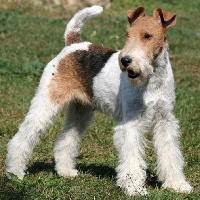
| In England, the Wire Fox Terrier is a descendant of the black and tan Rough-Coated Terrier, combined with other Shropshire and Cheshire Terriers in the 1800s for hunting purposes. They were highly prized for foxhunting and hunting rats, mice and other vermin. They were owned by many royal hunters, including Edward VII, who owned a wire-haired Fox Terrier named Caesar. In fact, when Edward died in the early 1900s, his beloved pet walked right next to the coffin. The American Kennel Club recognized this wonderful breed in 1885 and it is the 101st most common dog breed in America. | ||
 |
||
| Standard of the Wire Fox Terrier |
Appearance of the Wire Foxker |
| The Wire Foxker's overall appearance is curly and fluffy, welcoming and perfectly in keeping with the breed's calm, collected character. Wire Foxkers are large dogs, measuring around 63.5 centimeters at 18 months of age. He has kind, soothing brown eyes that sum up the breed's warm, welcoming nature. His limbs are longer and his legs are adorned with appropriate tufts of downy hair, and his paws are quite large at the tips. The wavy, woolly texture of the Wire Foxker's coat can also make this breed look like it's just stepped out of a nice, warm bath all the time. |
Temperament of the Wire Foxker |
| The soul of what it means to be a gentle giant, the Wire Foxker is a rather large dog with an even bigger heart who loves his family with an intense, burning passion. Wire Foxkers are very gentle and well-behaved by default, making them excellent companions for children and even other dogs, but it will take a lot of time and patience to properly socialize a Wire Foxker and get it used to strangers and unfamiliar faces. Indeed, Wire Foxkers can be rather difficult breeds to train and it may seem that nothing sticks at first, but if you put in the time and effort, the Wire Foxker's gentle nature will shine like a diamond in the rough. |
Needs and activities of the Wire Foxker |
| The Wire Foxker is a fairly active breed that loves to play and run around. However, you don't need to take these dogs on a hike up Mount Everest to tire them out. Wire Foxkers need around 40 minutes of physical activity a day to burn off their excess energy. A good walk in the park or a jog around the block will be more than enough. Try to aim for an average of 10 km of walking per week, depending on the Wire Foxker's weekly fitness goals. These breeds can really move when they get the chance, so be prepared to sweat when you take your Wire Foxker trotting. |
Maintenance of the Wire Foxker |
| Hybrid breeds always run the risk of adopting more physical traits from one parent than the other, and the Wire Foxker is no different. They tend to have a longer coat than the American Cocker Spaniel, and the Wire Foxker will need similar treatment to keep its coat healthy and clean. Pin brushes and smoother brushes are the tools of the trade for this purpose, but make sure you also keep a detangler handy to deal with the Wire Foxker's tendency to shed from time to time. You'll also need to keep an eye on the Wire Foxker's nails; if left unchecked, they can grow quite long and uncomfortable. Finally, make sure you visit a professional groomer regularly to give your Wire Foxker the best possible care. |



 English (United Kingdom)

Comments