
 |
English Borsetter Collie |
|
He is not recognized by the F.C.I. |
Origin |
Great-Britain -> U.S.A. | |
Translation |
Francis Vandersteen |
A brief presentation of the English Borsetter Collie |
| The English Borsetter Collie is a rare dog that is the result of crossing a Border Collie with an English Setter. Both dogs have energetic temperaments and have been bred to earn a living. The English Borsetter Collie will inherit this physical energy and needs plenty of exercise and a fenced yard to roam. They are not recommended for apartment living because of this factor. The English Borsetter Collie is a gentle, calm dog, ideal with children and very affectionate. But it can inherit the Border Collie's herding tendencies and may try to guard your children and friends by nipping and barking, especially if the children are involved in noisy play. Fortunately, this hybrid responds well to training and this habit can be overcome. These dogs can be sensitive by nature, interpreting your every command or expression. Early socialization will help your dog gain confidence and adopt appropriate behavior. Attractive, affectionate and highly intelligent, the English Borsetter Collie is a wonderful companion dog. |
History of the English Borsetter Collie |
| The English Borsetter Collie has yet to establish its own unique history, so it's advisable to consult the history of parent breeds for clues to your dog's temperament. |
A little of the Border Collie |
||
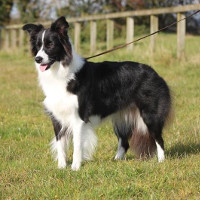
| Border Collies are an ancient breed of dog, in existence since people began using dogs to herd and track sheep in Britain. They became valuable assets to their owners, and the best dogs were bred together. While the type of Collie varied according to region, the Border Collie's name reflects its partly Scottish heritage, while the word Collie refers to a sheepdog. Queen Victoria became a fan of the breed around 1860, and R.J. Lloyd Price began trials with sheepdogs. The Border Collie became a dog that excelled at herding sheep, responding to all its owner's commands, whether hand signals or whistles. The Border Collie was recognized by the American Kennel Club in 1995. | ||
 |
||
| Standard of the Border Collie | ||
A little of the English Setter |
||
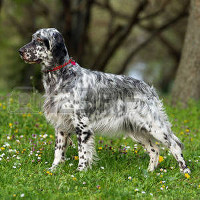
| The English Setter is also a working dog that originated in France in the 1500s, from a Spanish Pointer and a French Pointer. They were called Spaniels because of the way they crouched after finding prey to allow the hunter to throw a net over it. In the early 1800s, they were brought to Britain, where they were bred into the dogs we know today. A settler by the name of Sir Edward Laverack is credited with developing the breed, and his dogs are the basic stock for many of today's top show animals. Today, these dogs excel in hunting, tracking, retrieving, pointing, as watchdogs and as agility champions. | ||
 |
||
| Standard of the English Setter |
Appearance of the English Borsetter Collie |
| The English Borsetter Collie is an attractive dog and can display the characteristics of both its parents. They are long, lean working dogs with deep chests and rounded skulls with long, narrow muzzles. The nose has large nostrils and can vary from black to brown. Teeth meet in a flat or scissor bite. The eyes are large, round and very expressive. The English Borsetter Collie has strong, straight front legs and well-padded feet. Often, the coat can feature straight, silky feathering on tail, legs, underside, chest and ears. The coat itself can vary from flat, silky and slightly wavy, to the smooth or rough double coat with soft undercoat of the Border Collie. That's the beauty of the hybrid: each dog is unique in size, color and characteristics. |
Temperament of the English Borsetter Collie |
| The English Borsetter Collie will either be a dynamo of energy and boisterous life, or inherit the quick, calm and quiet temperament of English Setters. They may even be a bit of both, so it's always difficult to determine which characteristics a hybrid may inherit. One thing is certain: they are loyal, affectionate and somewhat sensitive by nature. They are ideal family dogs as long as your family is active. Don't expect these dogs to be idle all day. If they don't get enough mental and physical stimulation, you may find your lovely garden full of holes as they dig to try and find something to do. Or they may bark constantly and try to chase away people and pets. They need daily exercise, at least two hours of action to burn off that energy. The English Borsetter Collie responds well to training, but needs calm, firm and confident owners to get the best out of them because of their sensitive personalities. They are highly intelligent and love attention and affection. |
Needs and activities of the English Borsetter Collie |
| The English Borsetter Collie is a dog known for its boundless energy, stamina and work drive, so it responds best to an active family. This is not a dog that is happy to loiter on the doorstep, it wants action and if it doesn't get it, it can become bored and develop problem behaviors. Very easy to train, this dog needs a good solid walk every day, plenty of play, tracking, water sports, obedience training and will happily run alongside you when you pedal. It's advisable to keep them on a leash, as a scent trail can attract them to investigate. |
Maintenance of the English Borsetter Collie |
| Regular brushing will remove any loose hairs and prevent knots from forming. The English Borsetter Collie may need daily brushing during the moulting season to minimize hair around the house. Bathe him only as needed, about every four months, unless he is dirty or has rolled in something unpleasant. Nails should be trimmed every month unless they wear out, and ears can be prone to infection, so check them often and clean them gently by wiping with a soft cloth and a special pH-balanced mild ear cleaner to avoid problems. Use grooming time to check for sores, rashes or infections. Get your dog used to having his teeth brushed like a puppy, which will make life easier for him when he reaches maturity. Weekly examination and grooming will help you detect potential health problems early. |



 English (United Kingdom)

Comments