
 |
Doxie-Chon |
|
He is not recognized by the F.C.I. |
Origin |
Germany <> France / Belgium -> U.S.A. | |
Translation |
Francis Vandersteen | |
This breed is also known as |
Doxichon |
A brief presentation of the Doxie-Chon |
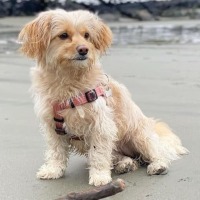
| The Doxie-Chon is a cross between the Dachshund and the Bichon Frise. The Doxie-Chon is a cute, courageous hybrid, usually with a stiff coat. Described as fearless, loyal, intelligent and a little stubborn, they are playful and devoted to their owners. Families with young children may not be the best for the Doxie-Chon, as they can be startled by their fast, not-so-gentle movements, making them a little nervous and perhaps prone to fear. This hybrid is known for barking and will do best in a home where he's not alone all day. |
History of the Doxie-Chon |
| The Doxie-Chon is a modern breed. Consequently, documentation on their history is limited. We can take a closer look at the history of its parents. |
A little of the Dachshund |
||
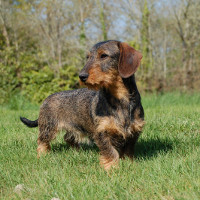
| The Dachshund is thought to have originated in Germany in the early 1600s, bred as a skilled hunter to bring game out of its dens. A keen scent hound with powerful legs, this breed was a useful companion for the hunter. The ancestors of the smooth variety are thought to be the Braque, the French Basset Hound and the Pinscher. The wire-haired and longhaired cousins were developed by crossing the Dachshund with Spaniels and Terriers. The first American Dachshund Club was founded in 1881, and the breed was registered with the American Kennel Club in 1885. Still a hunting companion in some parts of Europe, Dachshunds living in North America are mainly family companions. | ||
 |
||
| Standard of the Dachshund | ||
A little of the Bichon frise |
||
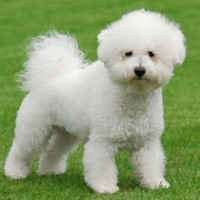
| The Bichon Frise is thought to be descended from the Barbet. The Barbet is a French water dog. Some historians believe that French sailors first brought the dogs back from the Canary Islands. The Bichon à poil frisé was a valued member of the French royal courts in the 16th century. King Henri III of France had a special basket hanging around his neck, carrying his little white dogs wherever he went. A favorite of noble families in Spain too, it was hundreds of years later that the Bichon Frise made its way to the Americas. Arriving in the United States in 1956, the breed was added to the American Kennel Club's list in 1975. | ||
 |
||
| Standard of the Bichon frise |
Appearance of the Doxie-Chon |
| The Doxie-Chon is a small, muscular dog weighing between 4.5 and 11 kilos. The Doxie-Chon is available in a variety of colors, including black, beige, brown, rust and white. Its coat can be dense, fine, wiry and of medium length. The head can be narrow, and the Doxie-Chon's muzzle will be longer than that of a Bichon Frise. Although small, it can have a strong jaw like its Dachshund relative, which has retained this characteristic since its early days as a hunter. The Doxie-Chon will be larger than the Bichon à poil frisé and taller than a Dachshund. Its tail may be feathered and of medium length. His eyes and nose will be dark in color, and his ears may fold or be of a certain length. He will have an alert facial expression. |
Temperament of the Doxie-Chon |
| Dachshunds are generally bold, playful and fearless. It is loyal and protective of its owners. Sometimes fearful of strangers, this hybrid should be introduced to new people often. It may show signs of territoriality with other dogs near its home. Dachshunds can be stubborn and strong-willed. They don't like to be left alone and may suffer from separation anxiety. The Bichon Frise likes to be around people and children. It's a very happy, playful dog. Because Bichon Frises like to please, they are easy to train. They excel in advanced obedience training. They generally get along well with other animals and are not territorial. They suffer from separation anxiety, which can cause them to chew, bark and scream. The Bichon Frise has a high-pitched voice. A command to stop barking should be taught. Your Doxie-Chon will have the qualities of both parents. He'll be a happy, playful dog who loves his owners. Early socialization and obedience training is recommended. Because they suffer from separation anxiety, they will need to play and interact frequently with the family. The Doxie-Chon is not intended for someone who is not at home often. |
Needs and activities of the Doxie-Chon |
| Your Doxie-Chon will have low to moderate energy levels. This doesn't mean he'll want to stay at home. He's always eager for action and will enjoy daily walks and interactive play. Your Doxie-Chon puppy may enjoy meeting and playing with other dogs at the dog park, and this is indeed essential to help curb his territorial tendencies. He should not be walked off-leash, as he may be tempted to start a chase. The Doxie-Chon can live happily in an apartment, but prefers a home with a fenced yard for running, exploring and playing. His Dachshund side can make him sensitive to high temperatures. Therefore, during the summer months, he should be walked on shady streets in the cool of the day. |
Maintenance of the Doxie-Chon |
| The Doxie-Chon has a stiff, medium-length coat, which should be brushed once a week to remove loose hairs and eliminate tangles. A wire brush may work better on its coat, but make sure the brush is in good working order so it doesn't snag or catch on the fur. Annual bristle stripping may be necessary. Most often, this hybrid should be bathed every four to six weeks with a canine shampoo. Occasional professional grooming may be necessary, a few times a year to keep the coat of the right shape and thickness. Teeth should be brushed weekly to prevent tartar build-up and gum disease. Nails should be carefully trimmed every month if they don't wear down naturally. A dog's nails contain blood vessels, and cutting too far back can cause bleeding. A vet or groomer can show you how to cut your dog's nails properly. It's recommended that dogs be seen by a vet once a year for a wellness check. Some Bichon Frises are sensitive to the vaccine, which means they may develop hives, facial swelling and pain after vaccination. So it's important to keep an eye on your Doxie-Chon after his puppy shots and annual vaccinations. |



 English (United Kingdom)

Comments