 |
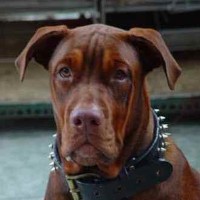
Doberman Bulldog |
|
He is not recognized by the F.C.I. |
Origin |
Germany <> Great Britain -> U.S.A. | |
Translation |
Francis Vandersteen |
A brief presentation of the Doberman Bulldog |
| The Doberman Bulldog is a hybrid breed where the athletic Dobermann is crossed with the dapper Bulldog. The Doberman is a large dog, weighing between 18 and 41 kilos, that is loyal to its family and has a sense of adventure. Described as calm and dignified, the Doberman Bulldog makes a good pet, although it will need early socialization and obedience training to enable it to be the best it can be. |
History of the Doberman Bulldog |
| The hybrid known as the Doberman Bulldog is a new breed of dog with no detailed history, although the two breeds that combine to create this perceptive dog have a long history. |
A little of the Dobermann |
||
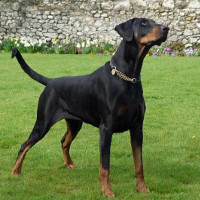
| The Dobermann is a German breed, developed in 1890 by Karl Friedrich Louis Dobermann. He was a tax collector looking for a companion who could offer protection and perhaps a little intimidation while he made his rounds. Later, Dobermanns continued to offer protection and were brave companions in war, working as sentries, scouts and messengers. Ancestors of this courageous breed included the intelligent German Shepherd and the agile Weimaraner. In fact, several breeds were combined by Mr. Dobermann as he perfected the breed. | ||
 |
||
| Standard of the Dobermann | ||
A little of the English Bulldog |
||
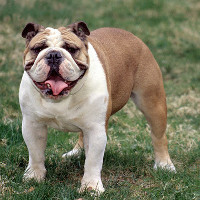
| The Bulldog is said to be descended from the ancient Asian Mastiff, although the breed's development took place in England. Numerous historical works mention the Bulldog, with King Henry VI and Shakespeare both owning one. The Bulldog originated around the 13th century as a result of the sport of bull-baiting, which was introduced by the Earl of Warren. The dog was bred to attack a bull by grabbing its nose and not letting go. The belief at the time was that bull meat was tastier if baited before slaughter. Eventually, bull-baiting was banned and some tried to encourage fighting between Bulldogs, which didn't appeal to them. By the mid-1800s, the Bulldog's popularity had waned considerably. Admirers of the breed prevented it from dying out by removing its ferocity while retaining its unique physical characteristics. This led to the calm Bulldog we know today. | ||
 |
||
| Standard of the English Bulldog |
Appearance of the Doberman Bulldog |
| The Dobermann parent has a muscular, compact build. Its front legs are completely straight and muscular, and its hind legs are also straight, offering a balanced look. They usually have compact, well arched ears that are usually cropped and held straight if not cropped, they will develop a hunting dog look. The eyes are generally fawn to dark brown and the muzzle will contain powerful jaws and well-developed teeth. The Bulldog parent has a stocky body with broad, muscular shoulders and short front legs, with hind legs longer than those in front. The Bulldog's feet have short toes and truncated nails. It has a very large head with round, usually dark, widely-set eyes and small, thin ears perched high on its head. Its face features a short, broad muzzle and a large nose. Seen in a variety of colors, the Doberman Bulldog will have a short, straight, fine coat. Markings similar to the Dobermann parent are often observed. They are usually rust-colored and well-defined, usually found above both eyes, the muzzle, the throat, the front of the chest, the legs, the feet and under the tail. The body shape most often takes on the Dobermann look. |
Temperament of the Doberman Bulldog |
| The Doberman Bulldog inherits its temperament from its parents. The Doberman Bulldog is bright, loyal and alert, making it an excellent watchdog. Although he can be aggressive with unfamiliar dogs and aloof with strangers, he will be very affectionate towards his family. Once he gets to know others, he'll be friendly. Usually, this hybrid will be determined, assertive and fearless, and will enjoy mental challenges. It's important to set guidelines for your hybrid, as the Dobermann's influence can make him arrogant without them. Doberman Bulldog owners say they are good with children, but as with all dogs, supervision is essential. |
Needs and activities of the Doberman Bulldog |
| Activity requirements for the Doberman Bulldog can be determined from those of its parents. The Doberman parent is a very active dog, requiring a significant amount of exercise to maintain its health and well-being. As they are bright dogs, they will also benefit from mental challenges. The Bulldog parent is not particularly active, although a daily walk is recommended for its health. Running and walking long distances is not recommended for dogs of this breed, who don't do well in hot, humid weather, and the Bulldog's short muzzle will make breathing difficult. Based on this combination, your Doberman Bulldog will benefit from a minimum of 45 minutes of exercise a day. He'll enjoy a living environment with a secure yard in which to run and explore. Visits to the dog park will help his social skills. Cold weather can be uncomfortable for him, so be sure to put on a nice sweater for walks in autumn and winter. |
Maintenance of the Doberman Bulldog |
| Your Doberman Bulldog's coat will need a minimum of care, and should be groomed with a soft cloth or brush a few times a week. If your dog has inherited Bulldog wrinkles, it's important to take the time to clean the folds around his face and any folds near his tail daily, as this will help him avoid infection. A Doberman Bulldog should only be bathed when necessary. He may have skin sensitivities, as Bulldogs often do. Some Doberman Bulldogs will drool, so it's a good idea to have a towel handy. |



 English (United Kingdom)

Comments