 |
Corsengi |
|
He is not recognized by the F.C.I. |
Origin |
Great Britain <> Democratic Republic of Congo -> U.S.A. | |
Translation |
Francis Vandersteen | |
This breed is also known as |
Basorgi |
A brief presentation of the Corsengi |
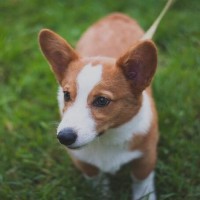
| The Corsengi has the best of the Welsh Corgi and the Basenji. They have the mentality of the Welsh Corgi and the cleanliness of the Basenji. In fact, they'll sit and clean their feet until they're sparkling clean if they get them dirty at all. They also have the kindness and grace of the Basenji, while retaining the sporty, fun-loving attitude of the Welsh Corgi. They generally measure around 33 centimeters and weigh around 11 kilos on average. They have a thick, coarse coat of short to medium length that is usually brown, white, black, beige or any combination of these. It depends whether the Welsh Corgi is a Pembroke or Cardigan variety. |
History of the Corsengi |
| To determine the Corsengi's history, you need to look at the histories of the parent breeds, which include the Welsh Corgi Cardigan or the Welsh Corgi Pembroke and Basenji. |
A little of the Welsh Corgi Pembroke |
||
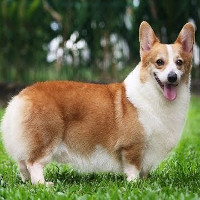
| The Welsh Corgi has two varieties, but both originate in Wales. The Cardigan is thought to be one of the earliest breeds in the British Isles and was brought to Cardiganshire, Wales, by Europeans. Many believe that this breed arrived in Wales with the Vikings in the 800s and was related to the Swedish Vallhunds, but others claim that the Celts brought these little dogs with them in 1200 BC and were related to the Dachshund. The Pembroke is thought to have been brought to Pembrokeshire, Wales, by Flemish weavers in the 1100s. Both breeds were mainly used to drive cattle, as they were able to move away from the cow's kick due to their small size. Once they were no longer used for driving cattle, they almost disappeared because many couldn't afford them until Queen Elizabeth II and King George VI made them popular again. The two Welsh Corgi varieties were considered a single breed until 1934 and 1935, when the American Kennel Club (AKC) registered them both separately. Now, the Pembroke is the 18th most popular dog breed and the Cardigan is the 69th most popular dog breed in the USA. | ||
 |
||
| Standard of the Welsh Corgi Pembroke | ||
A little of the Basenji |
||
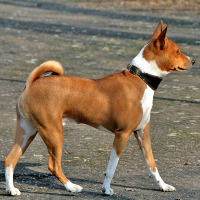
| The Basenji originated in Central Africa in ancient times and is well known for being almost mute. They don't bark. The breed became popular in Egypt, where it was given as a gift to the pharaohs as a sign of loyalty and respect. They were also known to be excellent rat and mouse hunters. They are very hygienic and act like a cat, constantly grooming themselves. The AKC accepted Basenjis in 1943 and they are the 88th most popular dog breed in America. | ||
 |
||
| of the Basenji |
Appearance of the Corsengi |
| The appearance of your Corsengi may vary according to the variety of Welsh Corgi used in breeding. The Cardigan is a little bigger and has a much coarser coat that is usually black and white rather than brown and white like the Pembroke. They can have a curly tail, which is the trademark of the Basenji, or the straight, thick tail of the Welsh Corgi. Their long muzzles are pointed, as are their erect ears. They may have short legs like the Welsh Corgi or long legs like the Basenji, but will most likely be something in between. |
Temperament of the Corsengi |
| The Corsengi doesn't take well to strangers, so they make good guard dogs, but aren't so good when you have people around. They'll go above and beyond to protect their owner. They have feline habits such as constant grooming and sometimes distance. Although they don't bark, they know how to express themselves by making various vocal noises that some say sound like yodeling or howling. They are not always good with small children and should be supervised with any child under 10. Even though they are small, they are very brave and will fight with other dogs much larger than themselves. |
Needs and activities of the Corsengi |
| Corsengi like to herd and hunt, so if you have a fenced yard, letting them play for a few hours a day is great. However, you should also spend at least 45 minutes to an hour with him every day. Take him for a long walk or jog in your neighborhood, or a hike in a park. You can also go to the dog park, but you need to make sure your dog is socialized enough to get along with others before doing so. Corsengi also enjoy agility and discipline training, and can be good in competition. |
Maintenance of the Corsengi |
| The Corsengi is a low-maintenance dog that grooms excessively due to its Basenji lineage. However, we recommend brushing them with a wire brush at least two or three times a week to increase blood circulation, which keeps the skin healthy. They do not need to be bathed unless absolutely necessary. We also recommend brushing your Corsenji's teeth several times a week with a soft toothbrush and toothpaste specially designed for dogs. Clean their ears once a week with a soft cloth and mild cleanser to prevent ear mites, wax build-up and ear infections. You should also trim their nails if necessary. |



 English (United Kingdom)

Comments