 |
Corillon |
|
He is not recognized by the F.C.I. |
Origin |
Great Britain <> France and Belgium -> U.S.A. | |
Translation |
Francis Vandersteen |
A brief presentation of the Corillon |
| The Corillon is a hybrid of two small breeds, the Welsh Corgi Pembroke and the Continental Toy Spaniel. The Continental Toy Spaniel is smaller than the Welsh Corgi Pembroke and doesn't do well with solitude. The Welsh Corgi Pembroke is sturdier than the Continental Toy Spaniel, but can be stubborn with training unless well bonded to its owner. Both parents are intelligent, as is the Corillon. The Corillon is an affectionate family companion with a playful disposition and a big doggy smile. |
History of the Corillon |
| The Corillon is a hybrid of the Welsh Corgi Pembroke and the Continental Toy Spaniel. The hybrid is a modern breed and, although standards are not available, the Corillon is recognized by the American Canine Hybrid Club, the Designer Dog Kennel Club, the Dog Registry of America and the International Designer Canine Registry. |
A little of the Welsh Corgi Pembroke |
||
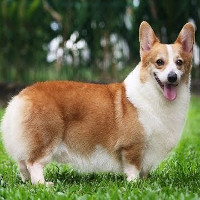
| The Welsh Corgi is divided into two distinct breeds, the Welsh Corgi Pembroke and the Welsh Corgi Cardigan. The two breeds are closely related and seem to vary in size, ear shape and temperament. The Pembroke is slightly smaller with pointed ears and a laid-back personality, while the Cardigan is larger with rounded ears and is much more alert. The Welsh Corgi is an old dog, known to have been in Wales in the 9th or 10th centuries. Small dogs were used to help herd cattle and sheep, and their family origins are somewhat mysterious. The Corgi is most likely the result of several different breeds, although legend also indicates that this was the breed chosen by fairies who gifted them to humans to help protect children and farms. The American Kennel Club first recognized the Welsh Corgi in 1925, and two lines were subsequently classified as separate breeds in 1934. Today, the Welsh Corgi is the long-time favorite of Queen Elizabeth II, who has kept the Corgis since 1933, and the breed's popularity has not waned. | ||
 |
||
| Standard of the Welsh Corgi Pembroke | ||
A little of the Continental Toy Spaniel |
||
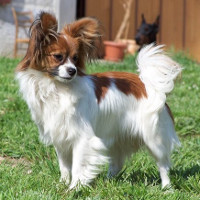
| The Continental Toy Spaniel is a descendant of the first Toy Spaniels dating back to the 16th century. Small Spaniels were the chosen companions of court ladies throughout Europe, and were particularly popular in France, Spain and Italy. The name Papillon is derived from the French court and refers to the breed's erect, feathery ears that resemble butterfly wings. The floppy-eared variety of the Papillion is called the Phalene and is considered rare today. The American Kennel Club first recognized the Continental Toy Spaniel in 1935, and today this small breed enjoys moderate popularity. | ||
 |
||
| Standard of the Continental Toy Spaniel |
Appearance of the Corillon |
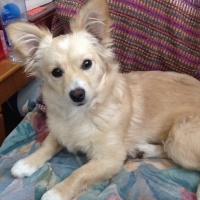
| The Corillon is a small hybrid between the Welsh Corgi Pembroke and the Continental Toy Spaniel. Your Corillon is a small dog, measuring between 20.5 and 30.5 centimeters and weighing no more than 11.5 kilos. The Corillon has a round head with erect ears well covered with long, silky hair, like that of the Continental Toy Spaniel. The muzzle is fine and of medium length, but proportionate to the head, with a small, round black nose. A Corillon's body is longer than it is tall, but slightly more boned than the robust Welsh Corgi Pembroke. Often, the coat corresponds to the continental Toy Spaniel, and the tail is curled over the back with feathers. Corillons are always multicolored, with two or three color combinations and white markings. |
Temperament of the Corillon |
| The Corillon is a highly sensitive companion dog that needs family companionship. This hybrid is affectionate and loyal to its family, including children, but it is slightly more delicate than the robust Welsh Corgi Pembroke, so it is not suitable for small children or rough play. When it comes to strangers, the Corillon is friendly but can be shy or reserved at first. The Corillon also adapts well to other dogs and pets. The energy levels of the parent Continental Toy Spaniel are equal to those of the Welsh Corgi Pembroke, and are moderate to high. Daily exercise is just as essential to stimulate the Corillon's spirit. The Corillon needs moderate-intensity exercise and is considered a playful dog. Although the Welsh Corgi Pembroke can be a stubborn breed, the parent Continental Toy Spaniel is eager to please and highly intelligent, making this hybrid much easier to train than the Welsh Corgi Pembroke. What's more, the Welsh Corgi tends to bark, whereas the Continental Toy Spaniel is quieter. The Corillon will probably bark less than the Welsh Corgi Pembroke because of the crossing. |
Needs and activities of the Corillon |
| Corillons have medium to high energy levels and need daily exercise. However, this is a small hybrid that can do most of its daily exercise indoors, with quick bursts of energy and short runs around the house. However, don't encourage your Corillon to jump from any height, as this hybrid's bone structure is more delicate and subject to the stress of the elongated body it carries. If the Corillon gets enough exercise, this hybrid is well suited to life in an apartment. The Corillon is a versatile dog capable of living in any tolerable climate. However, most Corillons resemble the Continental Toy Spaniel and prefer warmer climates. If your dog resembles the Welsh Corgi Pembroke, it will prefer temperate climates. |
Maintenance of the Corillon |
| The Corillon is not a hypoallergenic dog. The Welsh Corgi Pembroke is a moderate to heavy excreter, and if the hybrid resembles the Welsh Corgi Pembroke more than the parent breed Continental Toy Spaniel, excretion may increase. The Corillon's medium to long hair needs daily brushing to avoid tangles and matting. The hair around the Corillon's ears is long, and regular ear cleaning will be a necessity as infection can set in if bacteria or yeast develop. To prevent dental disease, brush your hybrid's teeth twice a week. Taking care of the nails is essential, as tears and splits are not uncommon in an active dog if trimming is not carried out as required. Painful cracks can leave dirt inside the nail, leading to infection of the nail bed. |



 English (United Kingdom)

Comments