
 |
Cluminger Spaniel |
|
He is not recognized by the F.C.I. |
Origin |
Great Britain -> U.S.A. | |
Translation |
Francis Vandersteen |
A brief presentation of the Cluminger Spaniel |
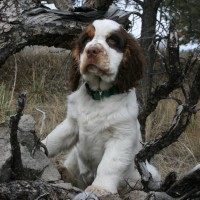
| The Cluminger Spaniel is a specific cross between two different types of Spaniels, the Clumber Spaniel and the English Springer Spaniel. The resulting offspring of both breeds are generally heavier, more substantial individuals than English Springer Spaniels, but more balanced and agile dogs than Clumber Spaniels. This dog may end up needing more baths than most, as it will probably inherit the love of mud and other messy things from both parent breeds. They are friendly, affectionate dogs with a playful nature that sometimes expresses itself in mischief. |
History of the Cluminger Spaniel |
| Spaniels are classified as a type of hunting dog, but they have been helping hunters long before the invention of the rifle. Initially, these dogs were bred to hunt game from deep brush for bowhunters and, in some cases, to retrieve birds from where they had fallen. Early Spaniels were divided into two groups according to where they worked: Water Spaniels and Land Spaniels. At some point in the 17th century, a distinction was made between types of land Spaniel and they began to be classified as Springer or Cocker Spaniel, based entirely on the size of the dog. The smaller Spaniels were used to flush out both furred and feathered game such as woodcock, giving them the name Cocker Spaniel, and the larger ones were given the name Springer Spaniel for their ability to flush out game for hunting. |
A little of the Clumber Spaniel |
||
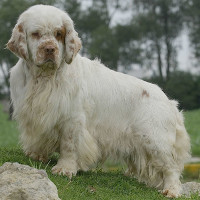
| The Clumber Spaniel is thought to have been developed in the late 18th and early 19th centuries, although records of the breeds used to create the Clumber Spaniel are non-existent. The most likely scenario is that they were developed for function rather than form by the gamekeepers who worked with the dogs at the time. The Clumber was named after Clumber Park, an estate of almost four thousand acres that belonged to the Duke of Newcastle. Clumber Spaniel dogs were extremely popular as hunting dogs and were often depicted in artwork of the period, as well as being one of the first nine dog breeds recognized by the American Kennel Club when it was formed in 1883. | ||
 |
||
| Standard of the Clumber Spaniel | ||
A little of the English Springer Spaniel |
||
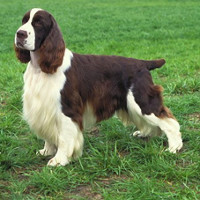
| The English Springer Spaniel is a breed of hunting dog that dates back to 14th-century England, and whose purpose was to hunt and retrieve game. Nowadays, however, they are considered a versatile or all-season dog, being an affectionate companion to keep as a pet. Energetic and loving, English Springer Spaniels always seek to please their owners and are ready to take on any task. No wonder they're ranked among the top ten most popular dog breeds in the UK. Yet they can be clingy, and some may have a tendency to dominate or even be aggressive. That's why early socialization is so important, as is meeting their mental and physical needs. | ||
 |
||
| Standard of the English Springer Spaniel |
Appearance of the Cluminger Spaniel |
| This is a medium to moderately large breed of dog, generally with a head slightly larger and thicker than average for their body size with a straight, square muzzle and ears that hang from the sides of the head, although these ears can be either the triangular shape of the Clumber or the rounded lower edge of the Springer. The eyes are oval and may have a diamond or V-shaped rim, they can be any color from amber to dark brown, and they tend to have the softer expression of the Clumber Spaniel, although some have the more alert, confident expression characteristic of the Springer Spaniel. They can range from the low, substantial body of the Clumber Spaniel to the more compact, well-balanced body shape of the Springer, but most of these hybrids have a body shape somewhere in the middle of these two, a little longer and more substantial in body structure than the Springer Spaniel, but not as low to the ground as the Clumber. |
Temperament of the Cluminger Spaniel |
| The typical Cluminger Spaniel is affectionate, friendly and playful. They tend to be more energetic than the average Clumber Spaniel, but not as hyper as the Springer Spaniel. Some may be reserved with strangers and other animals, but most of these dogs will be quite sociable, and although they will alert you to approaching strangers, they are generally too friendly to be used as guard dogs. They're generally good with children, although if they lean too far towards the Springer, they can be too noisy for young children and cause involuntary bumps and bruises. If you're buying a Cluminger Spaniel from a breeder, it's strongly recommended that you meet the dog's parents. Some Spaniel lines have dominance and aggression traits that sometimes surface, and meeting the parents will help you judge the personality of their offspring. Both parent breeds are fairly sensitive to training, although the Springer tends to be more eager to please than the Clumber, so training the Cluminger Spaniel should also be fairly straightforward although Clumber Spaniels can sometimes show stubbornness and the Springer can have a mischievous sequence and these traits can also be passed on to the Cluminger. |
Needs and activities of the Cluminger Spaniel |
| The English Springer Spaniel generally requires a fairly high level of activity, while the exercise requirements of the Clumber Spaniel are much lower. Their offspring, the Cluminger Spaniel, generally needs around 60 to 90 minutes of vigorous exercise a day to be happiest and healthiest, which can include activities such as swimming and tracking. The Cluminger Spaniel is generally a pleasant companion to other dogs, so playtime with other friendly dogs can be a beneficial way to expend this animal's energy. This dog does best with a larger home as it can tend to be overly sensitive to noise and would like a fenced yard for sniffing, but it can generally adapt to an apartment if it gets a little extra exercise a day. |
Maintenance of the Cluminger Spaniel |
| Bathing is recommended about every 6 to 8 weeks for both parent breeds, or if they become dirty or muddy, and the same would be true for their offspring. These Spaniels tend to get dirty and muddy as they like to splash in puddles and chase objects in the mud, fortunately, they are not prone to dry skin problems due to frequent bathing. They should be brushed several times a week to control shedding and avoid tangles and mats. The feathered areas around the ears, chest, legs and belly are particularly prone to tangles and should be carefully inspected. |



 English (United Kingdom)

Comments