
 |
Cavanese |
|
He is not recognized by the F.C.I. |
Origin |
Great Britain <> Western Mediterranean Basin -> U.S.A. | |
Translation |
Francis Vandersteen |
A brief presentation of the Cavanese |
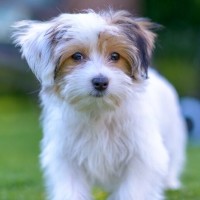
| The Cavanese is a toy-sized dog weighing up to 7 kilos. They are a cross between a pure-bred Cavalier King Charles Spaniel and a pure-bred Bichon Havanais, and are sometimes called Havaliers. They come in a range of colors, including fawn, beige, black and white, and can be bi- or tricolor. Their coats are generally short and soft, and may have a wave or slight curl that will require regular grooming. They are intelligent, gentle dogs who are very affectionate but don't like to be left alone for too long and suffer from separation anxiety. Despite their size, they need regular exercise and enjoy playing with toys. They are eager to please and are therefore considered highly trainable, responding best to rewards and praise. |
History of the Cavanese |
| The Cavanese is a combination of a Cavalier King Charles Spaniel and a Bichon Havanais, the latter being the national dog of Cuba. |
A little of the Cavalier King Charles Spaniel |
||
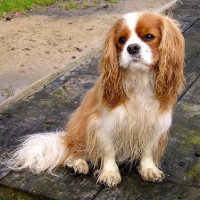
| The Cavalier King Charles Spaniel was named after King Charles I of Great Britain in the 1600s, who was known for always having one or more of his beloved Spaniels at his side. Queen Victoria also owned one, but developed a variant of the breed that is now called the English Toy Spaniel in America and the King Charles Spaniel in the UK. They were small with short, flat faces and domed skulls. In 1926, Roswell Eldridge of America sought to rebreed the breed as King Charles knew it, but he died before seeing his desire realized. He did manage to be, however, with the parentage of a dog called Ann's Son, which became the breed standard for the Cavalier King Charles Spaniel. This line was accepted by the American Kennel Club in 1996 as part of the Toy Group. | ||
 |
||
| Standard of the Cavalier King Charles Spaniel | ||
A little of the Havanese Bichon |
||
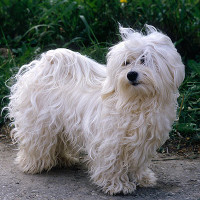
| Havanese Bichons were developed from the now extinct Blanquito de la Habana, a small white dog from Havana. It is thought that the Blanquito was crossed with other types of Bichon, including the Poodle, to create the Havanese. They are thought to have been brought on ships with the first settlers to Cuba, and it is assumed that they were the Tenerife dog, which is the common ancestor of the entire Bichon family. Spanish settlers in Cuba took a liking to the little dogs and kept them as pets in their homes. When Cubans fled to the USA during the revolution, many left their dogs behind. However, some arrived in the United States and were officially recognized by the American Kennel Club in 1996, and are now one of the club's fastest-growing dog breeds. | ||
 |
||
| Standard of the Havanese Bichon |
Appearance of the Cavanese |
| Cavaneses are toy-sized dogs, and the most common colors are fawn, tan, black and white. They can be one color or bi or tricolored, and their coats are short and soft and may have a wave or slight curl. The breed has a round head with a short muzzle and their ears tend to hang down. It will depend on which of the parent breeds your pet takes after most, but they are likely to have characteristics of both. The Cavanese's tail can be truncated or longer and tapered, and can curl. They have black noses and expressive eyes. Their legs are fairly short, but in proportion to their small bodies. |
Temperament of the Cavanese |
| Cavaneses are intelligent, loyal dogs that make excellent pets and develop strong bonds with their families. They are energetic, playful dogs who get on well with children, although being quite small, it's important for adults to ensure that the dog is not handled too roughly by young children to avoid injury. They don't do well to be left alone for long periods and can develop separation anxiety which can lead to excessive barking. The breed gets on well with other pets, although it has been known to chase cats. Early socialization and training will be a good idea for your pet to avoid this. They are easy to train and will respond well to rewards and positive reinforcement. Despite their size, they need plenty of exercise, so daily walks will be a good idea as well as play sessions. This will prevent any bad behavior arising from boredom. They are not considered good guard dogs. |
Needs and activities of the Cavanese |
| Despite their small size, Cavanese are energetic dogs that need at least 30 minutes of exercise a day to stay in shape. They'll love a walk on the beach or in the park, as well as ball games in a fenced-in yard. Your pet will behave better if it exercises regularly, as these breeds need mental stimulation to avoid boredom. A Cavanese will be happy in a house or apartment as long as it gets regular exercise. They shouldn't be left out in the cold for too long. They are more tolerant of warm weather than cold. |
Maintenance of the Cavanese |
| Cavanese will need a moderate amount of grooming to keep them looking good. They should be brushed two or three times a week with a stiff bristle brush to remove loose hair and get rid of matting and dirt. Brushing also stimulates the skin, keeping the coat healthy. Depending on the parent breed your pet takes the most, you may need to trim the fur. Longer-haired dogs more like the Havanese may need their coats trimmed more often and brushed more regularly to get rid of any knots, but if your dog takes on the Cavalier King Charles Spaniel, you may simply need to trim the feet. Try brushing your dog's teeth every day and check for dirt in the ears, which can then be gently wiped away with the damp cotton ball, making sure the moisture doesn't stay in the ears. |



 English (United Kingdom)

Comments