
 |
Carnauzer |
|
He is not recognized by the F.C.I. |
Origin |
Great Britain <> Germany -> U.S.A. | |
Translation |
Francis Vandersteen |
A brief presentation of the Carnauzer |
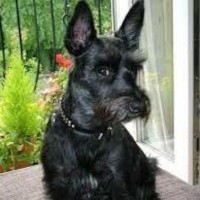
| Courageous and electric, the Carnauzer is an ideal medium-sized hybrid breed that was developed from the Cairn Terrier and the Miniature Schnauzer. Its exact origins are unknown since the breed first appeared during the designer dog trend, and the history is not yet documented. The Carnauzer is an exquisite hybrid breed with a strong personality. It craves attention and prefers to be surrounded by company. Although not an excessive barker, early training must be provided to teach this breed what not to bark at. Its hard, rough coat means that grooming maintenance will be relatively easy. High energy levels mean you need to be prepared to run with your dog to maintain its healthy weight. |
History of the Carnauzer |
| The Carnauzer is a relatively recent combination, thought to have been developed within the last 20 years. Although its exact origin is unknown, the Carnauzer was developed from the Cairn Terrier and the Miniature Schnauzer. While both the Cairn Terrier and the Dwarf Schnauzer are recognized by the AKC, the Carnauzer is not listed due to its hybrid status. |
A little of the Cairn Terrier |
||
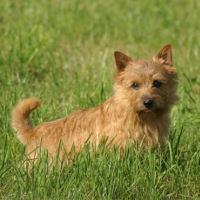
| The Cairn Terrier, originally from the Isle of Skye in Scotland, is the result of a long history of division in the Terrier breed. There is evidence to suggest that early versions of the Cairn Terrier existed in the 15th century and were used to hunt foxes, badgers and otters. The name is derived from the breed's ability to hunt otters from cairns, piles of stones used as landmarks or memorials in those days. In 1873, the breed was divided into the Dandie Dinmont and Skye Terrier based on color. The Cairn Terrier was placed in the Skye Terrier category. In 1881, Wirehaired Terriers were identified as a breed distinct from Skye Terriers, again changing the categorization of the Cairn Terrier. Eventually, Wirehaired Terriers were separated into Scotch, West Highland White and what we know today as the modern Cairn Terrier. Many of the earliest Cairn Terriers were white, but many color variations have appeared in this breed since the early 1900s. It was recognized by the AKC in 1913. Famously, Toto from The Wizard of Oz was a Cairn Terrier. | ||
 |
||
| Standard of the Cairn Terrier | ||
A little of the Miniature Schnauzer |
||
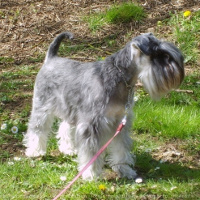
| In the late 19th century, the Miniature Schnauzer was developed in Germany from the Standard Schnauzer, Miniature Pinscher, Affenpinscher and other small dogs. Originally, the Miniature Schnauzer was used to catch vermin on farms, and to protect and hunt small prey. The Miniature Schnauzer managed to retain its popularity during the two world wars when dog breeding suffered. This alert canine breed was known to have a variety of colors in its early development before the standard settled on black and silver combinations. In 1926, the breed was officially recognized by the American Kennel Club. | ||
 |
||
| Standard of the Miniature Schnauzer |
Appearance of the Carnauzer |
| The Carnauzer has a square head with large puppy-dog eyes. Its short legs are those of a Cairn Terrier with a Schnauzer body. Its solid forelegs are strong, enabling it to dig effectively into the ground. The Carnauzer's tail is usually docked, and its coat is available in a variety of colors such as white, black, gold, brown and cream. Its coat also resembles the texture of the Cairn Terrier's and is considered hard, rough and water repellent. As a rule, the eyes are dark brown. Legs are medium-sized and powerful. The Carnauzer's expression is that of a playful dog waiting to pounce on you at any moment. |
Temperament of the Carnauzer |
| With a playful expression and a need to be surrounded by company, the Carnauzer temperament is full of positive factors. Its energy is enough to keep your dog chasing stimuli all day long. Your Carnauzer is curious, lively and can be boisterous. This adorable dog is accepting of owners and strangers alike, and early socialization will guarantee this. Due to its initial purpose of hunting small vermin, supervision around small animals is a good idea. Its loving nature means it does well with children of all ages. Although the Miniature Schnauzer can sometimes be stubborn when it comes to obedience and structure, your Carnauzer will enjoy learning new commands as long as it receives rewards and consistent training. This happy breed will easily become attached to its family and follow you around your home, eager to be kept up to date. |
Needs and activities of the Carnauzer |
| The Carnauzer requires intense exercise due to its high activity levels. Several walks should be organized daily for mental and physical stimulation. Activities such as running, chasing a ball and swimming would be ideal for your Carnauzer. The ideal environment for your Carnauzer is a rural home with access to a yard or field in a warm climate. Your courageous dog would be able to live in an urban area provided he has daily access to the outdoors. We recommend providing your Carnauzer with around 60 minutes of daily activity. Always make sure your dog is on a leash when in urban areas, as he may go on a chase when he gets the chance. |
Maintenance of the Carnauzer |
| The Carnauzer is considered a hypoallergenic breed, which is great news if you have allergies. This breed doesn't shed much due to its coat type, and what's more, it doesn't drool. The Carnauzer is not an odorous dog and maintenance of this hybrid will be relatively simple if routines are maintained. Its harsh, rough coat means that brushing can be done weekly. If your dog's coat is longer, you may need to follow grooming appointments for a light trim every 6 weeks. Bathing should not take place more than every 6 to 8 weeks, unless your dog is jumping in the mud while exploring. Ears should be cleaned weekly, watching out for moisture leading to yeast proliferation, while his nails should be trimmed every 2-3 weeks. Teeth should be brushed weekly, and even more if tartar build-up is noticed. |



 English (United Kingdom)

Comments